Story 1 of 5
Macklem says the new U.S. tariffs could cut Canada’s fourth-quarter growth to below 1%
01What happened
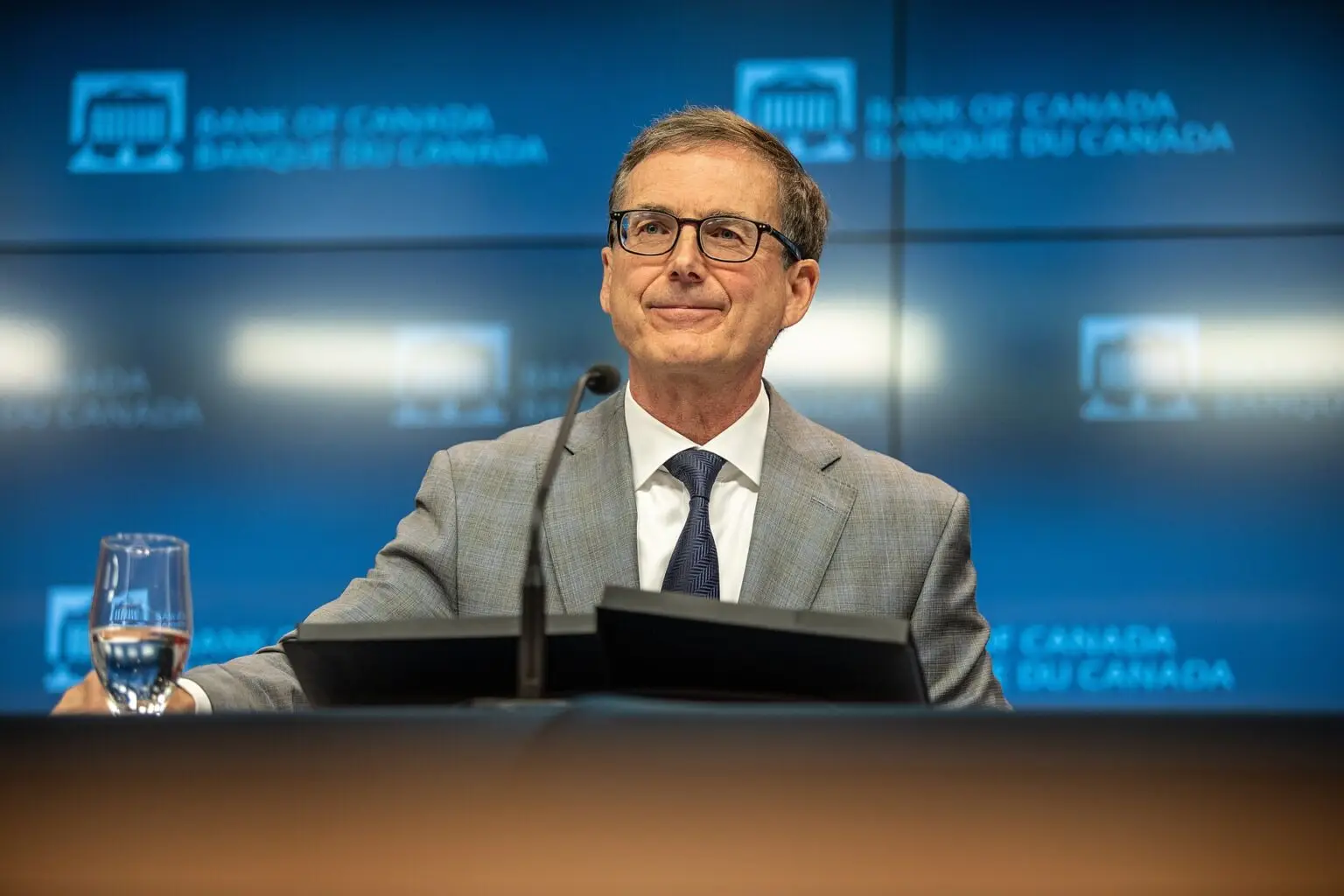
Bank of Canada Governor Tiff Macklem spoke to the Halifax Partnership on Monday 21 September, and the speech had two halves. The first was a recovery report: GDP grew at a 3.3% annualised pace in the second quarter, non-energy exports rose 14.5% in the quarter to their highest level since early 2025, business investment rose at an 8.8% annualised rate, and the unemployment rate has edged down to 6.4%. Almost one in five Canadian businesses now uses AI to make goods or deliver services, about triple the share of two years ago.
The second half was a warning. The latest U.S. tariffs cover products worth about 5% of Canada’s goods exports to the United States, and if they stay in place Macklem said growth could be roughly halved in the fourth quarter, to below 1%. On prices, CPI inflation has sat around 3% for four months, mostly because of fuel: every 10% rise in oil adds about 0.2% to CPI, and because of damaged refining capacity, pump prices have behaved as if oil were almost US$40 a barrel higher than it is. If oil stays near US$100, he expects inflation to edge up in the coming months. The overnight rate has been 2.25% since the 2 September hold, and the next decision is 28 October, alongside a new Monetary Policy Report.
02Our view
The Bank of Canada holds at 2.25% on 28 October. We think its next move is still more likely to be a cut than a hike, but not before CPI ex-gasolineCPI ex-gasoline The Consumer Price Index with gasoline removed. When it sits well below the headline rate, the inflation is coming from fuel rather than from the broad economy. has stopped climbing, so variable-rate relief stays paused through the winter.
Why we think so. Governor Macklem’s speech had two halves, and they pull in opposite directions. The recovery is real: GDP grew at a 3.3% annualised pace in the second quarter, non-energy exports rose 14.5% to their highest level since early 2025, business investment rose at an 8.8% annualised rate and unemployment edged down to 6.4%. The warning is also real: the latest U.S. tariffs cover about 5% of Canada’s goods exports to the United States, and if they stay, growth could be roughly halved in the fourth quarter, to below 1%. A tariff slowdown argues for lower rates eventually, but it arrives slowly. Inflation of 3% is here now. CPI has sat around 3% for four months, mostly because of fuel; every 10% rise in oil adds about 0.2% to CPI, and damaged refining capacity has made pump prices behave as if oil were almost US$40 higher than it is. With ex-gasoline inflation at 2.4% in August and the Bank saying the upside risks to inflation have grown, a cut now would lean against its own forecast. A tariff shock that halves growth also removes any case for following the Fed higher. That leaves a hold.
What the market is pricing. The consensus for 28 October is a hold at 2.25%, and we agree. Where we take a view is on direction afterwards: the slowdown Macklem described tilts the next move toward a cut, but only once the inflation numbers allow it.
What it means. For a household with a variable-rate mortgage, a line of credit or anything priced off prime rate, the relief of the past two years has paused, and the Bank is not promising when it resumes. Budget on today’s rate through the winter rather than on a cut. For a business that sells into the United States, 5% of national exports sounds small, but the tariffs land on a few sectors, and within those sectors the hit is the whole margin, not 5% of it. Check whether your products sit inside the tariffed categories and decide now how much of the cost can be passed on; the customer conversation is easier before the invoice than after. The broader planning question is how much income or revenue depends on a U.S. buyer, and whether the budget balances if rates stay put for another year while fuel stays expensive.
What would change our mind. A September CPI reading in mid-October with ex-gasoline inflation above 3% would put a hike on the table. A Labour Force Survey showing job losses spreading beyond the tariffed sectors, or the 5-year yield falling below 3.3%, would bring a cut forward. We would say so.
What to watch. The September CPI in mid-October, the price of oil as the UN General Assembly week unfolds, and the 28 October decision with its new Monetary Policy Report. There is no major Canadian release today.
03Why it matters to you
If you carry a variable mortgage or a line of credit, tariffs and fuel are pulling rates in opposite directions. Knowing your payment under either path helps you plan.
Sources Bank of Canada, Navigating uncertainty and adapting to change, speech by Governor Tiff Macklem, Halifax; The Canadian Press (via Yahoo Finance Canada), Bank of Canada governor warns new tariffs could cut fourth-quarter growth in half; BNN Bloomberg, Macklem says U.S. trade unpredictability could set back recent economic progress; Bank of Canada, Bank of Canada maintains the policy rate at 2¼%; TD Economics, Canadian Consumer Price Index (August 2026)