Markets · 3 Nov 2026Policy rateBank of Canada2.50%YieldsCA 2Y3.26%CA 5Y3.49%+3 bpCA 10Y3.77%+3 bpCanadian dollarCAD/USD0.7146−0.11%CAD/EUR0.6385−0.02%CAD/GBP0.5325−0.15%CAD/JPY113.25+0.34%CryptoBTCUS$80,269+3.46%ETHUS$2,423+5.57%

Morning Brief

Thursday 24 September 2026

The U.S. 30-year Treasury yield reached 5.39% on Wednesday, its highest since 2004, after the strongest U.S. business survey in five years, and the Government of Canada 10-year followed to about 3.86% while the TSX fell 584 points and the dollar slipped to 70.94 U.S. cents.

The desk’s view todayCanadian fixed mortgage rates rise again before the 28 October decision, with the 5-year Canada yield moving back toward 3.65%, and the Bank of Canada holds at 2.25%.

Story 1 of 5

The U.S. 30-year yield hit 5.39%, its highest since 2004, and Canadian fixed rates are next in line
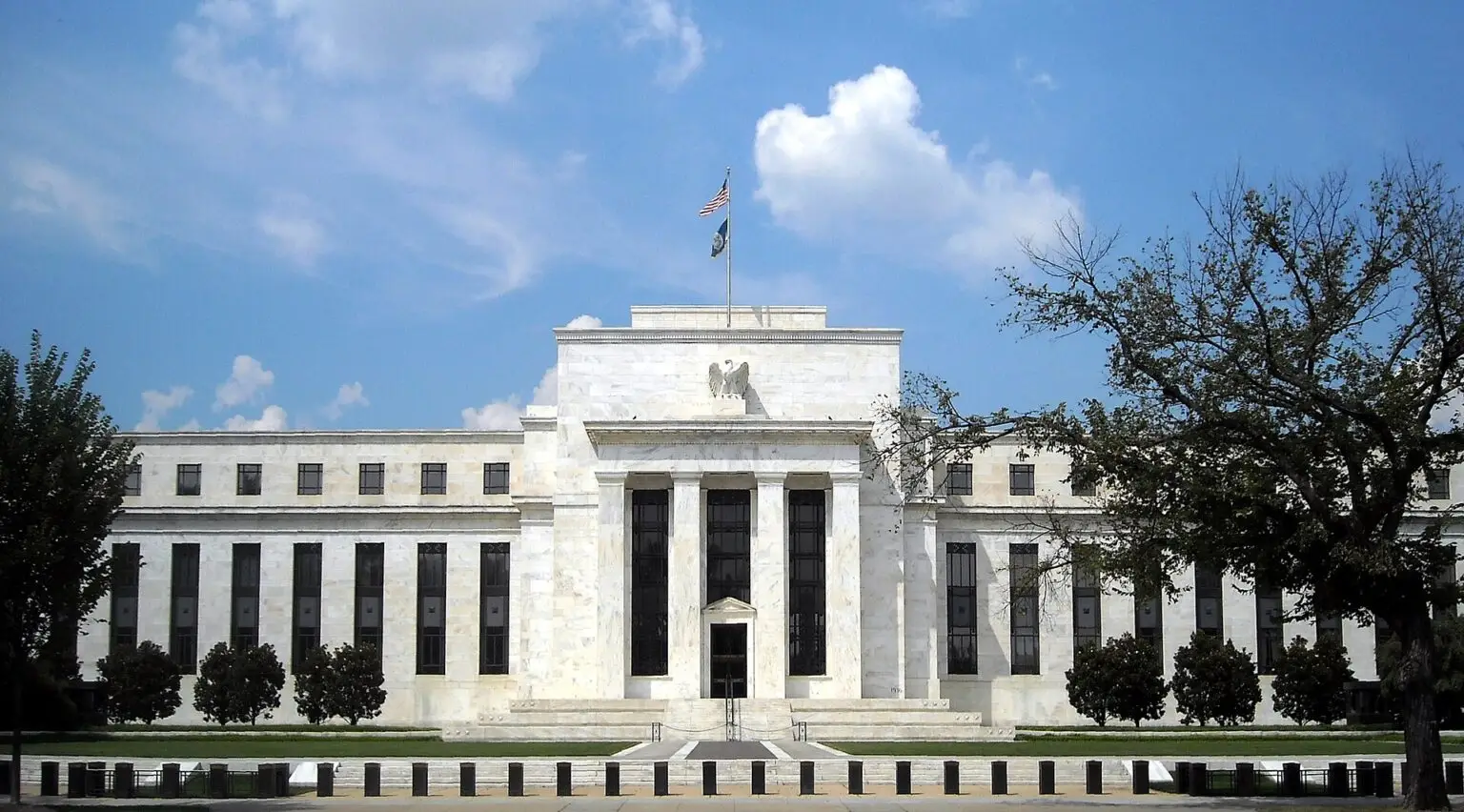
The Marriner S. Eccles Federal Reserve Board Building on Constitution Avenue in Washington, D.C.
Photo: AgnosticPreachersKid, CC BY-SA 3.0, via Wikimedia Commons

01What happened

Wednesday was the worst day of the year for government bonds. The U.S. 30-year Treasury bond yieldBond yield The annual return an investor gets for lending to a government or company through a bond. Yields rise when bond prices fall. Fixed mortgage rates are priced from the 5-year Government of Canada yield. rose to 5.39%, a level last seen in July 2004, and the 10-year closed at 5.11%, up from 4.96% on Tuesday according to the Federal Reserve’s own daily table. Every Treasury maturity beyond two years now yields more than 5%. Overnight the selling continued, and by early Thursday the 30-year had touched 5.44%.

The trigger was a strong economy, not a weak one. S&P Global’s flash PMI for September, published Wednesday morning, put U.S. composite activity at 58.4, its highest in 62 months, with manufacturing at 57.0 against a forecast of 53.6 and services at 58.7 against 55.8. The survey said input costs rose at the fastest rate since October 2022 on fuel, transport and wages. The Fed raised its target range to 3.75% to 4.00% on 16 September, and markets now price better than even odds of further quarter-point increases in October and December.

Canada was pulled along. The Government of Canada 10-year yield rose to about 3.86% on Wednesday from the Bank of Canada’s 3.83% close on Tuesday, and the 5-year, which sets fixed mortgage pricing, closed Tuesday at 3.54%, up from 3.35% a month earlier. The dollar fell to 70.94 U.S. cents, its lowest in about seven weeks.

02Our view

Canadian fixed mortgage rates rise again before the 28 October Bank of Canada decision, with the 5-year Canada yield moving back toward the 3.65% it reached in mid-September. The Bank itself holds at 2.25%.

Why we think so. Wednesday was the worst day of the year for government bonds. The US 30-year Treasury bond yieldBond yield The annual return an investor gets for lending to a government or company through a bond. Yields rise when bond prices fall. Fixed mortgage rates are priced from the 5-year Government of Canada yield. rose to 5.39%, a level last seen in July 2004, and the 10-year closed at 5.11%, up from 4.96%. Every Treasury maturity beyond two years now yields more than 5%. The trigger was strength, not weakness: S&P Global’s flash PMI put US composite activity at 58.4, its highest in 62 months, with manufacturing at 57.0 and services at 58.7, and input costs rising at the fastest rate since October 2022. A selloff driven by growth and inflation data does not reverse in a week. Canada was pulled along, with the 10-year rising to about 3.86% and the 5-year, which sets fixed mortgage pricing, closing Tuesday at 3.54%, up from 3.35% a month earlier. Lenders fund fixed mortgages from the bond market: when the 5-year rose about a quarter point in the second week of September, several banks raised fixed rates by 10 to 20 basis points within days.

What the market is pricing. Forecasters expected US manufacturing at 53.6 and services at 55.8, so both beat by a wide margin. Markets now price better than even odds of further quarter-point Fed increases in October and December, on top of the move to 3.75% to 4.00% on 16 September. In Canada, the consensus is a hold at 2.25%, and we agree. The Bank cannot cut into a global bond rout and 3% inflation, and has no reason to hike when tariffs are cutting growth. The overnight rate has not moved since March.

What it means. Anyone renewing or closing a mortgage in the next 120 days can ask for a rate hold today rather than next week; it is free and it caps the damage if the next move is up. The gap between variable and fixed has narrowed, and a variable rate only wins if the Bank cuts, which is not on the table this autumn. A GIC saver gets the other side of the trade: higher yields mean better rates on new one to five-year terms, so a maturing GIC is worth comparing with the old ladder. The gap between a 2.25% Bank of Canada and a Fed near 4% keeps the dollar weak at 70.94 US cents. A household can check how much of its debt reprices in the next two years, and whether the budget still works at a renewal rate half a point higher.

What would change our mind. The US 10-year back below 4.8% or the Canada 5-year below 3.4% within two weeks, which would mean the market judged Wednesday’s PMI a one-off; or a September CPI print in mid-October with CPI ex-gasolineCPI ex-gasoline The Consumer Price Index with gasoline removed. When it sits well below the headline rate, the inflation is coming from fuel rather than from the broad economy. clearly falling, which would reopen the case for a cut. Either and we would say so.

What to watch. US initial jobless claims today, expected at 201,000; US new home sales for August, expected at 615,000 annualised; today’s Fed speakers, Barkin, Hammack and Paulson; Canada’s September CPI in mid-October; and the Bank of Canada decision and Monetary Policy Report on 28 October.

03Why it matters to you

If you are renewing or buying, fixed rates are taking their lead from the bond market, not the Bank of Canada. Locking at the right moment can save real money.

Book a mortgage renewal review

Sources CNBC, 30-year Treasury yield hits highest level since 2004 as bond market rout continues; Investing.com, 30-year Treasury yield hits 5.39%, a 22-year high, after hot PMI data; Axios, Treasury yields rip higher on renewed inflation fear; S&P Global, S&P Global Flash US PMI, September 2026; U.S. Federal Reserve, H.15 Selected Interest Rates, 22 September 2026; U.S. Federal Reserve, FOMC statement, 16 September 2026; Investing.com (via Yahoo Finance), Canada 10-year yield climbs as bond selling resumes; Bank of Canada, Selected bond yields, 22 September 2026 close; Ascenthya market feed, Bank of Canada Valet and CoinGecko data, last good copy in the database, 23 September 2026; Canadian Mortgage Trends, Bond yield surge pushes fixed mortgage rates higher across Canada; The Canadian Press (via BNN Bloomberg), S&P/TSX composite down more than 400 points, U.S. stock markets also lower
Story 2 of 5

Retail sales fell 0.7% in July, and volumes fell more, as the summer spending pause showed up in the data

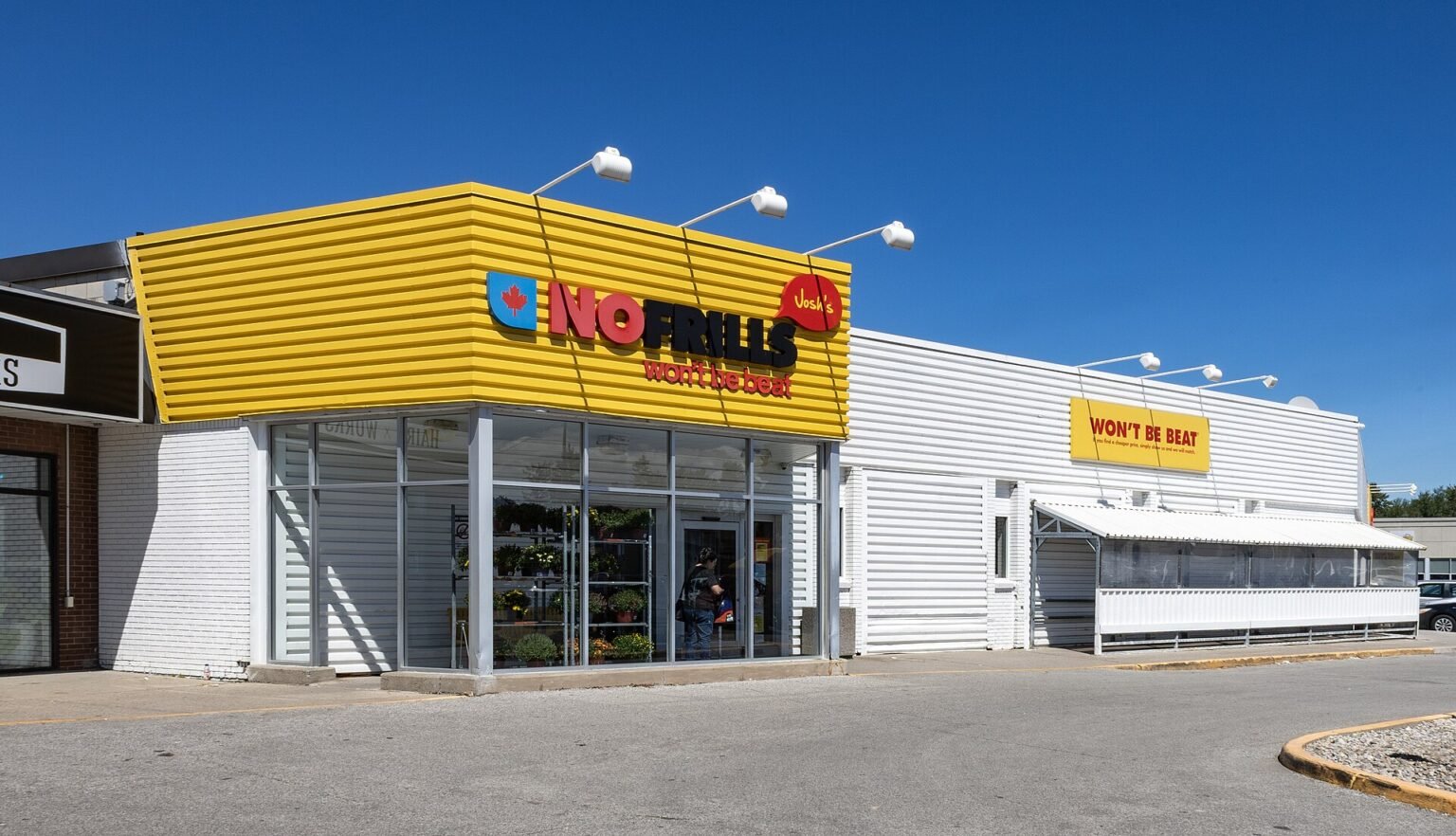
Exterior of a No Frills grocery store in Essex, Ontario
Photo: Chris Woodrich, CC BY-SA 4.0, via Wikimedia Commons

01What happened

Statistics Canada reported Thursday morning that retail sales fell 0.7% in July to $73.7 billion. In volume terms, stripping out price changes, sales fell 1.1%, so Canadians bought noticeably less for slightly less money. Core retail sales, which exclude gasoline stations and car dealers, also fell 0.7%. General merchandise stores led the decline, down 1.9% after a 2.5% gain in June, and clothing and accessories retailers fell 1.2%; building material and garden suppliers rose 0.8%.

The agency’s advance estimate for August points to a 1.3% rebound, although it warned the figure will be revised. Economists had expected a 0.8% decline for July, so the miss was small. The Bank of Canada’s September statement had described consumption as broad-based in the second quarter; July is the first month of the third.

02Our view

July’s 0.7% fall in retail sales is a pause, not a turn, and the August estimate of plus 1.3% is closer to the underlying trend. But that trend is slowing through the autumn, because fuel is taking a larger share of the budget and the tariff news has made people careful.

Why we think so. Statistics Canada reported that retail sales fell 0.7% in July to $73.7 billion. In volume terms, stripping out price changes, sales fell 1.1%, so Canadians bought noticeably less for slightly less money. Core retail sales, which exclude gasoline stations and car dealers, also fell 0.7%. General merchandise stores led the decline, down 1.9% after a 2.5% gain in June, and clothing and accessories fell 1.2%, while building material and garden suppliers rose 0.8%. A strong June, a weak July and an estimated bounce in August is what a cautious customer looks like: spending in bursts around promotions and pulling back in between. That is a sign of households managing a tighter budget, not of households in retreat. The pressure on that budget is real. Diesel and gasoline costs are high, and when more of each paycheque goes to fuel, less is left for discretionary purchases even if income holds up.

What the market is pricing. Economists expected a 0.8% decline, so the miss was small and slightly better than feared. Markets will take the August estimate as encouraging, but the agency warned it will be revised. We share the market’s reading that July was not a collapse, while putting more weight on the volume decline, which is the cleaner measure of how much households actually bought.

What it means. For the Bank of Canada, weaker spending is the case for a cut in a year when 3% inflation is the case against one, and the August rebound keeps both alive; we expect it to hold. For a household reviewing its autumn budget, card statements can be read the same way the Bank reads this release: which categories moved, and was the change price or quantity. It is also worth checking whether the discretionary share of spending has quietly shrunk as fuel and food prices rose, because that share is the cushion a slower economy would draw on. For a retail, hospitality or consumer-facing business, inventory and staffing can be planned for a customer who spends in bursts, with a fixed-cost base flexible enough to absorb a slow month without borrowing to cover it.

What would change our mind. The final August figure revised below zero, or the September Labour Force Survey showing job losses spreading beyond the tariffed sectors. Either would make July the start of something rather than a blip.

What to watch. The revised August retail figure; the September Labour Force Survey; payroll employment and job vacancies for July, released today; and the Bank of Canada decision on 28 October.

03Why it matters to you

If your household has been holding back on spending, that caution is worth turning into a plan. A clear budget gives your savings a purpose.

Book a budget and savings check

Sources The Canadian Press (via BNN Bloomberg), Statistics Canada reports retail sales down 0.7% in July at $73.7B; Reuters (via Investing.com), Canada July retail sales fall 0.7%; seen up 1.3% in August; Statistics Canada, The Daily: Retail trade, July 2026 (release page could not be fetched by the engine; figures taken from the wire reports of the release); Bank of Canada, Bank of Canada maintains the policy rate at 2¼%

Story 3 of 5

The TSX lost 584 points as gold and materials fell, and Wall Street had its third straight losing day

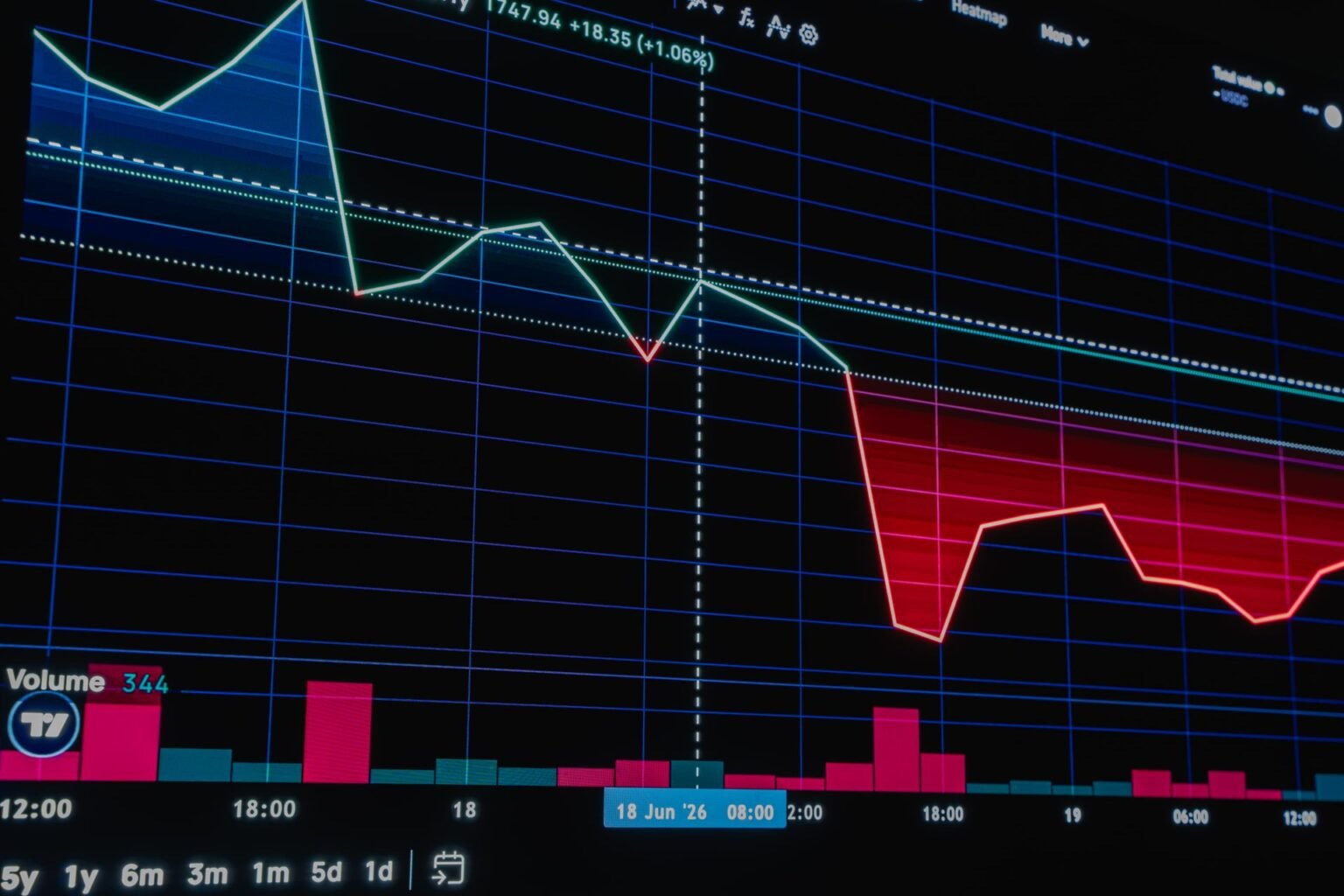
A stock market chart on screen showing prices falling
Photo: Pexels

01What happened

The S&P/TSX Composite fell 584.18 points, or about 1.6%, to close at 35,751.43 on Wednesday, its biggest one-day drop in weeks. Materials led the way down as December gold fell US$58.00 to US$4,318.40 an ounce, while energy was the one sector to rise: the November crude contract gained US$1.64 to US$92.16 a barrel. In New York the S&P 500 fell 0.8% to 7,706.03, the Dow lost 352.10 points to 51,511.59, the Nasdaq fell 1.1% to 26,936.04 and the Russell 2000 dropped 1.8%. It was the third straight decline for the Dow.

The reason was the bond market. A 10-year Treasury at 5.11% and a 30-year at 5.39% give investors a competitor for equities that did not exist a year ago, and the strongest U.S. business survey in five years, with input costs rising at the fastest pace since 2022, pushed rate-hike expectations up rather than down. Gold, which pays no yield, was the first casualty; the Toronto index, with its heavy weighting in miners, was the second. In the feed’s data of record, Bitcoin was US$84,076 at Wednesday evening, down 2.6% over 24 hours, and Ethereum was US$2,674, down 2.8%.

02Our view

Wednesday’s selloff is a repricing, not the start of a bear market, because it is happening on strong growth data and profits are still expected to rise sharply this quarter. But the portfolio mix that made sense at 1% yields is not the mix that makes sense at 4% to 5%.

Why we think so. The S&P/TSX Composite fell 584.18 points, or about 1.6%, to 35,751.43, its biggest one-day drop in weeks. In New York the S&P 500 fell 0.8% to 7,706.03, the Nasdaq 1.1% and the Russell 2000 1.8%, a third straight decline for the Dow. The reason was the bond market. A 10-year Treasury at 5.11% and a 30-year at 5.39% give investors a competitor for equities that did not exist a year ago. When a safe bond pays more, the price investors will pay for future company profits falls, and the effect is largest for assets that pay little or no income. Gold, which pays no yield, fell US$58.00 to US$4,318.40 an ounce and was the first casualty; the Toronto index, heavy in miners, was the second. Energy was the one sector to rise, with November crude up US$1.64 to US$92.16. Bitcoin fell 2.6% over 24 hours to US$84,076 and Ethereum 2.8% to US$2,674, moving with risk assets rather than against them.

The bigger picture. For most of the past fifteen years, bonds paid so little that holding them felt like a cost. That pushed many portfolios toward equities by default. With a safe government bond yielding 5% in the United States and about 3.9% in Canada, the comparison is honest again: a stock has to earn its place. That does not make stocks a bad investment. It makes the balance between growth and income a real decision.

What it means. For most Canadians the TSX is their pension, their RRSP and their balanced fund, and materials and energy are about a third of the index, so a bad day for gold can outweigh a good day for oil. The practical step is to look at the fixed-income share of a portfolio and at what it holds; a bond fund bought in 2021 has a very different yield today than its price history suggests. Rebalancing inside a TFSA or RRSP costs nothing in tax, and a portfolio that has drifted heavy in equities and gold after two strong years has a natural trim available. In a taxable account, the capital gains cost needs weighing against the concentration. The core question is whether the written asset mix was set for near-zero rates.

What would change our mind. The selling spreading to corporate credit, with spreads widening sharply, or the October earnings season showing revenue falling short of the capital being spent on AI. Either would make this a valuation correction rather than a rate adjustment.

What to watch. US jobless claims and new home sales today; today’s Fed speakers; the October earnings season; and the Bank of Canada decision on 28 October.

03Why it matters to you

If your pension, RRSP or balanced fund is built on the TSX, a bad day for gold can outweigh a good day for oil. A review shows what your savings depend on.

Book a portfolio review

Sources The Canadian Press (via BNN Bloomberg), S&P/TSX composite down more than 400 points, U.S. stock markets also lower; The Associated Press (via ABC News), How major US stock indexes fared Wednesday 9/23/2026; CNBC, 30-year Treasury yield hits highest level since 2004 as bond market rout continues; S&P Global, S&P Global Flash US PMI, September 2026; Ascenthya market feed, Bank of Canada Valet and CoinGecko data, last good copy in the database, 23 September 2026

Story 4 of 5

Diesel is at a record and the shortage runs into 2027, which means the grocery bill is not done rising

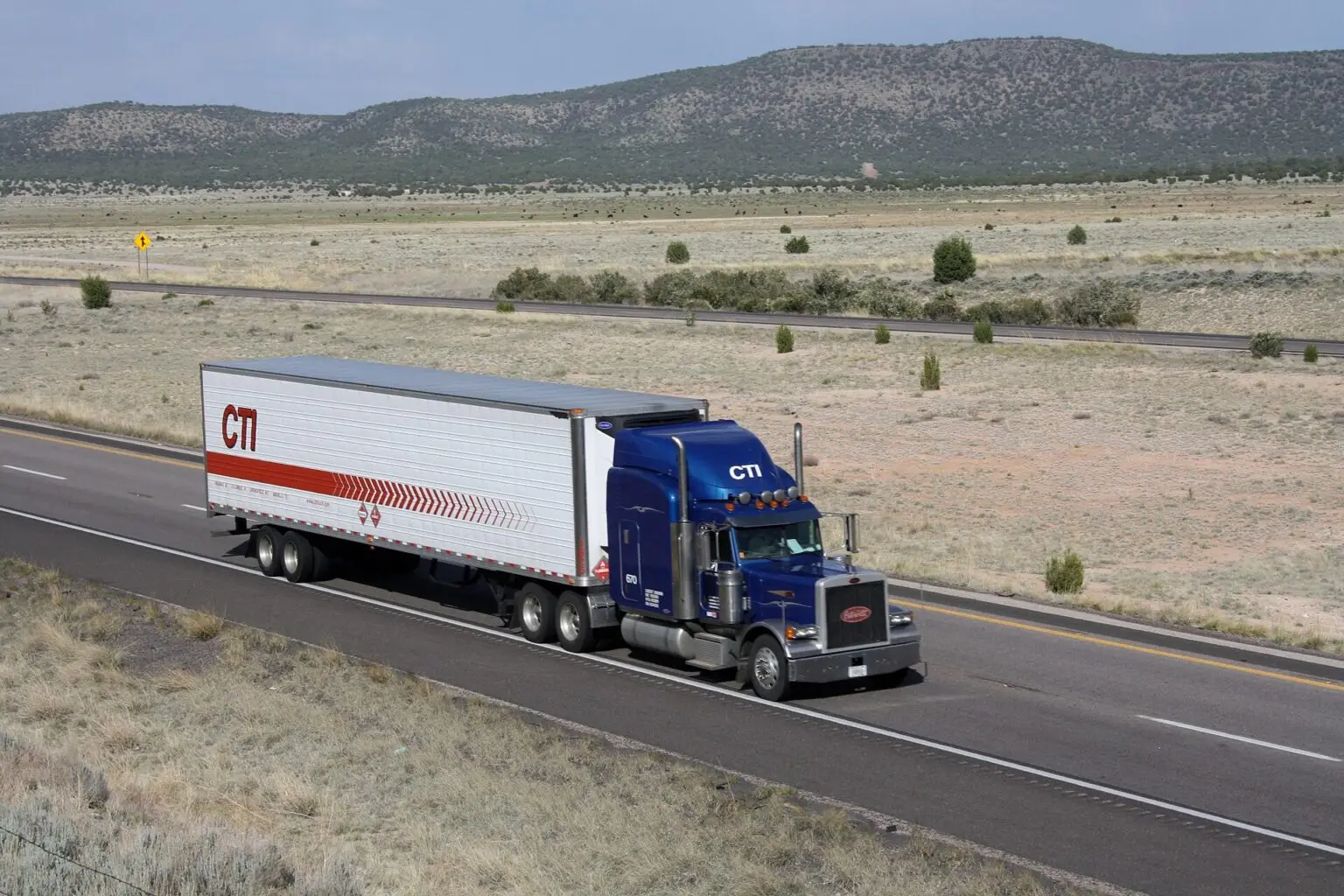
Diesel transport trucks travelling on Interstate 40 in Arizona
Photo: Arne Hückelheim, CC BY-SA 3.0, via Wikimedia Commons

01What happened

Diesel across Canada hit a record average of $2.751 a litre on 17 September, and the outlook has since got worse. A Reuters analysis on Sunday found that U.S. distillate stocks fell to 107.9 million barrels by 11 September, the lowest for the time of year since 1982, and that the U.S. Energy Information Administration expects them to fall below 100 million barrels this month and to stay below the five-year low through the end of 2026 and most of 2027. European stocks at the Amsterdam-Rotterdam-Antwerp hub were 16% below their five-year average in July. The U.S. diesel refining margin hit a record US$118.62 a barrel on 14 September, and retail diesel there passed US$6 a gallon for the first time.

The cause is refining, not crude. Damage to refineries and pipelines in the Middle East and Ukrainian strikes on Russian plants have taken diesel capacity out of the system faster than crude, which is why Governor Macklem said on Monday that Canadian pump prices have behaved as if oil were almost US$40 a barrel higher than it is. Crude itself closed Wednesday at US$92.16.

02Our view

Diesel stays expensive into the new year whatever crude does. The practical result is that the food and delivery parts of CPI keep rising into the winter, even if the gasoline component eases.

Why we think so. Diesel across Canada hit a record average of $2.751 a litre on 17 September. The problem is refining, not crude. Damage to refineries and pipelines in the Middle East and Ukrainian strikes on Russian plants have removed diesel capacity faster than crude supply, which is why Governor Macklem said Canadian pump prices have behaved as if oil were almost US$40 a barrel higher than it is. Crude closed Wednesday at US$92.16. Inventories confirm the squeeze. A Reuters analysis found US distillate stocks fell to 107.9 million barrels by 11 September, the lowest for the time of year since 1982, and the US Energy Information Administration expects them below 100 million barrels this month and below the five-year low through the end of 2026 and most of 2027. European stocks at the Amsterdam-Rotterdam-Antwerp hub were 16% below their five-year average in July. The US diesel refining margin hit a record US$118.62 a barrel on 14 September. Lost refining capacity takes months to replace and stocks cannot be rebuilt in weeks.

How this has played out before. Fuel surcharges take 30 to 60 days to appear in shelf prices, because carriers and suppliers reprice contracts in cycles. That puts the July diesel spike in the September grocery bill and the September record in the November one. This is also the channel the Bank of Canada watches for signs that inflation is spreading: headline CPI is at 3% mainly because of fuel, and diesel is how fuel becomes food, building materials and delivery charges.

What it means. Almost nothing reaches a Canadian store without a diesel engine moving it. A household can budget the food line for the winter at today’s prices plus a few points rather than hoping for relief, and put off a large purchase that depends on cheap freight. For a farm, a trucking firm, a contractor or a fishing operation, diesel is the cost line that moved most this year. A business that buys or moves anything heavy should check whether supplier contracts allow fuel surcharges to pass through, and whether its own customer pricing does; the firm caught in the middle absorbs the cost. Both households and businesses can estimate how much of their monthly costs are tied to fuel one step removed, through groceries, deliveries and materials. For borrowers, broader inflation from diesel is one more reason not to expect a rate cut soon.

What would change our mind. US distillate stocks turning up for three consecutive weeks, or the diesel refining margin falling back below US$60 a barrel. Either would mean Chinese exports and record margins have brought supply back faster than the EIA expects.

What to watch. Weekly US distillate inventory data; the diesel refining margin; Canadian pump prices for diesel; and Canada’s September CPI in mid-October, especially its food component.

03Why it matters to you

If groceries already take a larger share of your budget, the diesel shortage means prices are not done rising. Planning for that now keeps the budget intact.

Book a budget and savings check

Sources Reuters (via BNN Bloomberg), Global diesel shortage likely to last into 2027 as storage tanks drain; CP24, No end in sight: why every Canadian is expected to feel the impacts of higher diesel prices; Bank of Canada, Navigating uncertainty and adapting to change, speech by Governor Tiff Macklem, Halifax; The Canadian Press (via BNN Bloomberg), S&P/TSX composite down more than 400 points, U.S. stock markets also lower
Story 5 of 5

Volkswagen pushed its $7 billion St. Thomas battery plant to 2029, a two-year delay on Canada’s largest EV bet

Charging handles at an electric vehicle charging station in Windsor, Ontario
Photo: Chris Woodrich, CC BY-SA 4.0, via Wikimedia Commons

01What happened

PowerCo, Volkswagen’s battery subsidiary, said Thursday that production at its St. Thomas, Ontario plant will now begin in 2029 rather than 2027, and named EllisDon as general contractor. The company said it is aligning the timeline and product strategy with market demand, battery technology and the group’s long-term plan, and framed the change as getting the pacing right rather than stepping back. The 370-acre site is designed for 90 gigawatt-hours a year, enough for up to a million vehicles, and was to be PowerCo’s largest cell plant anywhere.

The public money behind it is large: Volkswagen’s own investment is $7 billion, Ontario committed $500 million in incentives and Ottawa up to $13.2 billion in production subsidies and tax credits, most of it payable only when cells are made. About 3,000 jobs were promised at full operation, with roughly 1,300 construction workers at peak; about 60 are on site now. The delay follows slower electric vehicle sales in North America and comes in the same week Ottawa was told by the U.S. president that Canadian potash is welcome but should be cheaper.

02Our view

Volkswagen’s St. Thomas battery plant is delayed, not cancelled. But a 2029 start means the jobs and local property demand arrive a full business cycle later than planned, and anyone who priced them into a decision should take them out again.

Why we think so. PowerCo, Volkswagen’s battery subsidiary, said production will now begin in 2029 rather than 2027, citing market demand, battery technology and the group’s long-term plan, and framed the change as getting the pacing right. The evidence that the project is still alive is concrete: the 370-acre site is in place, EllisDon has just been named general contractor, and the subsidy structure is unchanged. Companies that intend to walk away rarely hire a general contractor first. The evidence that demand is the issue is equally clear: the delay follows slower electric vehicle sales in North America, and the plant is designed for 90 gigawatt-hours a year, enough for up to a million vehicles. A plant that large only makes sense if demand grows into it.

The bigger picture. The public money is large: Volkswagen’s own investment is $7 billion, Ontario committed $500 million in incentives and Ottawa up to $13.2 billion in production subsidies and tax credits, most of it payable only when cells are made. That design protects taxpayers in a delay, since little is paid out now, but it also pushes the promised return further out. About 3,000 jobs were promised at full operation, with roughly 1,300 construction workers at peak; about 60 are on site now. Two years is a long time for a town, an apprentice or a supplier that borrowed to expand on a 2027 start.

What it means. For a business owner in southwestern Ontario, the lesson is wider than batteries: a customer’s announced date is not a contract, and firms that expanded on the announcement rather than the purchase order are the ones carrying the cost. A household or small business whose income depends on one large project should treat announced dates as the optimistic case and keep enough liquidity, such as a cash buffer or an unused line of credit, to ride out a two-year slip. A tradesperson choosing where to train or relocate can weigh a project with shovels in the ground and a contractor named against one with only a press release. Homeowners and investors who expected local property demand from the plant should push that expectation out. The underlying question is concentration: how much of a family’s income, property value or business revenue rests on one employer or one project.

What would change our mind. A second slip of the date or a change to the plant’s scale in the next year, which would mean the market case has weakened rather than the timing; or a Volkswagen order book that fills the plant before it opens, which would make the delay purely technical.

What to watch. Construction progress under EllisDon and the size of the workforce on site against the 1,300 peak; any revision to the plant’s timeline or capacity; and electric vehicle sales in North America.

03Why it matters to you

If your income or business was planned around a 2027 start at St. Thomas, a two-year delay changes the math. Reviewing your borrowing and plans now limits the damage.

Book a business review

Sources Electric Autonomy Canada, PowerCo delays St. Thomas battery plant two years to 2029; CBC News, Volkswagen subsidiary delays opening of $7B St. Thomas, Ont., battery plant to 2029; The Canadian Press (via BNN Bloomberg), Trump says U.S. to continue buying Canadian potash but wants cheaper price

Today’s news, considered against your own plans.

If one of these stories bears on your mortgage, savings, income or business, we would be glad to go through it with you and explain clearly what, if anything, it means for you.

Book a conversation

Free · optional

The Morning Brief in your inbox at 06:00 Pacific.

The day’s stories, what each means for you, and our view. Unsubscribe in one click.

Email subscriptions open shortly.