Markets · 3 Nov 2026Policy rateBank of Canada2.50%YieldsCA 2Y3.26%CA 5Y3.49%+3 bpCA 10Y3.77%+3 bpCanadian dollarCAD/USD0.7146−0.11%CAD/EUR0.6385−0.02%CAD/GBP0.5325−0.15%CAD/JPY113.25+0.34%CryptoBTCUS$80,269+3.46%ETHUS$2,423+5.57%

Morning Brief

Wednesday 7 October 2026

Canada’s merchandise trade surplus widened to $4.2 billion in August from $787 million in July, with exports to the United States up 8.1% ahead of the 50% US tariffs that took effect on 22 August.

The desk’s view todayThe August trade surplus is borrowed from September, the Bank of Canada holds at 2.25% on 28 October, and Canadian fixed mortgage rates stay roughly where they are into year end.

Story 1 of 5

Canada’s trade surplus jumps to $4.2 billion as exporters race the tariff clock

Container cranes at the Port of Vancouver, seen across the water from Stanley Park
Photo: Ymblanter, CC BY-SA 4.0, via Wikimedia Commons

01What happened

Statistics Canada reported on Tuesday 6 October that merchandise exports rose 2.5% in August while imports fell 2.0%, lifting the trade surplus to $4.2 billion from $787 million in July, the sixth surplus in a row.

Exports to the United States climbed 8.1% and the surplus with the US nearly doubled to $11.2 billion from $6.1 billion, the largest one-month improvement on record. Exports to other countries fell 8.5% from July’s record. Energy products, led by diesel, supplied more than a quarter of the export gain, and prices for petroleum-based energy products are up more than 50% from a year ago.

The timing matters. A new round of 50% US tariffs on hundreds of Canadian goods took effect on 22 August, and American buyers pulled orders forward ahead of them. Economists at CIBC and RBC both expect the surge to reverse in September.

02Our view

August’s $4.2 billion trade surplus is borrowed from September, not earned. We expect it to narrow sharply in the next release, and we would not read it as a sign that tariffs are being absorbed painlessly.

Why we think so. Exports rose 2.5% in August while imports fell 2.0%, lifting the surplus from $787 million in July. The detail shows where the strength came from. Exports to the United States climbed 8.1% and the US surplus nearly doubled to $11.2 billion from $6.1 billion, the largest one-month improvement on record, while exports to other countries fell 8.5% from July’s record. A new round of 50% US tariffs on hundreds of Canadian goods took effect on 22 August, and American buyers pulled orders forward to beat it. Orders placed early are orders that will not be placed later, so the same goods that inflated August will be missing from September and October. Price also played a part: energy products, led by diesel, supplied more than a quarter of the export gain, and petroleum-based energy prices are up more than 50% from a year ago. That portion reflects a supply shock abroad rather than demand for Canadian output.

What the market is pricing. Economists at CIBC and RBC both expect the surge to reverse in September, so our call sits with the consensus. The difference is one of emphasis. We think the headline will flatter the economy the Bank of Canada judges on 28 October, and that the Bank will read it the way forecasters do: as a timing effect that says the underlying picture is weaker than it looks. That argues for patience at the Bank rather than optimism.

What it means. A one-month surplus does not change a household budget directly, but it shapes two things that do: the Canadian dollar, which closed near 70 US cents, and the Bank’s reading of the economy, which sets the floor under variable borrowing costs. For business owners who sell into the US, August is a reminder that tariff deadlines move order books. Revenue that arrives early will not arrive later, so cash planning for the fourth quarter should assume a quieter September and October. A firm that invoices in US dollars can check whether an August receivables bulge has already been converted, and at what rate, before deciding how much currency exposure to hedge for the rest of the year. For owner-managed businesses, lumpy export revenue also raises the question of how much operating cash to keep in reserve, and how to smooth taxable income across years so that one strong month does not distort a tax bill.

What would change our mind. A September trade report showing exports to the US holding near August levels after the 22 August tariffs took effect. That would mean American importers are absorbing the duty rather than cutting volumes, and that the tariff damage is smaller than we assume.

What to watch. The September jobs report on 9 October, for any sign of export-sector layoffs; September CPI on 19 October; the Bank of Canada decision on 28 October; and the September trade report, the first full month with the new tariffs in force.

03Why it matters to you

If you buy in U.S. dollars or travel south, the loonie and the Bank’s view of the economy move together. Knowing how currency affects your plans helps you budget for it.

Book a budget and savings check

Sources Statistics Canada, The Daily: Canadian international merchandise trade, August 2026; Global News, Exports to the U.S. spiked in August before Trump’s 50% tariffs: StatCan

Story 2 of 5

US bond yields sit near 24-year highs while Canadian yields drift lower

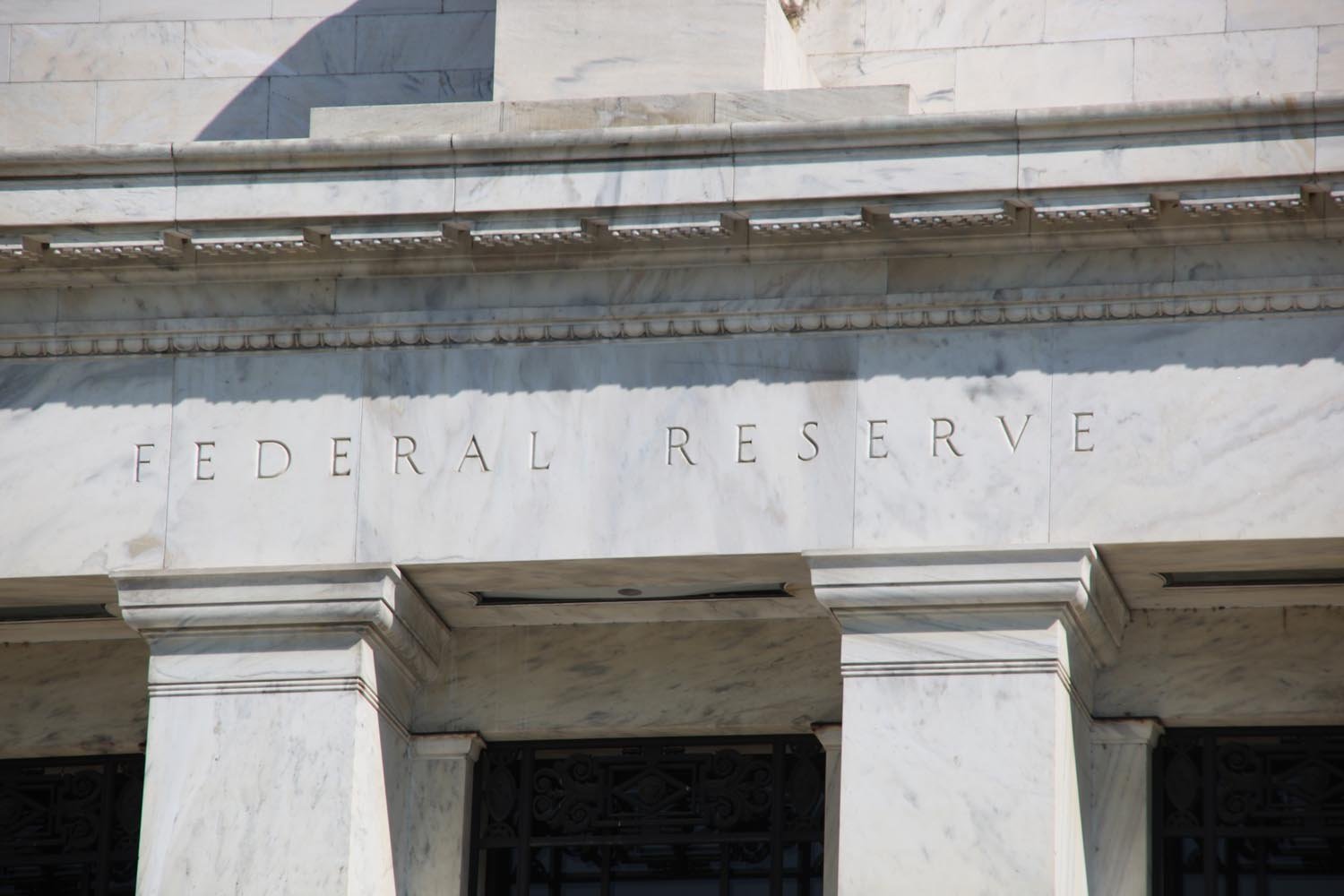
The words Federal Reserve carved in stone above the main entrance of the Marriner S. Eccles Federal Reserve Board Building in Washington, D.C.
Photo: Tim Evanson, CC BY-SA 2.0, via Wikimedia Commons

01What happened

The US 10-year Treasury yield traded near 5.3% on Tuesday 6 October, just below the 5.34% reached on 1 October, its highest level since 2002. The Federal Reserve raised its policy range to 3.75% to 4.00% on 16 September, its first increase in three years, and publishes the minutes of that meeting today at 11:00 PT. Reuters reports that investors now expect the Fed to hold at its 27 to 28 October meeting, even though 16 of 18 officials had pencilled in one more hike this year.

Canada has not followed. The Government of Canada 5-year bond yieldBond yield The annual return an investor gets for lending to a government or company through a bond. Yields rise when bond prices fall. Fixed mortgage rates are priced from the 5-year Government of Canada yield. closed at 3.59% on 6 October, down 4 basis points on the day, and the 10-year at 3.92%. The Bank of Canada’s overnight rate is 2.25%, and the next decision is on 28 October.

02Our view

The Bank of Canada holds at 2.25% on 28 October, and the Government of Canada 5-year yield stays in a 3.4% to 3.8% range into year end. For borrowers, that means fixed mortgage rates roughly where they are now, not lower.

Why we think so. The US 10-year Treasury yield traded near 5.3% on 6 October, just below the 5.34% reached on 1 October, its highest since 2002. The Federal Reserve raised its range to 3.75% to 4.00% on 16 September, its first increase in three years. Canada has not followed: the 5-year bond yieldBond yield The annual return an investor gets for lending to a government or company through a bond. Yields rise when bond prices fall. Fixed mortgage rates are priced from the 5-year Government of Canada yield. closed at 3.59% on 6 October, down 4 basis points on the day, and the 10-year at 3.92%. Canadian fixed mortgage rates are priced off the 5-year Government of Canada yield, not US Treasuries, so this divergence has helped anyone renewing this autumn. We do not think the gap can keep widening. A spread this wide pulls capital toward US dollars, which weakens the loonie and makes imports dearer, adding to inflation the Bank is already watching. With the Ivey prices index at 82.8, oil above US$100 and the dollar near 70 US cents, the case for a cut is not there, and a soft economy removes the case for a hike.

What the market is pricing. Reuters reports that investors now expect the Fed to hold at its 27 to 28 October meeting, even though 16 of 18 officials had pencilled in one more hike this year. That gap between what officials projected and what markets expect is a source of risk: if the minutes published today read as more hawkish than investors assume, US yields could rise again, and Canadian yields would be pulled part of the way with them. Our range of 3.4% to 3.8% allows for that pull without assuming Canada fully follows.

What it means. For a mortgage renewal in the next 120 days, a written rate hold from the lender costs nothing, protects against a move higher and keeps the option to take a lower rate if yields fall. For those choosing between variable and fixed, a variable rate follows the Bank’s policy rate through prime, and with the Bank on hold there is no near-term saving to capture. For savers, higher long-term yields lift the return on guaranteed products such as a 5-year GIC, which changes the trade-off between paying down a mortgage and saving, a question worth revisiting at each renewal.

What would change our mind. Friday’s September jobs report showing unemployment jumping above 6.5% with outright job losses. That would revive rate-cut pricing and pull the 5-year yield, and fixed mortgage rates, lower than we expect. A September CPI on 19 October below 3% would point the same way.

What to watch. The FOMC minutes today at 11:00 PT and the US 10-year Treasury auction at 10:00 PT; the Canadian 2-year bond auction this morning; the September jobs report on Friday 9 October; September CPI on 19 October; and the Bank of Canada and Federal Reserve decisions at the end of the month.

03Why it matters to you

If you are renewing a mortgage this fall, the gap between Canadian and U.S. yields is working in your favour for now. Comparing terms soon can help you lock in that advantage.

Book a mortgage renewal review

Sources Reuters, Fed minutes could detail rate-hike decision, policy path; Federal Reserve, Federal Reserve issues FOMC statement, September 16, 2026; Bloomberg, Treasury 10-Year Yield Hits Highest Since 2002 on Rate Outlook; Bank of Canada, Selected bond yields; KnightsbridgeFX, Canadian Dollar Update, October 6, 2026

Story 3 of 5

Ivey PMI cools to 58.2 but prices paid keep climbing

A row of loading docks with sectional doors at a modern distribution warehouse
Photo: Mark LS, CC BY-SA 4.0, via Wikimedia Commons

01What happened

The Ivey Purchasing Managers Index fell to 58.2 in September from 64.3 in August, well below the 65.2 that economists expected, according to figures released on Tuesday 6 October. A reading above 50 still means activity expanded, just more slowly.

The detail is less comfortable. The prices index rose to 82.8 from 80.4, meaning more than four in five purchasing managers reported paying higher prices. Supplier deliveries slowed, with that index at 39.2, and the employment index edged up to 56.5 from 55.0.

02Our view

Canada’s September CPI prints at or above 3% on 19 October, keeping the Bank of Canada from cutting even as growth slows. The Ivey survey says activity is cooling while the cost pressure behind inflation is still building.

Why we think so. The Ivey Purchasing Managers Index fell to 58.2 in September from 64.3 in August. A reading above 50 still means activity expanded, just more slowly. The price detail is what matters for inflation. The prices index rose to 82.8 from 80.4, meaning more than four in five purchasing managers reported paying more. Supplier deliveries slowed, with that index at 39.2, and when deliveries slow, buyers usually pay up to secure goods. Purchasing managers see cost pressure months before it reaches a grocery receipt or a contractor’s quote, because they are buying the inputs that finished goods are made from. Combine a prices index in the 80s with oil above US$100 and a dollar near 70 US cents, which raises the Canadian price of anything bought in US dollars, and the evidence points to goods inflation that is broadening rather than fading. The employment index edged up to 56.5 from 55.0, so firms are not yet cutting staff.

What the market is pricing. Economists expected the headline index at 65.2, so activity disappointed by a wide margin. A miss of that size would normally strengthen the case for lower rates. We think the prices component outweighs it. A central bank can tolerate slower growth more easily than rising input costs, because the second feeds into future inflation. That is why a weaker survey does not, in our view, bring a cut closer.

What it means. For small business owners, input costs are still rising and suppliers are slower, so pricing and inventory decisions for the holiday season need to allow for both. Comparing current supplier quotes with invoices paid in the first half of the year shows which cost lines moved most and whether any can be locked in. For households, persistent inflation changes the real return on cash: money set aside for more than a year or two should earn interest that keeps pace with prices, which is the case for comparing high-interest savings with GIC terms. For borrowers, a CPI at or above 3% means no relief from the Bank this autumn.

What would change our mind. The Ivey prices index dropping below 75 in October, or a CPI ex-gasolineCPI ex-gasoline The Consumer Price Index with gasoline removed. When it sits well below the headline rate, the inflation is coming from fuel rather than from the broad economy. reading falling toward 2.5%. Either would tell us the price pressure is narrower than the headline suggests, and the case for a cut would return.

What to watch. The New York Fed’s survey of consumer inflation expectations today, where about 3.7% is expected for the one-year measure against 3.6% before; Canada’s September CPI on 19 October; the October Ivey survey; and the Bank of Canada decision on 28 October.

03Why it matters to you

If your business buys goods or materials, rising prices paid point to higher costs ahead. Reviewing your pricing and supplier terms now protects your margin.

Book a business review

Sources MT Newswires, Canada’s Ivey PMI Slips in September as Prices Index Continues to Rise; FX.co, Canada Ivey PMI Falls in September

Story 4 of 5

Oil holds above US$100 as the Gulf stays tense

Fuel pumps under the canopy of a roadside filling station
Photo: Bob Harvey, CC BY-SA 2.0, via Wikimedia Commons

01What happened

Brent crude traded around US$101 a barrel at the start of the week and West Texas Intermediate near US$89 to US$90, with the November WTI contract settling at US$89.44 on Tuesday 6 October. Prices are off September’s peak but Brent has held above US$100 for most of the past month.

The supply picture is contradictory. Kpler data cited by Reuters put crude flows through the Strait of Hormuz at 19.5 to 22.5 million barrels a day in late September, above pre-war levels, and Saudi Arabia’s East-West pipeline is moving a full 5.8 million barrels a day to the Red Sea. At the same time Iran has stepped up attacks on tankers, with the UK maritime agency logging nine incidents so far in October, and Houthi missiles aimed at Saudi targets continue to be intercepted.

02Our view

Oil carries a conflict premium that fades only when tanker attacks stop, not when flows recover. Our base case is Brent between US$90 and US$105 into the winter.

Why we think so. Brent traded around US$101 at the start of the week and West Texas Intermediate near US$89 to US$90, with the November WTI contract settling at US$89.44 on 6 October. Brent has held above US$100 for most of the past month. The supply picture is contradictory, and that is the key to our call. Kpler data cited by Reuters put crude flows through the Strait of Hormuz at 19.5 to 22.5 million barrels a day in late September, above pre-war levels, and Saudi Arabia’s East-West pipeline is moving a full 5.8 million barrels a day to the Red Sea. On volume alone, prices should be falling. They are not, because Iran has stepped up attacks on tankers, with the UK maritime agency logging nine incidents so far in October, and Houthi missiles aimed at Saudi targets continue to be intercepted. Traders are paying for the risk that a working route stops working. Insurance, shipping costs and the cost of holding extra inventory all rise with that risk.

How this has played out before. Risk premiums in oil tend to be sticky on the way down. Prices rise quickly when a threat appears and fall slowly once it passes, because buyers want proof that attacks have ended before giving up the protection they paid for. That is why recovering flows have not brought prices back, and why a political agreement, not a shipping statistic, is the more likely trigger for a fall.

What it means. Canada is both a producer and a consumer of oil, so a high price cuts two ways. It supports export revenue and Alberta royalties, and diesel was the single biggest contributor to August’s export gain. It also keeps gasoline, diesel and anything moved by truck expensive. Energy is the main reason inflation remains above 3% and bond yields are elevated, which flows through to mortgage and savings rates. Households with a long commute or an oil-heated home can estimate this winter’s fuel bill at today’s prices and decide whether a fixed-price delivery contract or a larger cash buffer is the better protection. Anyone whose income or investments lean on energy should check concentration: how much of total wealth, including a home in a resource town, rises and falls with the same commodity.

What would change our mind. A durable US-Iran agreement that halts attacks in the Strait. That could remove US$10 to US$15 a barrel quickly and take Brent below our range.

What to watch. The US EIA weekly crude inventory report today; the count of tanker incidents logged by the UK maritime agency; Houthi activity against Saudi targets; and Canada’s September CPI on 19 October, where energy prices will be the largest swing factor.

03Why it matters to you

If your income or investments depend on energy, high oil helps one side of your finances and hurts the other. Knowing your balance makes the next swing easier to plan for.

Book a portfolio review

Sources OilPrice.com, Oil Prices Fall as Reports Say Hormuz Crude Flows Top Pre-War Levels; Trading Economics, Brent crude news stream, items of 6 and 7 October 2026; The Canadian Press, S&P/TSX composite rises amid tech sector strength, U.S. markets also move higher

Story 5 of 5

A 70-cent loonie and stalled trade talks: what a weak dollar costs

Canadian loonies and other coins in a coin tray
Photo: Pexels

01What happened

The Canadian dollar closed at 70.29 US cents on Tuesday 6 October, up slightly from 70.16 the day before but near the low end of its range this year, with one US dollar buying about $1.42 to $1.43 Canadian. Currency desks pointed to two drags: the gap between US and Canadian bond yields, and the lack of progress on trade.

On Monday 5 October President Trump told reporters he was in no hurry to resume talks with Canada and set no timetable, saying Ottawa had treated the US “very badly”. Canada’s dollar-for-dollar counter-tariffs took effect in September, and the formal CUSMA review falls this year.

02Our view

The loonie stays in a 69 to 72 US cent band until either the Bank of Canada signals a change in direction or trade talks restart with a date attached. Neither is in view this month.

Why we think so. The Canadian dollar closed at 70.29 US cents on 6 October, near the low end of its range this year, with one US dollar buying about $1.42 to $1.43 Canadian. Two forces hold it there. The first is the gap between US and Canadian interest rates. The US 10-year Treasury trades near 5.3% while the Canadian 10-year is 3.92%, and the Fed’s range of 3.75% to 4.00% sits well above the Bank of Canada’s 2.25%. Money tends to flow toward the higher-yielding currency, so as long as that gap stays wide the loonie struggles to rally. The second is trade. On 5 October President Trump said he was in no hurry to resume talks with Canada and set no timetable. Canada’s dollar-for-dollar counter-tariffs took effect in September and the formal CUSMA review falls this year. Without a date for talks, investors have no event to buy ahead of.

The bigger picture. A weak currency normally helps an exporter by making its goods cheaper abroad, but tariffs blunt that benefit, so Canada gets less of the usual cushion while still paying more for imports. That is why the dollar now matters for inflation as well as for travel budgets: imported food and goods cost more, and that shows up in the price data that keeps interest rates high.

What it means. A weak loonie is a quiet tax on Canadian consumers. A US$1,000 flight, a software subscription or a winter stay in Arizona costs about 42% more in Canadian dollars than its face value. Anyone with a known US-dollar expense in the next six months, such as a tuition payment, a property tax bill or a planned trip, can price it in Canadian dollars at today’s rate and decide whether to buy part of the US dollars now rather than all at once later. For investors, a portfolio heavy in US holdings has gained from the loonie’s slide, and that currency gain is worth measuring separately from the market return, because it can reverse even if markets do not.

What would change our mind. Today’s Fed minutes and Friday’s jobs data pushing US yields down faster than Canadian yields, narrowing the spread that is doing most of the damage. A restart of trade talks with a fixed date would also lift the dollar above our band.

What to watch. The FOMC minutes today at 11:00 PT; the US 10-year Treasury auction this morning; the September jobs report on Friday 9 October; the Bank of Canada decision on 28 October; and any timetable for Canada-US talks ahead of the CUSMA review.

03Why it matters to you

If you spend in U.S. dollars, a 70-cent loonie is a quiet tax on every purchase. Planning travel, subscriptions and imports around it keeps the cost under control.

Book a budget and savings check

Sources The Canadian Press, S&P/TSX composite rises amid tech sector strength, U.S. markets also move higher; KnightsbridgeFX, Canadian Dollar Update, October 6, 2026; Ratopati (agency report), Trump: No Rush to Resume Trade Talks with Canada

Today’s news, considered against your own plans.

If one of these stories bears on your mortgage, savings, income or business, we would be glad to go through it with you and explain clearly what, if anything, it means for you.

Book a conversation

Free · optional

The Morning Brief in your inbox at 06:00 Pacific.

The day’s stories, what each means for you, and our view. Unsubscribe in one click.

Email subscriptions open shortly.