Markets · 3 Nov 2026Policy rateBank of Canada2.50%YieldsCA 2Y3.26%CA 5Y3.49%+3 bpCA 10Y3.77%+3 bpCanadian dollarCAD/USD0.7146−0.11%CAD/EUR0.6385−0.02%CAD/GBP0.5325−0.15%CAD/JPY113.25+0.34%CryptoBTCUS$80,269+3.46%ETHUS$2,423+5.57%

Morning Brief

Friday 25 September 2026

The Government of Canada 5-year bond yield closed at 3.69% on Thursday, its highest of the year, with the 10-year at 3.97%, as the U.S. 10-year Treasury moved past 5.2% and Fed Governor Barr said further tightening is likely.

The desk’s view todayThe Canada 5-year yield stays above 3.5% through the 28 October Bank of Canada decision, fixed mortgage rates take at least one more step up before then, and the Bank holds at 2.25%.

Story 1 of 5

The Canada 5-year yield closed at 3.69%, its highest of the year, and the U.S. 10-year passed 5.2% this morning
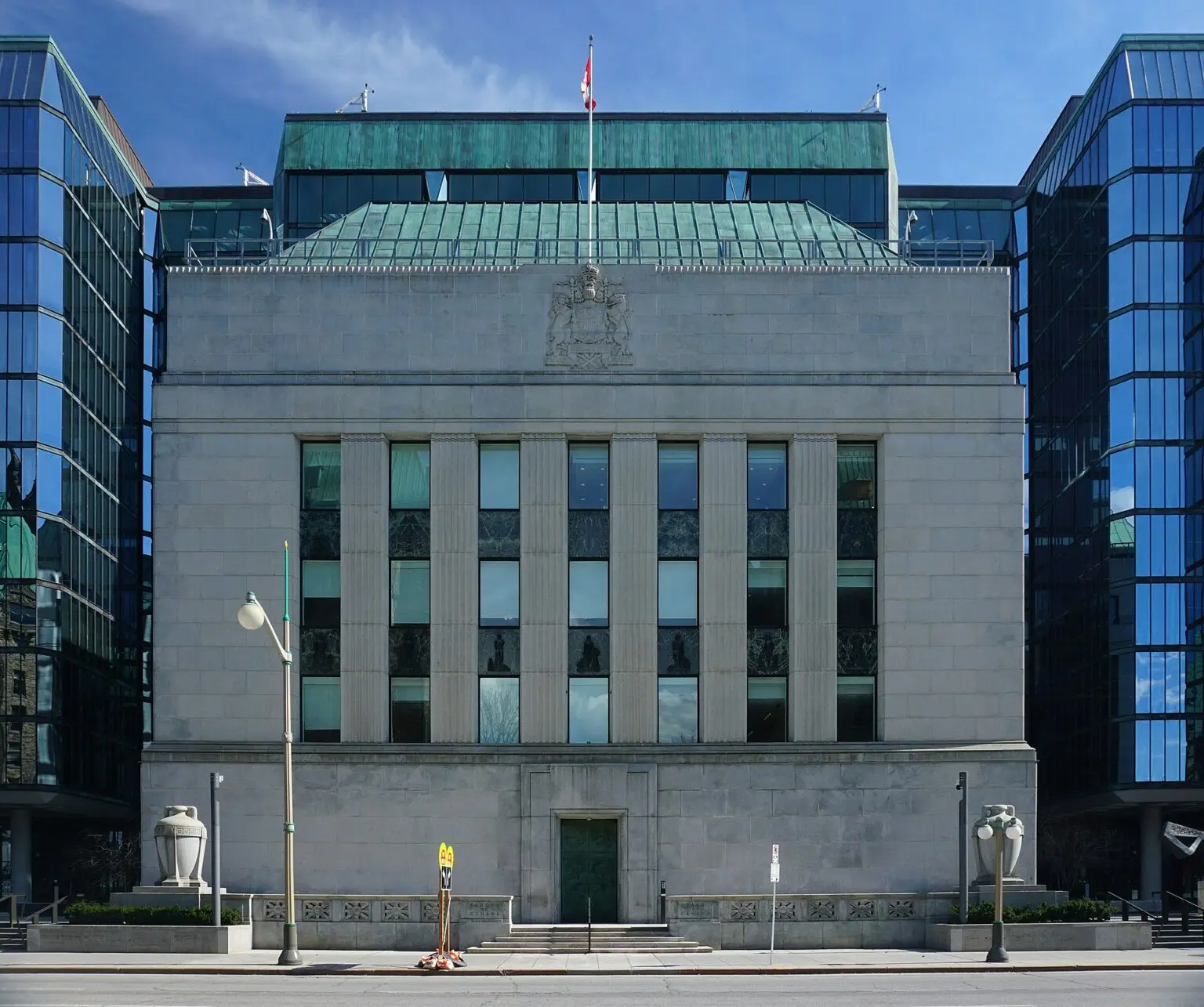
The Bank of Canada Building on Wellington Street in Ottawa
Photo: 方畢可, CC0, via Wikimedia Commons

01What happened

The Bank of Canada’s own table now shows Wednesday’s jump was not a one-day event. The Government of Canada 5-year bond yieldBond yield The annual return an investor gets for lending to a government or company through a bond. Yields rise when bond prices fall. Fixed mortgage rates are priced from the 5-year Government of Canada yield., the benchmark behind fixed mortgage pricing, closed at 3.69% on Thursday 24 September, unchanged from Wednesday and 15 basis points above Tuesday’s 3.54%. The 2-year closed at 3.39%, the 10-year at 3.97% and the long bond at 4.27%, the highest of the year for every maturity. The feed’s last good copy is dated 23 September, so this Brief uses the Bank’s Thursday close as the data of record.

The pull is still from the south. The Federal Reserve’s H.15 table put the U.S. 10-year Treasury at 5.11% and the 30-year at 5.40% at Wednesday’s close, and by early Friday market quotes had the 10-year near 5.22% and the 30-year near 5.50%, levels last seen in 2007 and before. Governor Michael Barr said on Wednesday that further policy adjustments are likely to be needed to bring inflation back to target on time, and futures put the odds of another quarter-point increase at the 27 to 28 October meeting at about 71%. The Fed’s target range is 3.75% to 4.00%. U.S. jobless claims fell to 197,000 last week, below the 204,000 expected, so the labour market is giving the Fed no reason to pause.

The Canadian dollar closed Thursday at 70.74 U.S. cents, down from 70.94 on Wednesday, and was near 70.7 cents this morning. The S&P/TSX Composite slipped 44.97 points to 35,706.46; energy rose with crude and consumer stocks fell. In New York the S&P 500 closed almost flat at 7,704.13 and the Dow lost 161.61 points to 51,349.98, after an afternoon recovery on reports of a possible Hormuz deal.

02Our view

The Government of Canada 5-year yield stays above 3.5% through the 28 October decision, and fixed mortgage rates take at least one more step up before then, while the Bank of Canada holds at 2.25%.

Why we think so. The 5-year bond yieldBond yield The annual return an investor gets for lending to a government or company through a bond. Yields rise when bond prices fall. Fixed mortgage rates are priced from the 5-year Government of Canada yield., the benchmark behind fixed mortgage pricing, closed at 3.69% on Thursday 24 September, 15 basis points above Tuesday’s 3.54% and up from 3.35% in late August. Every maturity, from the 2-year at 3.39% to the long bond at 4.27%, closed at its high for the year. The pull is from the south. The US 10-year Treasury closed Wednesday at 5.11% and was near 5.22% by early Friday, with the 30-year near 5.50%. Fed Governor Michael Barr said further adjustments are likely to be needed, and US jobless claims of 197,000 give the Fed no reason to pause. The selloff rests on strong growth, a hawkish Fed and an unresolved oil shock. Canadian yields have followed US yields almost point for point this month, and there is no domestic reason for that link to break.

What the market is pricing. Futures put the odds of another quarter-point Fed increase at the 27 to 28 October meeting at about 71%. In Canada, the market expects the Bank to hold, and we agree. The Bank cannot cut into 3% inflation, 3.2% wage growth and a 70-cent dollar, and has no reason to hike while tariffs are cutting growth. So the policy rate stays put while the funding cost of fixed mortgages rises around it. A five-year fixed rate is the 5-year yield plus a spread, so this move is, in the ordinary course, worth another 20 to 30 basis points on posted rates. In mid-September, a similar move led major banks to lift fixed rates by 10 to 20 basis points within days.

What it means. Anyone with a renewal or a purchase closing in the next 120 days can ask for a written rate hold now; it costs nothing and caps the risk if lenders reprice. A variable rate follows the Bank’s policy rate through prime and only wins if the Bank cuts, and no cut is in view this autumn. Savers rolling a maturing GIC will find better one to five-year terms than a month ago, because the whole curve has moved up. At 70.74 US cents, the dollar makes US-dollar expenses dearer, so a known one can be bought in stages. The useful test is whether the budget works if the renewal rate is half a point higher than today’s.

What would change our mind. A signed Hormuz agreement that takes Brent below US$90 within two weeks, or the US 10-year back under 4.9%, either of which would mean the bond market judged the inflation scare temporary. A September CPI in mid-October with CPI ex-gasolineCPI ex-gasoline The Consumer Price Index with gasoline removed. When it sits well below the headline rate, the inflation is coming from fuel rather than from the broad economy. clearly falling would reopen the case for a cut. Any of those and we would say so.

What to watch. The University of Michigan sentiment survey today, with early reports of one-year inflation expectations at 4.6%; Canadian GDP by industry for July on 30 September; the Labour Force Survey for September on 9 October; September CPI in mid-October; the Federal Reserve meeting on 27 to 28 October; and the Bank of Canada decision on 28 October.

03Why it matters to you

If you are renewing or buying, fixed rates follow the five-year yield, which is now at its high for the year. Timing and term choice now carry real weight.

Book a mortgage renewal review

Sources Bank of Canada, Selected bond yields, 24 September 2026 close; Ascenthya market feed, Bank of Canada Valet and CoinGecko data, last good copy in the database, 24 September 2026; U.S. Federal Reserve, H.15 Selected Interest Rates, 24 September 2026 release (data to 23 September); IC Markets blog, Friday 25th Sept 2026: U.S. futures edge lower as Treasury yields hit multi-year highs; Reuters (via Yahoo Finance), Fed’s Michael Barr backs more rate hikes as PMI hits 5-year high; RTTNews (via Yahoo Finance), U.S. initial jobless claims edge lower to 197,000, below expectations; The Canadian Press (via CP24), S&P/TSX composite down despite energy sector gains as price of oil climbs; Yahoo Finance, Stock market today: Dow, S&P 500, Nasdaq trim losses as hopes of Hormuz deal offset rising bond yields; Canadian Mortgage Trends, Bond yield surge pushes fixed mortgage rates higher across Canada; Investing.com, Canadian dollar holds near recent lows as U.S. dollar rally keeps pressure


Story 2 of 5

One in five Canadian businesses plans to sell or hand over the firm within ten years, and a third of restaurants in the next two

A closed sign hanging on the glass door of a small shop
Photo: Pexels

01What happened

Statistics Canada published a study this week drawn from the Canadian Survey on Business Conditions for the third quarter of 2026. It found that 20.3% of businesses intend to sell or transfer ownership within the next ten years, 42.6% do not, and 37.1% do not know. Accommodation and food services lead at 34.4%, followed by manufacturing and other services at 27.7% each, wholesale trade at 27.3% and agriculture, forestry and fishing at 25.1%. The timing is short: among restaurants and hotels that intend to sell, 49.1% expect to do so within two years. In agriculture the intentions are spread over two years (24.7%), three to five years (26.7%) and six to ten years (34.4%); the 2021 Census found three in five farm operators were 55 or older.

What owners expect from a sale is telling. Only 50.1% think they will attract a qualified buyer, 34.6% expect a fair market price, 38.4% plan to use a broker or professional, and 24.4% think they have enough time and resources to do it properly. Asked what happens if the sale fails, 33.7% say they will likely keep operating, 46.5% say they are likely or somewhat likely to sell at a reduced value, and 46.8% say they are likely or somewhat likely to scale down or close. Finding a Canadian buyer matters to 59.1%.

The same week, the CFIB’s Business Barometer for September put the 12-month small business confidence index at 47.9, down nearly ten points and below the 50 line that separates optimism from pessimism, with fuel costs cited as a constraint by 62% of firms, taxes and regulation by 61% and wages by 60%. Firms’ average price plans for the next year rose to 3.3% from 2.6% in August.

02Our view

The next two years will be a buyer’s market for small Canadian businesses. The supply of sellers is demographic and cannot wait, while demand is being rationed by financing costs and weak confidence.

Why we think so. Statistics Canada found that 20.3% of businesses intend to sell or transfer ownership within ten years, with accommodation and food services leading at 34.4%, followed by manufacturing and other services at 27.7% each, wholesale at 27.3% and agriculture, forestry and fishing at 25.1%. Among restaurants and hotels that intend to sell, 49.1% expect to do so within two years, and the 2021 Census found three in five farm operators were 55 or older. That is a long queue of sellers on a short timetable. On the buying side, a purchaser usually finances an acquisition with debt priced off government yields plus a lending spread, and the 5-year yield is at its highest of the year. Confidence is weak too: the CFIB’s 12-month small business index fell to 47.9, below the 50 line that separates optimism from pessimism, with fuel, taxes and wages each cited as constraints by about six in ten firms. More sellers, fewer financed buyers and lower confidence point to lower prices.

The bigger picture. Owners already sense this. Only 50.1% think they will attract a qualified buyer, 34.6% expect a fair market price and 24.4% think they have enough time and resources to sell properly. If a sale fails, 46.5% say they are likely or somewhat likely to sell at a reduced value and 46.8% likely or somewhat likely to scale down or close. Finding a Canadian buyer matters to 59.1%, which narrows the pool further. When a generation of owners heads for the exit at once, the businesses that sell well are the ones that look easy to own.

What it means. For most owner-managed businesses the company is the family’s largest asset, and the retirement, estate and tax plans all rest on what it fetches and when. Preparation is the lever an owner controls: clean financials, a management layer that runs without the owner, and a tax structure in place. The lifetime capital gains exemption for qualified small business shares and farm property, and the choice between a share and an asset sale, can move the after-tax result by more than a year of profit, and both take time to set up. An owner within five years of exit can start with an independent valuation and a list of what a buyer would find missing. An owner further out can decide whether the successor is family, staff or an outside buyer, since each route has its own timetable, and the family route needs years. Anyone counting on a sale for retirement should run the plan with the reduced-value case as well as the hoped-for one.

What would change our mind. A clear fall in the 5-year yield and in the cost of acquisition finance, or the CFIB confidence index back above 55 by the spring. Either would bring buyers back faster than we assume and shorten the queue.

What to watch. The monthly CFIB Business Barometer, including firms’ price plans, which rose to 3.3% from 2.6%; the 5-year Government of Canada yield; and the Bank of Canada decision on 28 October.

03Why it matters to you

If your business is your largest asset, the queue of sellers means planning a sale early protects its value. Your retirement, estate and tax plans all depend on it.

Book a succession planning review

Sources Statistics Canada, One in five Canadian businesses intends to sell or transfer: how many will change hands? (StatCan Plus, from the Canadian Survey on Business Conditions, third quarter 2026); Statistics Canada, The Weekly Review, September 21 to 25, 2026; Canadian Federation of Independent Business, Fuel costs, tariff pressures drag small business confidence down in September

Story 3 of 5

Washington and Tehran are talking about a phased reopening of Hormuz, and oil is priced for talks, not a deal

An oil pump extracting crude oil in the United States
Photo: Pexels

01What happened

Reuters reported on Thursday afternoon, citing Iranian, regional and Western sources, that U.S. and Iranian negotiators are working on a phased agreement under which Iran would allow shipping to transit the Strait of Hormuz in exchange for Washington lifting its economic blockade of Iranian ports. The U.S. Navy is still enforcing that blockade; by 23 September it had turned back 115 commercial vessels. On Friday the Associated Press reported that Foreign Minister Abbas Araghchi, in private meetings at the UN General Assembly, proposed reopening the strait and resuming nuclear talks within seven days if the United States lifts the blockade, waives sanctions on Iranian oil exports and agrees to a ceasefire that includes Lebanon. Secretary of State Marco Rubio said the U.S. would exchange ideas if there was an opportunity; the president said there was no urgency. The two sides remain apart on whether Iran can control navigation or collect tolls in the strait, which Washington rejects. A similar June arrangement collapsed after a 60-day interim period.

Crude moved on the headline. The November contract rose US$2.45 to close at US$94.61 a barrel in New York on Thursday, and early Friday quotes had Brent near US$105.60 and WTI near US$93, both a little lower on the day. The U.S. 30-year yield’s rise to 5.5% this week has been attributed in part to the energy shock feeding through to inflation expectations.

02Our view

The market is right to price talks rather than a deal. Our base case for the next month is crude in the US$90 to US$105 range rather than a return to the US$70s, and diesel, and therefore food and freight, stays expensive into the new year whatever crude does.

Why we think so. Reuters reported that US and Iranian negotiators are working on a phased agreement under which Iran would allow shipping through the Strait of Hormuz in exchange for Washington lifting its blockade of Iranian ports. Foreign Minister Abbas Araghchi proposed reopening the strait and resuming nuclear talks within seven days if the US lifts the blockade, waives sanctions on Iranian oil exports and agrees to a ceasefire that includes Lebanon. Those conditions are wide, and the two sides remain apart on whether Iran can control navigation or collect tolls, which Washington rejects. A similar June arrangement collapsed after a 60-day interim period. The blockade, which by 23 September had turned back 115 commercial vessels, is the main leverage Washington has, so it will not be given up for a statement. Secretary of State Marco Rubio said the US would exchange ideas; the president said there was no urgency.

What the market is pricing. The November contract rose US$2.45 to close at US$94.61 in New York on Thursday, and early Friday quotes had Brent near US$105.60 and WTI near US$93. Those levels include a war premium; they do not price a settlement. We agree. Diesel is the more important price for households, and it is at a record because refining capacity in the region is damaged. A reopened strait would help crude before it helped diesel, so relief at the till would lag relief at the wellhead by months.

What it means. For a Canadian household the strait shows up at the pump, in the grocery bill and in the mortgage rate, since the energy shock has fed into inflation expectations and long yields. Higher oil should normally support the Canadian dollar, but the rate gap with the US is doing more work, so Canadians are getting the cost of the shock without the usual currency cushion. A household can budget fuel and food for the winter at today’s prices and treat any drop as a bonus. A business that moves or buys anything heavy can check that surcharges in its supplier contracts and customer pricing work in both directions, because a deal would cut costs as suddenly as the war raised them. For Alberta or Saskatchewan businesses, or a portfolio heavy in energy producers, a deal cuts the other way, and a large energy weighting is worth checking as a deliberate choice rather than an accident of returns.

What would change our mind. A signed text with a verified first phase of ship transits, which would take Brent below US$90 within days; or a breakdown followed by attacks on shipping, which would put it above US$115 as fast. The falsifier is the first ship through under an agreement, not another statement.

What to watch. Follow-up to the seven-day proposal made at the UN General Assembly; the US Navy’s enforcement of the blockade; and any change in the US position on tolls and navigation.

03Why it matters to you

If fuel and groceries are pushing up your monthly costs, a reopened strait would help crude before diesel. Planning for higher costs a while longer is the safer budget.

Book a budget and savings check

Sources Reuters (via Yahoo News), US and Iran discuss phased deal to reopen Hormuz and end US blockade, sources say; Iran International, US-Iran talks focused on phased deal to reopen Hormuz; The Associated Press (via BNN Bloomberg), Iran proposes a deal to reopen the Strait of Hormuz in 7 days if the U.S. meets its conditions; The Canadian Press (via CP24), S&P/TSX composite down despite energy sector gains as price of oil climbs; IC Markets blog, Friday 25th Sept 2026: U.S. futures edge lower as Treasury yields hit multi-year highs; Yahoo Finance, Stock market today: Dow, S&P 500, Nasdaq trim losses as hopes of Hormuz deal offset rising bond yields; BNN Bloomberg, Canadian dollar faces three strikes against the U.S. dollar: Brooke Thackray

Story 4 of 5

Ottawa’s deficit shrank to $5.1 billion on stronger tax receipts, while Washington says there is no urgency for a trade deal

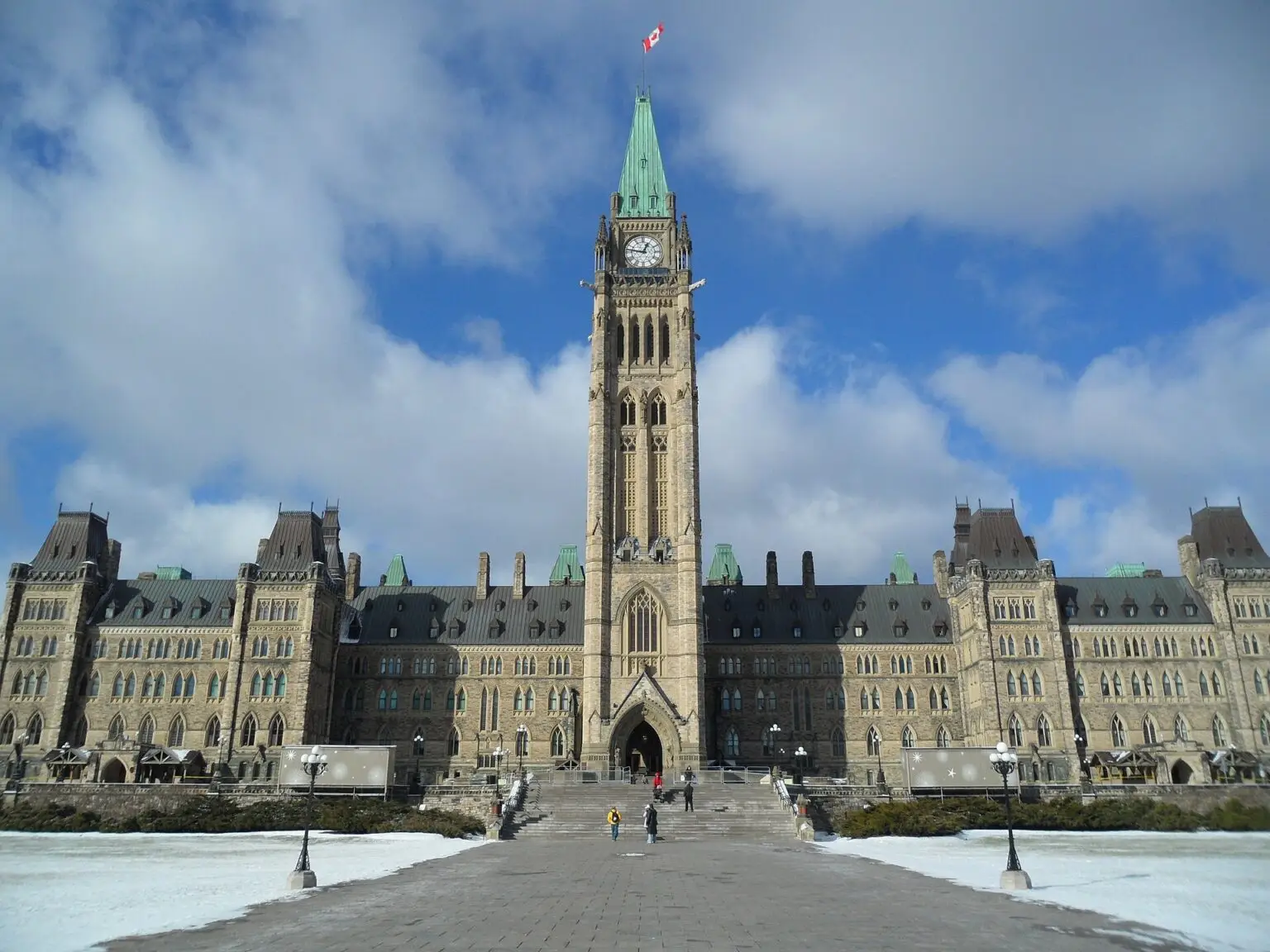
The Peace Tower of the Centre Block on Parliament Hill, Ottawa
Photo: EgorovaSvetlana, CC BY-SA 4.0, via Wikimedia Commons

01What happened

The Department of Finance’s Fiscal Monitor, published Friday morning, shows a budgetary deficit of $5.1 billion for April to July 2026, the first four months of the fiscal year, against $7.8 billion in the same period a year earlier. Revenues rose to $175.5 billion from $163.4 billion, an increase of about 7.4%, led by personal income tax, GST and other revenues. Program expenses excluding net actuarial losses rose to $159.0 billion from $151.3 billion, about 5.1%, on direct program spending and major transfers to persons. Public debt charges rose to $20.0 billion from $18.6 billion, about 7.5%, and net actuarial losses were $1.7 billion against $1.3 billion. The Parliamentary Budget Officer said on Thursday that the definitions in the government’s new budget framework are inconsistent.

On the same morning, U.S. Trade Representative Jamieson Greer told U.S. media there is no urgency to reach a trade deal with Canada, that the president is comfortable with the present arrangement, and that the United States is still getting what it needs in oil, gas and potash. Talks collapsed in August when the prime minister withdrew Canadian negotiators over last-minute terms; 50% tariffs on a range of Canadian goods imposed over the summer remain in place, along with the steel and aluminum levies that apply to most countries.

02Our view

The federal deficit for the full year comes in wider than the four-month pace suggests, but the bond market does not treat Canada as a fiscal problem this autumn. On trade, the tariff structure stays in place through the CUSMA review, and businesses should plan on it rather than around it.

Why we think so. The Fiscal Monitor shows a deficit of $5.1 billion for April to July 2026, against $7.8 billion a year earlier. Revenues rose about 7.4% to $175.5 billion, led by personal income tax and GST, while program expenses excluding net actuarial losses rose about 5.1% to $159.0 billion. Revenue is growing faster than spending because wages, employment and prices are all higher: the inflation dividend a government collects before it feels the cost. Two things make the four-month figure flattering. Spending is back-loaded, with most of it in the second half of the fiscal year. And public debt charges rose about 7.5% to $20.0 billion, faster than program spending, because old bonds are rolling into new ones at higher yields. With the 10-year near 4%, that line keeps climbing. The Parliamentary Budget Officer’s comment that the new budget framework’s definitions are inconsistent adds uncertainty about how the full-year figure will be presented.

The bigger picture. Canada’s yield rise this month is imported from the US, not home-made, and a narrowing deficit gives investors no reason to demand a Canada-specific premium. On trade, US Trade Representative Jamieson Greer said there is no urgency to reach a deal, that the president is comfortable with the present arrangement and that the US is still getting the oil, gas and potash it needs. Talks collapsed in August, and 50% tariffs on a range of Canadian goods remain, alongside steel and aluminum levies. When the side with leverage says it is comfortable, the status quo tends to last.

What it means. A business selling into the US can price the tariff as permanent in its 2027 plan and test whether the margin survives. If it does not, the choice is between a new market and a new product, and both take longer than a quarter. Waiting for a deal before investing or hiring is waiting for something Washington says it does not need. For households and investors, rising debt charges limit how much relief a fall budget can offer, so tax measures, rather than tax cuts, stay on the table. Measures announced in a budget often take effect on the announcement date, so a household with a large taxable portfolio or a business sale in prospect can make decisions that depend on today’s rules before the budget, not after. The wider question is how much income depends on rules a budget or trade decision could change this year.

What would change our mind. A fall budget with a deficit forecast well above last year’s that the market punishes with a wider Canada-US spread on the long bond; or a US move to reopen talks before the review, which would signal that the current arrangement is costing Washington more than Greer admits.

What to watch. The fall budget and its deficit forecast; any response to the Parliamentary Budget Officer’s comments; the CUSMA review; and the Canada-US spread on long-term bonds.

03Why it matters to you

If you hold government bonds or pay attention to tax changes, the direction of federal finances matters to both. A review keeps your plan in step with it.

Book a tax planning review

Sources The Canadian Press (via BNN Bloomberg), Federal government posts $5.1-billion deficit for April-to-July period; The Canadian Press (via BNN Bloomberg), ‘We’re still getting what we need’ from Canada, Trump’s trade lead tells U.S. media

Story 5 of 5

Weekly earnings are up 3.2% and there are still 501,000 open jobs, which is the quiet reason the Bank of Canada cannot cut

An industrial assembly line
Photo: Samuel Zeller samuelzeller, CC0, via Wikimedia Commons

01What happened

Statistics Canada reported on Thursday that payroll employment rose by 26,100, or 0.1%, in July and by 171,900, or 0.9%, over the year. Average weekly earnings were $1,347, up 3.2% from July 2025. Job vacancies stood at 501,000, the seventh consecutive month with little change. The report follows Wednesday’s population estimate, which put Canada at 41.8 million on 1 July with growth of 0.5% over the year, the slowest since 1915 to 1916, as the number of non-permanent residents fell by 154,614 to 2.78 million.

Put the two releases together and the labour market is tightening from the supply side rather than the demand side: employers are not adding many jobs, but there are fewer new workers to fill the ones that exist, and half a million remain open. Wages at 3.2% are running a little above headline inflation of about 3% and above the Bank’s 2% target. The CFIB survey adds that 41% of small firms name a shortage of skilled labour as a constraint on growth and 60% name wage costs.

02Our view

Wage growth stays near 3% into 2027, because the population slowdown is policy, not cycle. That keeps the Bank of Canada on hold rather than cutting, even if growth is soft.

Why we think so. Statistics Canada reported average weekly earnings of $1,347 in July, up 3.2% from a year earlier, with payroll employment up 26,100 in the month and 171,900 over the year. Job vacancies stood at 501,000, the seventh consecutive month with little change. The day before, the population estimate put Canada at 41.8 million on 1 July, with growth of 0.5%, the slowest since 1915 to 1916, as the number of non-permanent residents fell by 154,614 to 2.78 million. Put together, the labour market is tightening from the supply side: employers are not adding many jobs, but fewer new workers are arriving to fill the ones that exist. When the pool of available workers shrinks, employers compete for them with pay. The CFIB survey supports this: 41% of small firms name a shortage of skilled labour as a constraint and 60% name wage costs, and firms’ average price plans for the next year rose to 3.3% from 2.6%. Wages are being passed through to prices.

The bigger picture. For a central bank, wage growth above 3% with a shrinking labour force keeps service prices rising even when goods prices settle, because services are mostly labour. That is why 3% inflation and a weak retail number can coexist without a cut. The supply squeeze is the result of immigration policy, and it will not reverse before the immigration levels plan is revisited, so it is unlikely to fade on its own the way a cyclical squeeze would.

What it means. For employees, this is the best negotiating position in three years: vacancies are steady, new arrivals are fewer and 3.2% is the average raise, not the ceiling. Someone whose pay has not moved in a year can use that figure as a reference point, and weigh a raise against the after-tax value of benefits such as an employer pension match, which is often worth more. For employers, the choice is whether to compete on wages, hours, or training existing staff. For a household planning a return to work or a second income, the door is more open than the headlines suggest, though not in every region or trade. For borrowers, the same wage pressure is a reason not to expect a rate cut this autumn. A sound plan asks what a year without a raise would do to it.

What would change our mind. Vacancies falling below 450,000 for two consecutive months, or the Labour Force Survey in early October showing unemployment rising as layoffs spread beyond the tariffed sectors. Either would mean demand for labour was finally giving way, and a cut would be back in view.

What to watch. The Labour Force Survey for September on 9 October; September CPI in mid-October; the Bank of Canada decision on 28 October; and the next immigration levels plan.

03Why it matters to you

If you are an employee, you are in the best position in three years to negotiate pay. If you are an employer, rising wage costs call for a plan.

Book an income protection check

Sources Statistics Canada, The Daily: Payroll employment, earnings and hours, and job vacancies, July 2026 (release page blocked to the engine; figures from the Weekly Review); Statistics Canada, The Weekly Review, September 21 to 25, 2026; Canadian Federation of Independent Business, Fuel costs, tariff pressures drag small business confidence down in September

Today’s news, considered against your own plans.

If one of these stories bears on your mortgage, savings, income or business, we would be glad to go through it with you and explain clearly what, if anything, it means for you.

Book a conversation

Free · optional

The Morning Brief in your inbox at 06:00 Pacific.

The day’s stories, what each means for you, and our view. Unsubscribe in one click.

Email subscriptions open shortly.