Markets · 3 Nov 2026Policy rateBank of Canada2.50%YieldsCA 2Y3.26%CA 5Y3.49%+3 bpCA 10Y3.77%+3 bpCanadian dollarCAD/USD0.7146−0.11%CAD/EUR0.6385−0.02%CAD/GBP0.5325−0.15%CAD/JPY113.25+0.34%CryptoBTCUS$80,673+4.36%ETHUS$2,434+6.41%

Morning Brief

Monday 2 November 2026

Brent crude fell about 3% to near US$110 a barrel on Monday after Iran floated a two-day plan to reopen the Strait of Hormuz.

The desk’s view todayBrent crude stays above US$100 a barrel through November despite Monday’s drop.

Story 1 of 5

Oil drops about 3% as Iran floats a two-day plan to reopen the Strait of Hormuz, and OPEC+ holds December output

A crude oil tanker under way at sea
Photo: Pexels

01What happened

Brent crude for January delivery traded between roughly US$109 and US$112 a barrel in Monday’s early session, down from a Friday settlement of US$113.43, and U.S. crude fell to about US$100 to US$103. The trigger was Iran’s foreign minister, Abbas Araghchi, describing a plan, shortened with Qatari help from seven days to two, in which U.S. measures would come on the first day and shipping through the Strait of Hormuz would be restored on the second. Iran’s conditions include lifting recent U.S. sanctions, restoring oil waivers, a smaller U.S. military presence and the release of frozen funds. Washington has not replied: the Secretary of State said he knew of no timeframe, and the President said he was in no great hurry. Iran’s Revolutionary Guards also claimed two more tankers struck mines in the strait on Sunday, which has not been independently confirmed.

On Sunday, the seven core OPEC+ producers kept their December output targets unchanged, the third monthly pause in a row. Analysts quoted by Reuters note that Gulf members cannot reach those quotas while Hormuz is constrained, so the decision changes little on the ground. The full group meets on 29 November to set 2027 baselines. Brent rose 13.6% in October, its fourth straight monthly gain.

02Our view

Monday’s drop is a relief rally on a proposal, not a change in supply. We expect Brent to stay above US$100 a barrel through November, until tankers are moving through the Strait of Hormuz without incident and with Washington’s agreement.

Why we think so. Iran’s plan is a sequence, not a settlement. As Abbas Araghchi described it, the United States would act on the first day and shipping would be restored on the second, but the U.S. measures Iran wants are a long list: lifting recent sanctions, restoring oil waivers, a smaller U.S. military presence and the release of frozen funds. Washington has not replied. The Secretary of State said he knew of no timeframe and the President said he was in no great hurry, which is not the language of a government about to sign. Meanwhile the shipping risk itself has not gone away: the Revolutionary Guards claimed two more tankers struck mines in the strait on Sunday. The claim is unconfirmed, but shipping prices the possibility. On the supply side, OPEC+ holding its December targets for a third month changes little, because Gulf members cannot reach quotas for barrels they cannot ship.

What the market is pricing. Brent for January delivery traded between roughly US$109 and US$112 on Monday against a Friday settlement of US$113.43, and U.S. crude fell to about US$100 to US$103. That is a market marking down the risk premium on hope after a 13.6% rise in October, the fourth monthly gain in a row. We agree that the direction of risk has improved, but the move prices a plan as if it were a deal. Even if the strait reopened, it would take time for flows, freight and insurance to normalize, which is why we see the floor near US$100 rather than far below it.

What it means. Oil was the main reason the Bank of Canada raised its rate last week, so the price of a barrel now reaches Canadian households twice: at the pump and in heating bills, and through the rate path that sets variable mortgage and line of credit costs. A lasting fall would ease both, but we would not budget on it yet. Households that heat with oil or propane, and businesses that run vehicles or move goods, are better served by planning winter costs at current levels and treating any relief as a bonus. If a fixed-price or budget-billing arrangement is on offer, comparing it against today’s lower quote rather than last week’s peak is the fairer test. For investors, high oil supports Alberta, federal revenue and the Canadian dollar, so energy exposure in a portfolio partly offsets the cost in a household budget; it is worth knowing whether that balance is deliberate.

What would change our mind. Verified commercial tanker traffic through Hormuz resuming with U.S. agreement, or Brent settling below US$100 for three trading days in a row, would prove us wrong.

What to watch. Any formal U.S. response to the two-day plan, and independent confirmation or denial of the mine strikes. Tuesday brings the U.S. midterm elections and Governor Macklem’s testimony to the House of Commons finance committee, where he will be asked how much of last week’s hike was about energy. The full OPEC+ group meets on 29 November to set 2027 baselines.

03Why it matters to you

If fuel and heating already stretch your budget, or your rate renews next year, oil is now the line that decides both. A plan built on today’s price is worth checking against a higher one.

Book a budget and savings check

Sources IndiaInfoline, Crude oil slides nearly 4% as US-Iran talks raise hopes of peace; FinanceFeeds, Brent crude near $110 Monday after OPEC+ holds December targets; Voice of Emirates, Oil prices decline on Monday: Brent crude and the OPEC+ decision on December production


Story 2 of 5

Trump says Canada and the U.S. have the ‘concept’ of a trade deal, with a Keystone pipeline in it

The flags of Canada and the United States side by side
Photo: Pexels

01What happened

Speaking to reporters in Dubuque, Iowa on Sunday, President Trump said he had spoken to Prime Minister Carney again on Saturday and that the two countries had the concept of a deal that would be good for American farmers and fine for Canada. He said the deal would include the Keystone XL pipeline, that Canada would build and pay for it, and that the route was largely decided. Mr. Carney said on X that the call built on constructive talks about the outlines of a deal that respects Canada’s sovereignty, and that teams would work over the coming weeks to deliver it.

No text, tariff schedule or timeline has been published. Talks collapsed in August, after which the U.S. put 50% tariffs on a range of Canadian goods and banned some imports, and Canada answered with counter-tariffs. Reuters notes that the original Keystone XL permit was revoked in 2021 and that it is not clear how the project would be revived. Canadian stock futures were up 0.2% early Monday, and traders said they want detail on tariff relief for autos, metals and industrial goods before reading much into it.

02Our view

This is the most positive language from Washington since talks broke down in August, and it is still only language. Over the coming weeks we would treat a signed text with specific tariff rates as the signal, not a phone call or a description of a “concept”.

Why we think so. Everything published so far comes from statements, not documents. President Trump said the two countries had the concept of a deal that would be good for American farmers and fine for Canada, and that it would include the Keystone XL pipeline, built and paid for by Canada, on a route that was largely decided. Prime Minister Carney’s account was narrower: constructive talks about the outlines of a deal that respects Canada’s sovereignty, with teams working over the coming weeks to deliver it. Those two descriptions are not the same, and the gap between them is where negotiations usually stall. No text, tariff schedule or timeline exists. The pipeline itself raises questions, since the original Keystone XL permit was revoked in 2021 and it is not clear how the project would be revived. The timing matters too: a positive description from one side on the eve of U.S. midterm elections has an obvious political use, which is a reason for caution rather than cynicism.

What the market is pricing. Not much yet, and we think that is right. Canadian stock futures were up only 0.2% early Monday, and traders said they want detail on tariff relief for autos, metals and industrial goods before reading much into it. That restraint matches our view: the market will reward a schedule of rates, not a headline.

What it means. Tariffs work like a tax on Canadian exporters and the people they employ. Since talks collapsed in August, the U.S. has put 50% tariffs on a range of Canadian goods and banned some imports, Canada has answered with counter-tariffs, and the economy lost 68,000 jobs in September with unemployment rising to 6.5%. A real deal would help manufacturing towns, steel and auto suppliers and the farm sector. Until one is published, business owners who pay or pass on tariffs are better placed keeping plans for both outcomes and avoiding contracts or pricing that assume relief arrives on a given date. For households, job security in exposed sectors is the starting point for sizing an emergency fund, and that calculation should rest on today’s tariffs, not hoped-for ones. Investors with Canadian equity holdings should expect headlines like this to move prices briefly without changing the underlying earnings picture.

What would change our mind. Publication of an agreed text, or a tariff schedule with specific rates for autos, metals and industrial goods, would turn this from language into a signal. Equally, a new round of tariffs or a public disagreement over the pipeline would tell us the concept has not survived contact with the detail.

What to watch. The U.S. midterm elections on Tuesday, and whether the tone holds once they are over. Statistics Canada’s September merchandise trade figures on Wednesday will show how hard the tariffs have hit exports, and Friday’s October Labour Force Survey follows September’s loss of 68,000 jobs. Thursday’s federal budget may also say how Ottawa plans to support tariff-exposed sectors.

03Why it matters to you

If your business sells into the U.S., a deal described as a concept is not a reason to change prices or hiring yet. It is a reason to know what each outcome would do to your cash flow.

Book a business review

Sources Reuters (via KFGO), Trump floats ‘concept’ of US-Canada deal that includes pipeline after talking to Carney; The Canadian Press (via Truck News), Trump says US, Canada have the ‘concept of a very good deal’; Investing.com, TSX futures rise as Trump teases ‘concept’ of Canada trade deal

Story 3 of 5

A heavy week for Canadian policy: the Governor on Tuesday, the federal budget on Thursday, jobs on Friday

Parliament Hill in Ottawa seen from the Alexandra Bridge
Photo: David Samuel, User:Hellodavey1902, CC BY-SA 3.0, via Wikimedia Commons

01What happened

Governor Tiff Macklem and Senior Deputy Governor Carolyn Rogers appear before the House of Commons finance committee on Tuesday from 08:00 to 10:00 PT, with the opening statement posted at the start. It is their first appearance since the Bank raised the overnight rate by a quarter point to 2.50% on 28 October. Statistics Canada reports September trade on Wednesday. On Thursday, Finance Minister François-Philippe Champagne tables Budget 2026, titled “Masters of Our Destiny”. On Friday comes the October Labour Force Survey.

Little is known about the budget’s contents. The government says it is on track to balance its operating budget by 2027-28; the Parliamentary Budget Officer expects that target to be missed by a year and the deficit to stay above $63 billion as late as 2030-31, with defence spending rising from about $75 billion a year to $95.7 billion. Government of Canada bond yieldsBond yield The annual return an investor gets for lending to a government or company through a bond. Yields rise when bond prices fall. Fixed mortgage rates are priced from the 5-year Government of Canada yield. ended Thursday 29 October at 3.36% for two years, 3.58% for five years and 3.84% for ten years, according to the Bank of Canada, a few basis points below the day of the hike.

02Our view

For Canadian borrowing costs, Tuesday matters more than Thursday. The Governor’s tone on a second hike will move short-term rates directly this week, while the budget’s effect on bond yields depends on a deficit figure that is still unknown.

Why we think so. Governor Tiff Macklem and Senior Deputy Governor Carolyn Rogers appear before the House of Commons finance committee on Tuesday, their first appearance since the Bank raised the overnight rate by a quarter point to 2.50% on 28 October. Short-term rates, and with them variable mortgages and lines of credit through the prime rate, respond to what the market expects the Bank to do next, and a committee hearing is a rare chance for the Governor to say whether last week’s hike was a single step or the start of more. The budget works through a slower channel. Larger borrowing tends to push up longer bond yieldsBond yield The annual return an investor gets for lending to a government or company through a bond. Yields rise when bond prices fall. Fixed mortgage rates are priced from the 5-year Government of Canada yield. because the government must sell more bonds, and the five-year yield is what fixed mortgage rates are built on. But the size of that effect depends on how far the numbers move from what investors already assume. The government says it is on track to balance its operating budget by 2027-28; the Parliamentary Budget Officer expects that target to be missed by a year and the deficit to stay above $63 billion as late as 2030-31, with defence spending rising from about $75 billion a year to $95.7 billion. Much of that is already in the public domain.

What the market is pricing. Government of Canada yields ended Thursday 29 October at 3.36% for two years, 3.58% for five years and 3.84% for ten years, a few basis points below the day of the hike. That tells us the bond market has absorbed the hike calmly and is not yet bracing for a large budget surprise. We agree, and expect any repricing this week to come at the short end first.

What it means. Borrowers with variable-rate debt should listen to Tuesday’s hearing more closely than Thursday’s speech, because that is where the next move in prime is signalled. Anyone pricing a fixed renewal should watch the five-year yield after both events. Savers and investors have a different reason to wait for Thursday: the budget may change tax rules people plan around, such as RRSP and TFSA limits, capital gains treatment, housing measures or credits. A tax-driven decision planned for this week, such as realizing a gain or making a large contribution, is safer made after the measures are published. Business owners should look for changes to credits, deductions or sector support that alter the after-tax cost of investment.

What would change our mind. If the five-year yield moves more on budget day than it does on the day of the Governor’s testimony, we will have misjudged which event mattered for borrowers. A deficit figure well above the Parliamentary Budget Officer’s path would be the most likely cause.

What to watch. Tuesday’s testimony from 08:00 to 10:00 PT, with the opening statement posted at the start. Wednesday’s September trade figures. Budget 2026, “Masters of Our Destiny”, on Thursday, and the Bank of England’s decision the same day. Friday’s October Labour Force Survey, after September’s loss of 68,000 jobs and 6.5% unemployment.

03Why it matters to you

If this week’s budget changes the RRSP, TFSA or capital gains rules you plan around, the time to adjust is before year end, not after.

Book a tax planning review

Sources The Canadian Press (via paNOW), Five things to watch for in the Canadian business world in the coming week; Bank of Canada, Parliamentary appearance by the Governor and the Senior Deputy Governor; CTV News (via BNN Bloomberg), Finance minister announces date for new federal budget to be tabled; Global News, Budget 2026 title and theme focus on Canada’s sovereignty, minister reveals; Bank of Canada, Selected bond yields

Story 4 of 5

Tech stocks had their worst day since June as Intel and Amazon revive doubts about AI spending

Stock market price charts on a bank of trading screens
Photo: Pexels

01What happened

U.S. stocks closed October with a sharp sell-off on Friday. The S&P 500 fell 1.82% to 7,580.07, the Nasdaq Composite lost 2.86% to 25,437.00 and the Dow dropped 1.09% to 51,770.31, according to Reuters. Intel fell 28.6% and Amazon slid after results released late Thursday, which renewed worry that the money being spent on chips and data centres will take longer to pay off. The chip index fell 7.2% on the day and more than 15% for the month, and the Nasdaq ended 7.8% below its 6 October record. In Toronto, the S&P/TSX Composite fell about 1.7% on Friday to 35,620 and was down about 0.5% for the week. Even so, 82% of the S&P 500 companies that have reported beat estimates, and third-quarter earnings are expected to grow about 31.6% from a year earlier.

02Our view

Friday’s sell-off looks like investors repricing how long AI spending takes to earn its return, not the end of the earnings cycle. Over the rest of earnings season we expect volatility in the largest technology names, but we see it as a reminder about concentration, not a reason to change strategy on one day’s move.

Why we think so. The numbers point in two directions at once. Prices fell hard: the S&P 500 dropped 1.82% to 7,580.07, the Nasdaq Composite 2.86% to 25,437.00 and the Dow 1.09% to 51,770.31. Intel fell 28.6% and Amazon slid after their results, the chip index lost 7.2% on the day and more than 15% for the month, and the Nasdaq ended 7.8% below its 6 October record. Yet the profit picture is strong: 82% of the S&P 500 companies that have reported beat estimates, and third-quarter earnings are expected to grow about 31.6% from a year earlier. When earnings rise while prices fall, the market is not doubting current profits. It is lowering the price it will pay today for profits that depend on very large spending on chips and data centres paying off later. That is a change in patience, which can swing back, rather than a collapse in demand.

The bigger picture. Periods of heavy investment in a new technology tend to run ahead of the returns, and markets often move in bursts as investors argue about timing. The same companies that drove index gains on the way up drive the losses on days like this, because they make up such a large share of the market. In Toronto the effect was smaller, with the S&P/TSX Composite down about 1.7% on Friday to 35,620 and about 0.5% for the week, reflecting a different mix of sectors.

What it means. Many Canadians own the largest U.S. technology companies through index funds, pensions and balanced funds without ever choosing them, so a debate about AI payback can move a diversified portfolio more than any Canadian news. The practical step is to know how much of a total portfolio, counting pensions and every fund, sits in a handful of large U.S. names, and whether that matches the risk intended. After a strong year for one sector, an asset mix can drift well away from its target without any decision being made. Rebalancing on a schedule, rather than in reaction to a single day, keeps that drift in check. For investors with a long horizon, a day like Friday is information about concentration, not a signal to sell or to buy.

What would change our mind. If the share of companies beating estimates falls well below the 82% seen so far as the remaining reports arrive, or if expected third-quarter earnings growth is revised down materially from about 31.6%, the problem would be profits rather than patience, and we would treat this as more than a repricing.

What to watch. Friday’s U.S. employment report, which will shape bond yields and the value placed on future profits. The Federal Reserve’s senior loan officer survey on Monday, for any sign that credit for heavy investment is tightening, and the ISM manufacturing report, where prices paid were previously 77.9.

03Why it matters to you

If you hold an index fund, you already own the AI spending debate, often more of it than you would choose. Knowing how concentrated you are is the first step to deciding whether that is right for you.

Book a portfolio review

Sources Reuters (via Investing.com), Wall Street closes sharply lower as AI cash burn fears spark tech selloff; Canada News Group (via PR Newswire), Five TSX stocks finished well ahead of the Composite in a week of results and a rate hike

Story 5 of 5

Binance says US$6.3 billion was stolen in the largest crypto theft on record

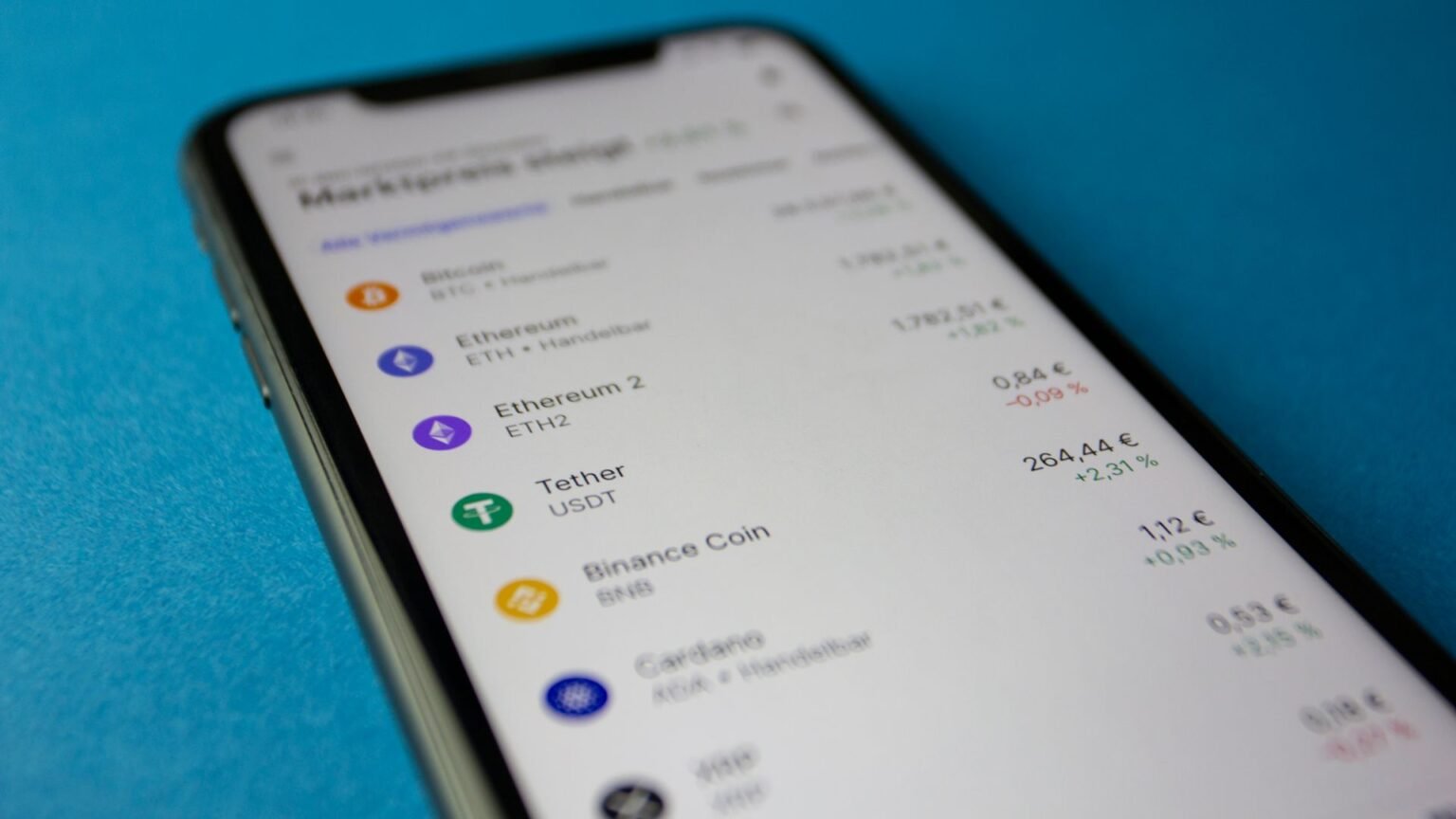
A phone screen showing cryptocurrency market prices
Photo: Pexels

01What happened

Binance, the world’s largest crypto exchange, suspended deposits and withdrawals on Thursday 29 October after an attacker moved about US$6.36 billion out of its wallets across 10 blockchains, most of it within about 20 minutes, according to the analytics firm TRM Labs. TRM and Chainalysis attribute the attack with high confidence to a North Korean unit; Binance says its own investigation has not attributed responsibility. About US$3 billion has been frozen, including more than US$2.3 billion by stablecoin issuers. The sum is more than six times the exchange’s US$1 billion emergency fund, and the company says its own funds will cover losses. Bitcoin touched a six-week low of US$76,368 and ether a two-month low of US$2,178. Bitcoin was near US$77,850 on Sunday afternoon.

02Our view

The size of this theft will bring tighter custody rules for crypto exchanges over the coming year. That is good for users over time, but in the near term we expect it to limit choice and raise costs.

Why we think so. The scale is hard for regulators to ignore. Binance, the world’s largest crypto exchange, suspended deposits and withdrawals on Thursday 29 October after an attacker moved about US$6.36 billion out of its wallets across 10 blockchains, most of it within about 20 minutes, according to TRM Labs. TRM and Chainalysis attribute the attack with high confidence to a North Korean unit, although Binance says its own investigation has not attributed responsibility. The sum is more than six times the exchange’s US$1 billion emergency fund. When a loss exceeds the cushion built for it by that margin, the question shifts from one company’s security to whether the rules on how exchanges hold, separate and back customer assets are adequate. About US$3 billion has been frozen, including more than US$2.3 billion by stablecoin issuers, which shows that some parts of the system can act quickly, but also that recovery depends on private firms choosing to intervene.

How this has played out before. Large failures in lightly regulated corners of finance tend to be followed by rules that resemble those for established institutions: requirements to keep client assets separate, to hold reserves and to submit to audits. Those rules make the system safer, but compliance is expensive, and some smaller firms leave or stop serving certain markets. That is the trade-off we expect here. Prices react first: bitcoin touched a six-week low of US$76,368 and ether a two-month low of US$2,178, with bitcoin near US$77,850 on Sunday afternoon.

What it means. Anyone holding crypto on an exchange is trusting that exchange’s security and its balance sheet, not the blockchain. Binance says its own funds will cover losses, but a promise to cover losses is only as good as the company making it, and it is not the same as the deposit insurance that protects a Canadian bank account or a GIC. The practical questions are simple: who holds the keys, what protection applies if that firm fails or is hacked, and how much wealth is prudent to keep outside regulated custody. For most households, money needed for near-term goals or an emergency fund belongs in insured deposits, and any crypto holding is best sized as an amount that could be lost without changing the plan.

What would change our mind. If the coming months pass without any major regulator proposing new custody, segregation or reserve requirements for exchanges, and customers are made whole without disruption, we will have overstated the policy response to this event.

What to watch. When Binance reopens deposits and withdrawals, and on what terms. How much of the frozen US$3 billion is recovered, and whether Binance confirms or disputes the attribution to North Korea.

03Why it matters to you

If you hold crypto on an exchange, your protection is the company’s promise, not deposit insurance. It is worth knowing how much of your savings sits on that promise.

Book a portfolio review

Sources Al Jazeera, Binance says $6.3bn stolen in biggest crypto heist in history: What we know

Today’s news, considered against your own plans.

If one of these stories bears on your mortgage, savings, income or business, we would be glad to go through it with you and explain clearly what, if anything, it means for you.

Book a conversation

Free · optional

The Morning Brief in your inbox at 06:00 Pacific.

The day’s stories, what each means for you, and our view. Unsubscribe in one click.

Email subscriptions open shortly.