Markets · 3 Nov 2026Policy rateBank of Canada2.50%YieldsCA 2Y3.26%CA 5Y3.49%+3 bpCA 10Y3.77%+3 bpCanadian dollarCAD/USD0.7146−0.11%CAD/EUR0.6385−0.02%CAD/GBP0.5325−0.15%CAD/JPY113.25+0.34%CryptoBTCUS$80,673+4.36%ETHUS$2,434+6.41%

Morning Brief

Friday 30 October 2026

Canada’s economy was flat in August and Statistics Canada’s early estimate has it shrinking 0.1% in September, two days after the Bank of Canada raised rates to 2.50%.

The desk’s view todayToday’s stall pulls the Bank of Canada’s second hike toward January rather than December and caps this cycle at 2.75%.

Story 1 of 5

Canada’s economy stalled again in August and September points to a decline, two days after the Bank of Canada raised rates
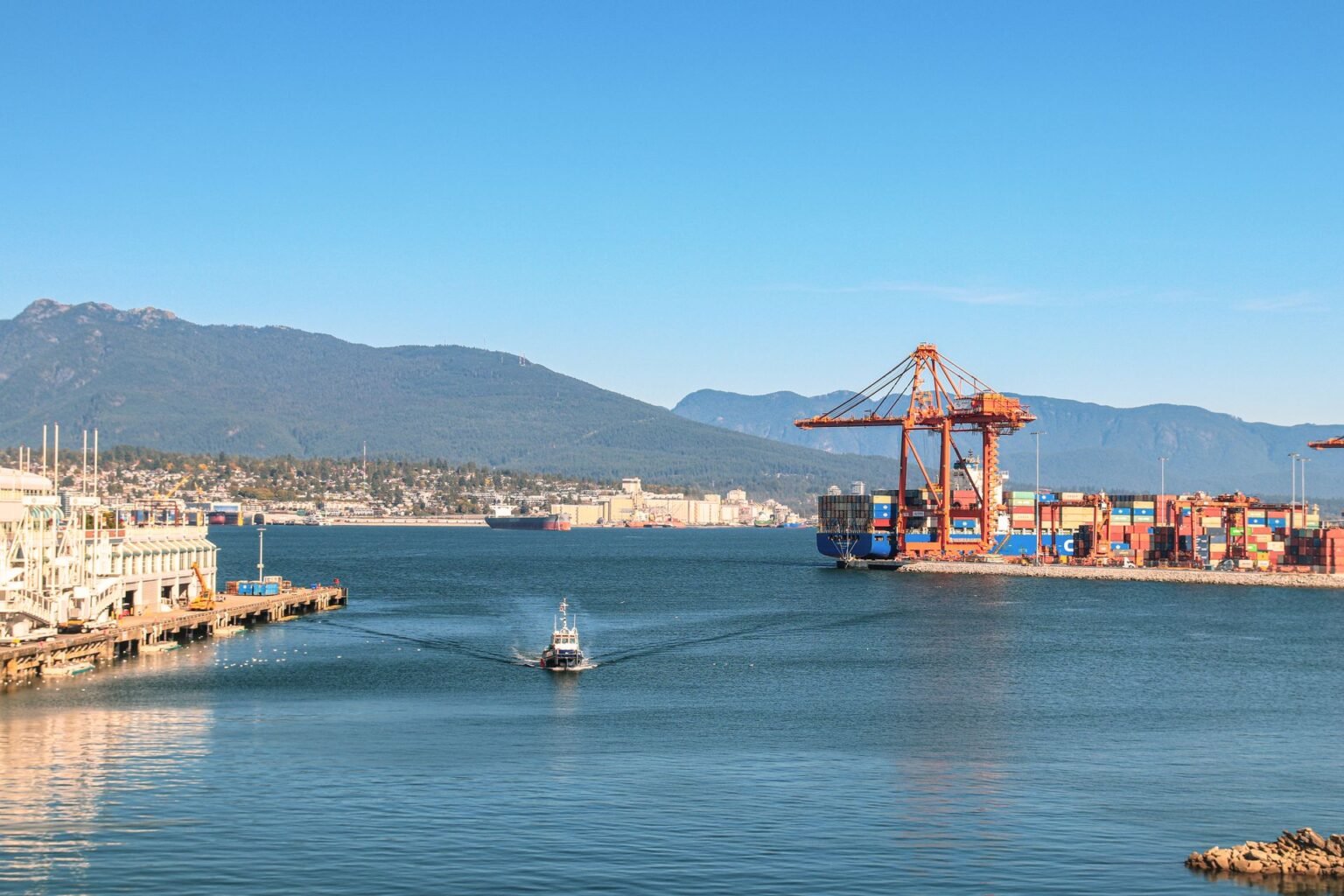
Container cranes and ships at the Port of Vancouver
Photo: Pexels

01What happened

Statistics Canada reported this morning that real GDP was essentially unchanged in August, the second flat month in a row and below the 0.2% gain economists expected. Goods-producing industries edged up 0.1% while services slipped 0.1%, and nine of 20 sectors grew. Retail trade rose 1.2% on motor vehicle sales and manufacturing added 0.3%, but wholesale trade fell 1.4% as most of its subsectors contracted, the public sector fell 0.2% as census work wound down, oil and gas extraction fell 1.2% for a third month and utilities fell 0.4% on nuclear maintenance outages. The agency’s advance estimate has GDP down 0.1% in September, with losses in manufacturing and in mining, quarrying and oil and gas, and a third-quarter gain of about 0.3% before annualizing, which works out to roughly 1.2% at an annual rate, our arithmetic. The Bank of Canada’s forecast on Wednesday assumed about 2% for the quarter.

Thursday’s payroll figures point the same way. Payroll employment fell 49,600, or 0.3%, in August after a 15,700 drop in July, with declines in 10 of 20 sectors, led by federal public administration (down 15,900, or 4.1%, as temporary Census staffing ended), accommodation and food services (down 6,800) and construction (down 4,500). Average weekly earnings were $1,355, up 3.7% from a year earlier, and job vacancies held at 507,200 with a vacancy rate of 2.8%, unchanged since December. Government of Canada bond yieldsBond yield The annual return an investor gets for lending to a government or company through a bond. Yields rise when bond prices fall. Fixed mortgage rates are priced from the 5-year Government of Canada yield. rose on the day of the hike: the Bank’s published closes for Wednesday 28 October have the two-year at 3.41%, the five-year at 3.62% and the ten-year at 3.87%, each up 4 or 5 basis points. The bond market’s reaction to this morning’s data comes after this Brief was filed.

02Our view

Today’s data pulls the Bank of Canada’s second hike toward January rather than December, and lowers the likely ceiling for this cycle to 2.75%. We still expect one more quarter point, but not at the December decision unless the October figures surprise.

Why we think so. The Bank raised rates on Wednesday to stop energy costs spreading into other prices, not because growth was strong, so weak growth on its own will not reverse the move. But the Bank also said it would proceed carefully, and the data give it every reason to. Real GDP was essentially unchanged in August, the second flat month in a row and below the 0.2% gain expected. Services slipped 0.1%, wholesale trade fell 1.4%, oil and gas extraction fell 1.2% for a third month, and only nine of 20 sectors grew. The advance estimate has GDP down 0.1% in September, which puts third-quarter growth near 1.2% at an annual rate against the roughly 2% the Bank assumed in its forecast two days ago. Payrolls tell the same story: employment fell 49,600 in August after a 15,700 drop in July, with declines in 10 of 20 sectors. A central bank that hiked for inflation reasons can tolerate one soft month; it is harder to justify a second move into an economy that is flat and shedding jobs.

What the market is pricing. Markets had a December move near a coin flip before this release. Bond yields rose on the day of the hike, with the two-year at 3.41%, the five-year at 3.62% and the ten-year at 3.87%, each up 4 or 5 basis points. Our view is that the coin flip should now lean toward a December hold. Not every signal is weak: average weekly earnings were up 3.7% from a year earlier and job vacancies held at 507,200, which is why we keep a second hike in the outlook rather than calling the cycle over.

What it means. For variable-rate borrowers, the prime rate has probably taken most of the increase it will see this year. Anyone choosing between fixed and variable at an autumn renewal can reasonably price the variable option on the assumption of one more quarter point rather than three, and compare that with the fixed quote; the gap between the two paths is narrower than it looked on Wednesday. Households whose income depends on a cyclical employer, such as construction, restaurants or the federal public service, face a softer job market at the same time as a higher prime rate, which argues for a larger cash buffer. Business owners should read flat wholesale and falling manufacturing as a demand signal for the months ahead.

What would change our mind. A clear rebound in hiring in the October Labour Force Survey in early November, together with October CPI in mid-November showing inflation excluding gasoline above 2.5%, would put a December hike back as the base case. A revision of September GDP to a gain on 30 November would also weaken our view.

What to watch. The October Labour Force Survey on Friday 6 November. October CPI in mid-November, with inflation excluding gasoline the measure that matters. The full September GDP figure on 30 November.

03Why it matters to you

If your family relies on your income and you carry a variable mortgage, now is the time to know how long you could keep paying if that income stopped.

Book an income protection check

Sources The Canadian Press, Economic growth stalled again in August, StatCan says; investingLive, Canada GDP for August 0.0% vs 0.2% estimate; Finimize, Canada’s Economy Flatlined Again In August; Statistics Canada, Payroll employment, earnings and hours, and job vacancies, August 2026; Bank of Canada, Selected bond yields

Story 2 of 5

The U.S. economy grew 3.4% in the third quarter with inflation at 3.6%, and the 10-year Treasury yield fell back below 5%

The facade and steps of a U.S. Federal Reserve building
Photo: Pexels

01What happened

The Bureau of Economic Analysis’s advance estimate has U.S. real GDP growing at a 3.4% annual rate in the third quarter, up from 2.2% in the second, with consumer spending, inventories, equipment and federal spending all up and exports down, led by petroleum products. Final sales to private domestic purchasers rose 4.9%. The quarterly price measures cooled: the PCE price index rose 2.1% annualized after 5.0% in the second quarter, and the core index 2.5% after 3.3%. The monthly figures for September, published the same morning, were warmer: the PCE price index rose 0.5% in the month and 3.6% from a year earlier, core PCE rose 0.3% and 3.1% year over year, personal income rose 0.2%, spending rose 0.5% in dollars but was flat after inflation, real disposable income fell 0.3% and the saving rate slipped to 3.8%.

Bond yields fell on the day: the 10-year Treasury closed at 4.96% from 5.05%, and a seven-year auction cleared at 4.894% against 5.085% in September. Stocks fell. The Dow lost 132 points to 52,342.62, the S&P 500 fell 23.75 to 7,720.23 and the Nasdaq dropped 365 points, or 1.4%, to 26,184.72. The S&P/TSX composite slipped 16 points to 36,249.03 as gold stocks fell 3.6% and materials 3.3%; gold lost US$18.70 to US$4,031.90 an ounce and the Canadian dollar closed at 71.51 U.S. cents. In Frankfurt, the European Central Bank held its deposit rate at 2.5% with euro-area inflation at 3.8%, said financing conditions had tightened since September and declined to pre-commit to a rate path; the Irish Times reports markets see a hike as soon as next month as a distinct possibility. Euro-area GDP for the third quarter, published this morning, rose 0.4% on the quarter and 1.3% on the year.

02Our view

The United States is the one major economy where a December rate hike is justified by the data, and we see a 10-year Treasury yield between 4.8% and 5.2% as the range to plan around for the rest of the year. Thursday’s dip below 5% does not, in our view, mark the start of relief.

Why we think so. Growth and inflation are both too strong for a central bank that wants to stop. Real GDP grew at a 3.4% annual rate in the third quarter, up from 2.2%, and final sales to private domestic purchasers rose 4.9%. The September PCE price index rose 0.5% in the month and 3.6% from a year earlier, and core PCE rose 3.1%, drifting up. Those figures give the two Fed members who already voted for a hike their argument. What holds the majority back is the quarterly picture, where the PCE index cooled to 2.1% annualized and the core to 2.5%. Beneath the headline, the consumer looks less solid: spending was flat after inflation, real disposable income fell 0.3% and the saving rate slipped to 3.8%, which means households are spending from savings. That is not a durable base, but it does not reduce inflation in the near term.

What the market is pricing. The 10-year Treasury closed at 4.96% from 5.05%, and a seven-year auction cleared at 4.894% against 5.085% in September. We read that move as a reaction to stock selling, with the Dow, S&P 500 and Nasdaq all lower, rather than a change in the inflation picture. In Europe, the ECB held at 2.5% with inflation at 3.8% and declined to pre-commit, and markets see a hike as soon as next month as a distinct possibility. The global pressure is toward higher rates, not lower.

What it means. A strong U.S. economy and a Fed inclined to hike support the U.S. dollar and keep the 10-year near 5%, which sets a floor under Canadian long-term rates even while Canada’s own economy stalls. For Canadian borrowers, that limits how far fixed mortgage rates can fall. For investors, the currency matters as much as the assets this year: with the Canadian dollar at 71.51 U.S. cents and the two economies pulling apart, it is worth knowing what share of a portfolio sits in U.S. dollars and whether any of it is hedged. A U.S. weight that grew through years of outperformance may reflect index drift rather than a decision. On the fixed income side, a 5% U.S. yield means better income on new money and price risk on long bonds already held.

What would change our mind. If the next U.S. jobs report shows payrolls falling, or if the 10-year closes below 4.8% for a full week, the market would be telling us the Fed is done, and we would drop the December hike from our base case.

What to watch. The third-quarter employment cost index, where the consensus is 0.8% after 0.9%, for wage pressure. The U.S. midterm elections on Tuesday 3 November. The October U.S. employment report on Friday 6 November, the most important single release before the December meeting.

03Why it matters to you

With safe bonds paying close to 5%, the risk in your RRSP and TFSA should be earning more than that. If your mix was set when cash paid nothing, it may not be.

Book a portfolio review

Sources U.S. Bureau of Economic Analysis, GDP (Advance Estimate), 3rd Quarter 2026; U.S. Bureau of Economic Analysis, Personal Income and Outlays, September 2026; Baystreet, TSX Wanes to End Thursday; Euronews, ECB holds rates at 2.5% as Lagarde announces early exit with inflation near double the target; Irish Times, ECB holds rates steady as Lagarde’s departure overshadows decision; TradingCharts, Forex Economic Calendar for October 30, 2026

Story 3 of 5

Amazon grows its cloud business 39% but its shares fall 6% after hours, as the cost of the AI build-out reaches the bottom line

The Amazon Spheres on the Amazon headquarters campus in Seattle
Photo: SounderBruce, CC BY-SA 4.0, via Wikimedia Commons

01What happened

Amazon reported third-quarter net sales of US$201.9 billion, up 12%, and record operating income of US$28.1 billion, above its own guidance. Amazon Web Services grew 39% to US$46.0 billion, its fastest pace in nearly five years, with operating income up 55% to US$17.8 billion, and chief executive Andy Jassy said the company projects AWS revenue growth “of over 40% both in 2027 and in 2028.” Earnings per share of US$1.89 missed the US$1.96 expected because of what sits below the operating line: interest expense tripled to US$1.7 billion and other income showed a US$703 million loss. Capital spending in the quarter was US$77.3 billion, free cash flow was negative US$33.5 billion, the company still expects about US$220 billion of cash capital spending for 2026 (US$172.2 billion spent through September), and long-term debt has risen to US$173.1 billion from US$65.6 billion at the end of 2025. Fourth-quarter guidance is for sales of US$240 billion to US$247 billion. The shares, which closed at US$243.79, fell nearly 6% in after-hours trading. Intel fell more than 16% after hours on weak guidance, with its finance chief saying the PC slowdown will last “at least through the first half of next year.”

It capped a rough day for the largest technology companies. Alphabet fell 13% in Thursday’s session after Wednesday night’s results, Microsoft gave back its early gain, and the Nasdaq lost 1.4%. Before the open this morning, S&P 500 futures were indicated down more than 1% and Nasdaq-100 futures down about 2.5%, according to TheStreet.

02Our view

This week is a correction in the price of AI growth, not a verdict that the growth is gone. Into the new year, we think the credit side of these balance sheets, not the revenue line, is the thing to watch.

Why we think so. The demand is real. Amazon Web Services grew 39% to US$46.0 billion, its fastest pace in nearly five years, operating income at AWS rose 55% to US$17.8 billion, and Andy Jassy said the company projects AWS revenue growth “of over 40% both in 2027 and in 2028.” Group operating income was a record US$28.1 billion. The strain is in how the build-out is paid for. Capital spending was US$77.3 billion in the quarter, free cash flow was negative US$33.5 billion, the company still expects about US$220 billion of cash capital spending for 2026, and long-term debt has risen to US$173.1 billion from US$65.6 billion at the end of 2025. Interest expense tripled to US$1.7 billion and, with a US$703 million loss in other income, turned an operating beat into an earnings miss of US$1.89 a share against US$1.96 expected. Alphabet has followed a similar path, with long-term debt nearly tripling. A spending plan funded largely by new debt is a bet that the cost of capital stays manageable, and with the 10-year Treasury near 5%, that bet got more expensive this week.

What the market is pricing. The shares fell nearly 6% after hours, Intel more than 16% on weak guidance, Alphabet fell 13% on Thursday, and before the open S&P 500 futures were down more than 1% and Nasdaq-100 futures about 2.5%. The market is now separating revenue growth from the price paid to fund it. We agree with that distinction but think the reaction treats a financing question as if it were a demand question.

What it means. Several of the largest holdings in a typical Canadian index fund have now shown the same pattern within 48 hours, so this sits inside many RRSPs and TFSAs whether investors follow technology or not. The technology weight in a portfolio has become more sensitive to bond yields, because every borrowed dollar of data centre now costs more. A practical check is how much of a large equity fund’s year-to-date return came from five companies, and what share of the portfolio those names should hold. Holding several funds that own the same few companies is not the diversification it appears to be; a rebalancing rule decided calmly works better than one invented during a sell-off.

What would change our mind. If fourth-quarter guidance of US$240 billion to US$247 billion proves conservative and corporate bond spreads stay tight into the new year, this week will look like an entry point. We would be more worried if a major cloud customer cuts its commitments or if AWS margins, already down to 38.7% from 39.4%, keep sliding.

What to watch. Today’s market open after weak futures. The 10-year Treasury yield around 5% and Friday’s U.S. employment report, which will move it. Signs in the fourth quarter that AWS margins have stabilized.

03Why it matters to you

If you hold an index fund, you already own the AI build-out, often more of it than you would choose. One evening like this moves your whole retirement balance.

Book a portfolio review

Sources TheStreet Pro, Stock Market Today: October 29, 2026; TheStreet Pro, Stock Market Today: October 30, 2026; Baystreet, TSX Wanes to End Thursday

Story 4 of 5

Prime is 4.70%, the cheapest variable is 3.69% and the cheapest five-year fixed is 4.44%: what the hike means at renewal

House keys and mortgage documents beside small model houses
Photo: Pexels

01What happened

The six largest banks moved prime to 4.70% on Thursday 29 October, from 4.45%, following the Bank of Canada’s increase on Wednesday. Ratehub’s rate tables as of this morning show the lowest five-year variable at 3.69%, big-bank variable rates between 3.85% and 4.37%, the lowest five-year fixed at 4.44% and big-bank fixed rates between 4.69% and 5.19%. Ratehub’s worked example: on the national average home price of $666,538 with 10% down and a 25-year amortization, the variable payment rose from $3,072 a month at 3.45% to $3,154 at 3.70%, or $82 more a month, $984 a year. Fixed rates did not move on the hike, because they follow Government of Canada bond yields: the five-year yield closed at 3.62% on Wednesday, up from 3.33% at the end of August, and Ratehub expects the lowest insured five-year fixed to stay above 4% through late 2026 unless yields fall by 15 to 20 basis points.

The housing backdrop is soft. CREA’s September data had national sales down 2.3% from August and 7.7% from a year earlier, new listings down 1.8%, a sales-to-new-listings ratio of 48.8%, the MLS Home Price Index down 0.4% on the month and 3.4% on the year, and the average price down 1.6% year over year. The Bank of Canada’s senior deputy governor, Carolyn Rogers, said on Wednesday that “our outlook on housing is pretty subdued” and that borrowing rates are already weighing on the market, with the increase adding “a bit on the margin.” The Bank’s October report has housing shrinking this year before contributing about 1% to growth over the next two years. Hugh Gorman, chief executive of Ottawa developer Colonnade Bridgeport, which has 1,000 apartment units under construction, said further increases of 25, 50 and 75 basis points “would make things much more challenging.”

02Our view

Fixed mortgage rates are closer to their peak for this cycle than variable rates are to theirs. Through this renewal season, that argues for weighing a shorter fixed term against a five-year one for anyone who wants certainty.

Why we think so. The two rates answer to different things. Variable rates follow prime, which the six largest banks moved to 4.70% from 4.45% on Thursday, and prime follows the Bank of Canada, which we expect to raise rates once more. Fixed rates follow Government of Canada bond yields, and the five-year yield closed at 3.62% on Wednesday, up from 3.33% at the end of August and within about 12 basis points of its high since the war began, by Ratehub’s count. This morning’s flat GDP and falling payrolls give the bond market a reason to stop climbing. So variable rates still have one or two increases ahead, while fixed rates already price much of the tightening. That asymmetry is why a shorter fixed term gives certainty without locking in five years near the top of the range.

What the market is pricing. Ratehub shows the lowest five-year variable at 3.69% and the lowest five-year fixed at 4.44%, with big-bank variable rates between 3.85% and 4.37% and fixed between 4.69% and 5.19%. The 75 basis point gap is three quarter-point hikes. If the Bank stops after one or two more, the variable still wins on arithmetic; if a budget cannot absorb three, the fixed rate is insurance with a known price. Ratehub expects the lowest insured five-year fixed to stay above 4% through late 2026 unless yields fall by 15 to 20 basis points.

What it means. On Ratehub’s example of the national average price of $666,538 with 10% down over 25 years, the variable payment rose $82 a month, $984 a year. Borrowers with a variable mortgage on fixed payments will see no change in the amount, but more of each payment now goes to interest, which quietly stretches the amortization. Before renewing, it helps to get three quotes on paper from the lender: variable, three-year fixed and five-year fixed, each with the monthly payment on the actual balance. The housing backdrop is soft, with CREA reporting September sales down 7.7% from a year earlier and the MLS Home Price Index down 3.4%, and the Bank’s Carolyn Rogers calling its housing outlook “pretty subdued.” Buyers with stable income and a long horizon gain some leverage; sellers should expect longer selling times. Households renewing in 2027 should decide in advance which other goal, such as RRSP or TFSA contributions, gives way first if the payment rises.

What would change our mind. If the five-year yield pushes through 3.80%, the market will have decided the Bank goes to 3% or beyond, and locking in five years would have been the right call.

What to watch. The five-year yield’s reaction to this morning’s GDP data. The October Labour Force Survey on Friday 6 November and October CPI in mid-November, which will shape the Bank’s December decision and the path of prime.

03Why it matters to you

If you renew in the next twelve months, the term you choose sets your payment for years. Comparing before the lender’s letter arrives keeps the choice yours.

Book a mortgage renewal review

Sources Ratehub, The Bank of Canada’s October 2026 rate hike: What it means for mortgages and housing; Ratehub, Best 5-year fixed mortgage rates; CTV News via BNN Bloomberg, Bank of Canada rate hike: Housing market may feel impact; Bank of Canada, Selected bond yields

Story 5 of 5

Brent oil touches US$117, its highest since April, as freight costs and attacks on shipping keep the Iran war in your fuel bill

A crude oil tanker anchored at sea
Photo: Pexels

01What happened

Brent crude futures for December rose more than 2% this morning to briefly top US$117 a barrel, the highest since April and more than 60% above pre-war levels, according to Al Jazeera. U.S. crude settled at US$102.55 on Thursday, down 23 cents. The price keeps rising even as flows recover, and the reasons are in the plumbing. Observed inventories fell by 10 million barrels in September and the global stockpile is 509 million barrels below its pre-war level, per the IEA. Gulf crude exports averaged 24.6 million barrels a day in the week to 18 October, above the pre-war average, but by September 40% of them bypassed the Strait of Hormuz by pipeline or by ship-to-ship transfer off Oman and the UAE, against 17% before the war, per Kpler. Freight costs have reached as much as US$40 a barrel, about ten times the usual rate, per LSEG, and October has been the deadliest month for attacks on commercial vessels since the war began, with 32 incidents logged by UKMTO. OPEC’s Gulf producers pumped 15.8 million barrels a day in September, 75% of their pre-war level. Brent for delivery in October 2027 trades above US$90, so the market expects relief but not a return to US$70.

Adi Imsirovic, a veteran oil trader who lectures at the University of Oxford, put it this way: “The market is doing exactly what it is supposed to do: It is telling us there is plenty of prompt oil, but there is no end to this war in sight.” Pavel Molchanov of Raymond James does not believe supply can realistically exceed 85% of pre-war levels without a permanent diplomatic solution.

02Our view

Oil stays above US$100 a barrel until the U.S. midterm elections on 3 November are past and Washington’s intentions toward Tehran are clearer. Until then, we expect the Bank of Canada to treat each US$10 move in Brent as a rate question.

Why we think so. The price is rising even as flows recover, and the reason is the cost and risk of moving oil, not the amount produced. Gulf crude exports averaged 24.6 million barrels a day in the week to 18 October, above the pre-war average, but by September 40% of them bypassed the Strait of Hormuz by pipeline or ship-to-ship transfer, against 17% before the war. Freight has reached as much as US$40 a barrel, about ten times the usual rate, and October has been the deadliest month for attacks on commercial vessels since the war began, with 32 incidents logged. Inventories keep falling: down 10 million barrels in September, with the global stockpile 509 million barrels below its pre-war level. OPEC’s Gulf producers pumped 15.8 million barrels a day, 75% of their pre-war level, and Pavel Molchanov of Raymond James doubts supply can exceed 85% without a permanent diplomatic solution. None of that changes with a single diplomatic letter.

What the market is pricing. Brent briefly topped US$117 this morning, the highest since April and more than 60% above pre-war levels, while U.S. crude settled at US$102.55 on Thursday. Brent for October 2027 delivery trades above US$90, so the market expects relief but not a return to US$70. As Adi Imsirovic put it, the market is saying there is plenty of prompt oil but “no end to this war in sight.” We agree with that reading, and see the near-term risk as tilted to the upside while freight and attacks keep rising.

What it means. Gasoline was 27.8% higher than a year earlier in September, which is why the Bank of Canada raised rates this week, so oil now reaches borrowers through prime as well as at the pump. Households are better served budgeting winter fuel and heating at today’s prices and comparing with last year’s actual bills. For a business that moves goods, the US$40 freight figure belongs in contract terms, and any agreement running past November is safer with a fuel surcharge clause than a fixed price. For investors, energy has carried the TSX this year while gold did the damage on Thursday; it is worth checking whether energy holdings have grown past their intended weight and whether they act as a hedge against the household’s own fuel bill or as an unintended bet on the war.

What would change our mind. A verified ceasefire that covers the shipping lanes could take Brent below US$100 within weeks. Evidence that global inventories have stopped falling would also weaken our view.

What to watch. The U.S. midterm elections on Tuesday 3 November. Exxon Mobil and Chevron results before today’s open, for producers’ view of the market. The Baker Hughes U.S. rig count this afternoon, after 603.

03Why it matters to you

If you own a business, fuel and freight raise your costs months before you can raise prices. Knowing how long your cash can carry that is worth an hour now.

Book a business review

Sources Al Jazeera, Oil flows are up as Iran war turmoil eases. Why do prices keep rising?; Baystreet, TSX Wanes to End Thursday

Today’s news, considered against your own plans.

If one of these stories bears on your mortgage, savings, income or business, we would be glad to go through it with you and explain clearly what, if anything, it means for you.

Book a conversation

Free · optional

The Morning Brief in your inbox at 06:00 Pacific.

The day’s stories, what each means for you, and our view. Unsubscribe in one click.

Email subscriptions open shortly.