Markets · 3 Nov 2026Policy rateBank of Canada2.50%YieldsCA 2Y3.26%CA 5Y3.49%+3 bpCA 10Y3.77%+3 bpCanadian dollarCAD/USD0.7146−0.11%CAD/EUR0.6385−0.02%CAD/GBP0.5325−0.15%CAD/JPY113.25+0.34%CryptoBTCUS$80,673+4.36%ETHUS$2,434+6.41%

Morning Brief

Thursday 29 October 2026

The Bank of Canada raised the overnight rate to 2.50%, its first increase since July 2023, and the six big banks moved prime to 4.70% from today.

The desk’s view todayThe Bank of Canada’s hike to 2.50% is the first of two, with a second 25 basis point increase in December or January more likely than not, but not the start of a long sequence.

Story 1 of 5

The Bank of Canada raises its rate to 2.50%, and the big banks move prime to 4.70% today
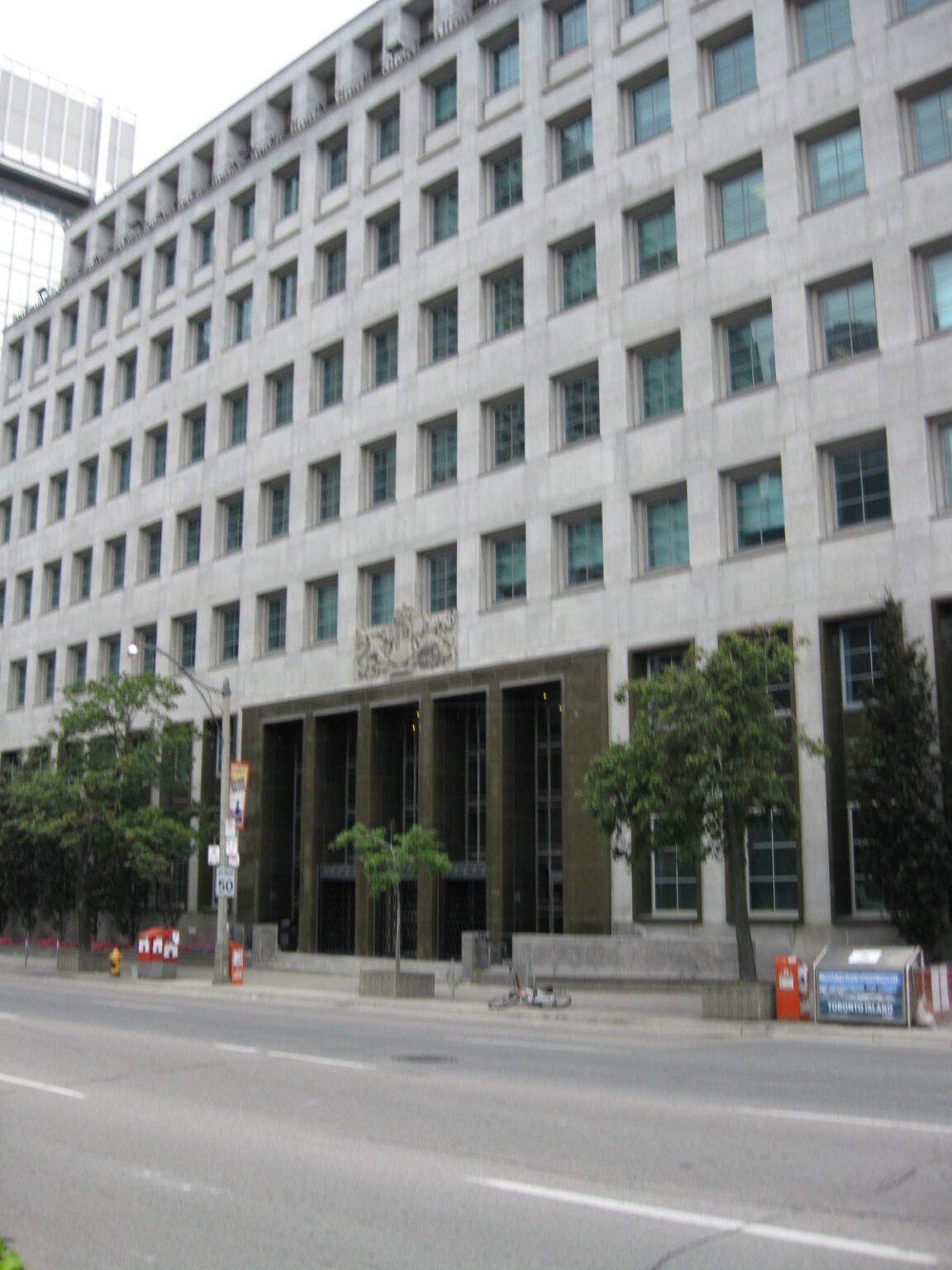
The Bank of Canada building on University Avenue in Toronto
Photo: Doug Kerr from Upstate New York, CC BY-SA 2.0, via Wikimedia Commons

01What happened

The Bank of Canada raised its target for the overnight rate by 25 basis points to 2.50% on Wednesday, with the Bank Rate at 2.75% and the deposit rate at 2.45%. It is the first increase since July 2023; the rate had sat at 2.25% since October 2025. The Bank said it moved “to reduce the risk that continuing high energy prices spread broadly to the prices of other goods and services.” Its numbers: CPI inflation has been around 3% since April and is expected to reach about 3.5% by the end of the year, inflation excluding gasoline was 2.2% in September, core measures remain close to 2%, and unemployment has been around 6.5% for several months. The economy grew 3.3% annualized in the second quarter and about 2% in the third, with a slowdown expected in the fourth as new U.S. tariffs bite. The Monetary Policy Report now has growth of 1% in 2026 and 2% in each of 2027 and 2028, and inflation averaging 3% in 2027, a full percentage point above July’s projection, before easing to 2% in mid-2028.

On what comes next, the statement says there “could be a need to increase the policy rate further, but given uncertainties, Governing Council agreed to proceed carefully.” Governor Tiff Macklem told reporters the Bank would take decisions “one meeting at a time” and that even after the increase the rate “is still low enough that it’s not restraining growth.” The Canadian Press reports that markets priced a 43% chance of another quarter point at the 9 December decision as of Wednesday afternoon, that RBC’s Frances Donald expects a further move in December or January and three more hikes in total, and that Servus Credit Union’s Charles St-Arnaud expects back-to-back hikes to 2.75% by year end.

The six largest banks all raised their prime lending rates by a quarter point to 4.70% effective today, 29 October, according to Canadian Mortgage Trends, which adds that TD’s separate mortgage prime is expected to rise to 4.85% from 4.60%. Government of Canada bond yieldsBond yield The annual return an investor gets for lending to a government or company through a bond. Yields rise when bond prices fall. Fixed mortgage rates are priced from the 5-year Government of Canada yield. barely moved into the decision: the Bank’s latest published close, for Tuesday 27 October, has the two-year at 3.36%, the five-year at 3.57% and the ten-year at 3.83%.

02Our view

Wednesday’s hike to 2.50% is the first of two, not one and done. We expect a second quarter point in December or January, and a policy rate of 2.75% to 3.00% is the range we would plan around into 2027, not the start of a long sequence.

Why we think so. The reasoning is in the Bank’s own forecast. The Monetary Policy Report expects CPI inflation to reach about 3.5% by the end of the year and to average 3% in 2027, a full percentage point above July’s projection, before easing to 2% only in mid-2028. Governor Macklem said that even after the increase the rate “is still low enough that it’s not restraining growth,” and the statement says there “could be a need to increase the policy rate further.” A committee that describes its own policy as not yet restrictive, while forecasting inflation above 3% for more than a year, has left itself room to move again. At the same time, the case for a long series of hikes is weak. Inflation excluding gasoline was 2.2% in September, core measures remain close to 2%, unemployment has been around 6.5% for several months, and the Bank expects growth to slow in the fourth quarter as new U.S. tariffs bite. That points to one more step, possibly two, and then a pause.

What the market is pricing. Markets priced a 43% chance of another quarter point at the 9 December decision as of Wednesday afternoon, so they see a second move as close to even rather than likely. Our call is slightly firmer on a second hike but open on timing. Among economists, RBC’s Frances Donald expects a move in December or January and three more in total, while Servus Credit Union’s Charles St-Arnaud expects back-to-back hikes to 2.75% by year end. We sit between them: a second hike yes, a third only if inflation outside energy picks up.

What it means. Variable-rate mortgages and lines of credit got more expensive today, as the six largest banks moved prime to 4.70%. On MoneySense’s example of a $618,480 mortgage over 25 years, the payment rises by about $82 a month. Borrowers with a variable mortgage on fixed payments will see no change in the amount, but more of each payment now goes to interest; it is worth asking the lender for the current amortization and trigger rate. Fixed rates are priced off the five-year yield, which at 3.57% had already absorbed the hike, so renewal quotes should look much as they did last week, with Ratehub’s best five-year fixed at 4.34%. Planning a cash buffer for 2.75% rather than 2.50% is prudent. Savers should see high-interest savings and short GIC rates follow prime upward within weeks, though with inflation projected at 3% through 2027 the real return on cash stays thin.

What would change our mind. October CPI in mid-November showing inflation excluding gasoline below 2%, together with a weak October jobs report, would make a December hold the base case. A December hike with guidance pointing to several more would mean we underestimated the Bank’s resolve.

What to watch. Statistics Canada’s August payroll employment figures today and August GDP on Friday. October CPI in mid-November and the October jobs report. The Bank’s next decision on 9 December.

03Why it matters to you

If you have a variable mortgage or a line of credit, your payment went up today. The question now is whether your budget, and your cover if income stopped, still hold at the new rate.

Book a mortgage renewal review

Sources Bank of Canada, Bank of Canada raises the policy rate by 25 basis points to 2½%; Bank of Canada, Monetary Policy Report, October 2026; The Canadian Press, Bank of Canada’s 1st rate hike in three years won’t be the last, economists argue; Canadian Mortgage Trends, Big banks raise prime rates to 4.70% following BoC hike; MoneySense, Bank of Canada raises interest rate to 2.5%, first hike since 2023; Bank of Canada, Selected bond yields

Story 2 of 5

The Fed holds at 3.75% to 4.00% on a 10 to 2 vote, with December priced as a hike and the 10-year above 5%

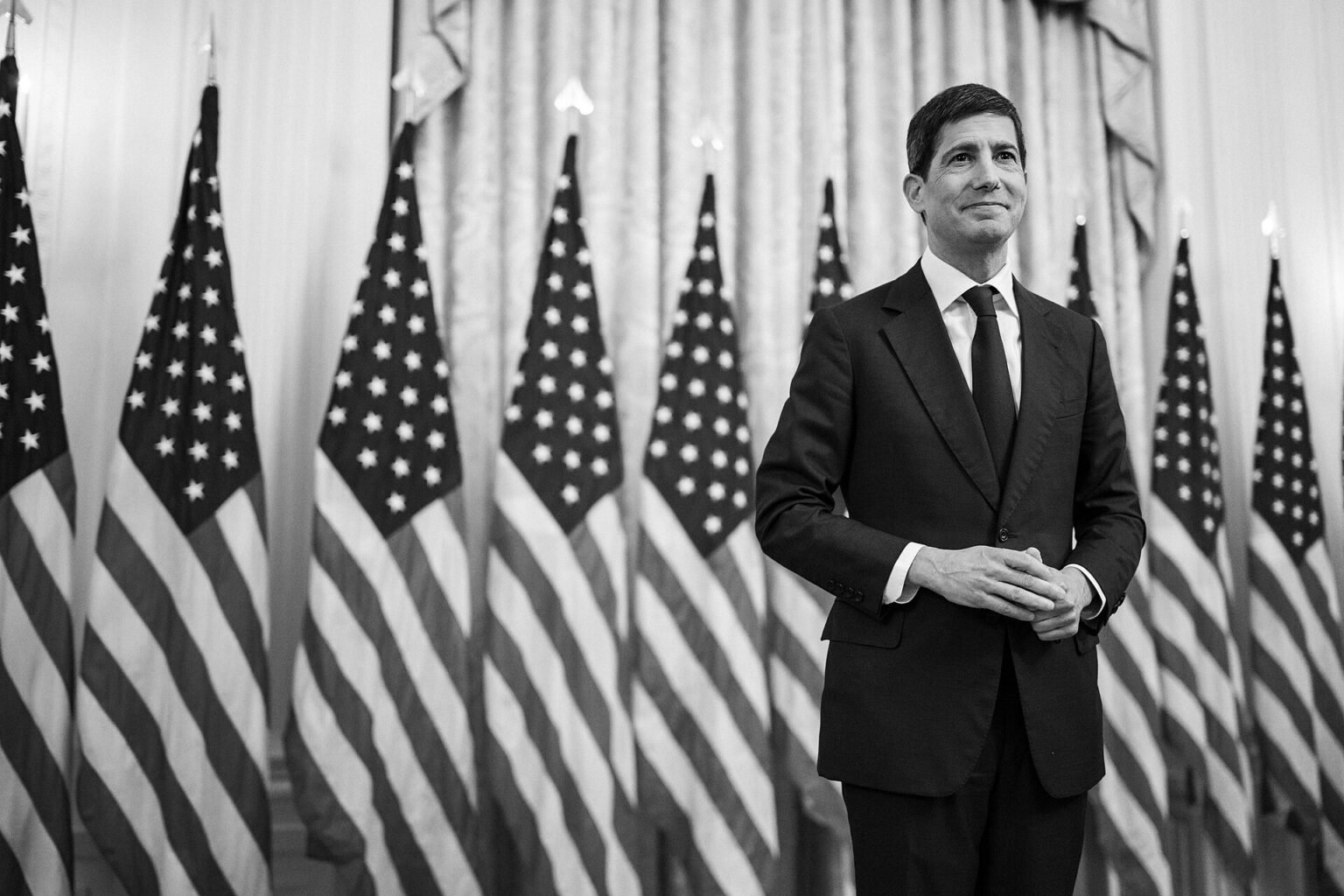
Federal Reserve Chair Kevin Warsh delivers remarks at his swearing-in ceremony in the East Room of the White House on 22 May 2026
Photo: The White House, PUBLIC DOMAIN, via Wikimedia Commons

01What happened

The U.S. Federal Reserve kept its target range at 3.75% to 4.00% on Wednesday. The vote was 10 to 2, with Governor Lisa Cook and Cleveland Fed President Beth Hammack preferring a quarter-point increase. The statement upgraded its description of the economy to “expanding at a strong pace,” said “inflation remains elevated” and added that “the Committee will deliver price stability.” Chair Kevin Warsh said he does not believe in forward guidance outside a crisis and would not pre-judge the 8 to 9 December meeting. He described the dissents as “a family fight, a serious, sober discussion,” said politics “did not play any role,” and on markets said: “While overall financial conditions are tighter, I’m unwilling and unable to call them tight.” He also announced that one of the eight meetings in 2027 will be given over to strategy with no rate vote.

Markets read the hold as a pause before a hike. TheStreet cites CME FedWatch pricing of about 78% for a quarter-point increase in December; Investopedia put the odds of at least a quarter point at 85%. The 10-year Treasury yield rose about 5 basis points to 5.04% as Warsh spoke, while the two-year fell to 4.70%, a steeper yield curve. Stocks edged up for a third day: the S&P 500 closed at 7,743.98, up 0.28%, the Nasdaq at 26,549.85, up 0.27%, and the Dow at 52,475.10, up 0.19%. The S&P/TSX composite closed at 36,265.09, up about 0.3% and its highest in a week, with technology up 1.9% and energy up 1.1% while real estate and industrials each fell 0.8%, according to Reuters, which had the Canadian dollar at 71.41 U.S. cents. Gold was near US$4,080 an ounce and the U.S. dollar index slipped 0.2% to 102.14.

Today at 05:30 PT the U.S. publishes its first estimate of third-quarter GDP, with a consensus near 3.4% annualized after 2.2%, and September PCE inflation, where the consensus is 3.6% for the headline and 3.1% for the core measure the Fed targets.

02Our view

A December rate hike in the United States is the base case, and for Canadians the long end of the curve matters more than the Fed’s policy rate. We expect the U.S. 10-year yield to stay near 5% into the 8 to 9 December meeting unless this morning’s inflation data surprise to the soft side.

Why we think so. The Fed held at 3.75% to 4.00%, but the details read as a pause, not an ending. Two members, Governor Lisa Cook and Cleveland Fed President Beth Hammack, voted for a quarter-point increase. The statement upgraded the economy to “expanding at a strong pace,” said “inflation remains elevated” and added that “the Committee will deliver price stability.” Chair Kevin Warsh declined to pre-judge December and said that while financial conditions are tighter, he is “unwilling and unable to call them tight.” That is the language of a committee waiting out next week’s election rather than one that is finished. Meanwhile the bond market is tightening on the Fed’s behalf: the 10-year Treasury rose to 5.04% as Warsh spoke while the two-year fell to 4.70%, a steeper yield curve.

What the market is pricing. CME FedWatch pricing put about 78% on a December quarter point, and Investopedia put the odds of at least a quarter point at 85%. We agree with that pricing. Stocks were calm, with the S&P 500 up 0.28% to 7,743.98 and the S&P/TSX composite up about 0.3% to 36,265.09, and the Canadian dollar barely moved at 71.41 U.S. cents, which tells us the gap between a Canadian hike and a U.S. hold was already priced.

What it means. Canadian long-term rates follow U.S. Treasuries more closely than they follow the Bank of Canada. A U.S. 10-year above 5% is what keeps the Canadian 10-year near 3.8% and sets the floor under five-year fixed mortgage rates and long-term business borrowing, whatever Ottawa’s central bank does. For anyone holding bonds, a Fed that hikes and a curve that steepens means better yields on new money and price losses on long bonds already held. The useful check is the average term, the durationDuration A measure of how much a bond or bond fund's price moves when interest rates change. A duration of 7 means roughly a 7% price fall for each one-point rise in yields., of the bond funds in a portfolio: a long-bond fund will move several times more on each Fed signal than a short-term one. Investors should also know how much of a retirement portfolio sits in U.S. dollars without a hedge, and whether the fixed income side is built for yields that stay high rather than for the cuts many expected a year ago.

What would change our mind. If this morning’s core PCE prints at or below 3.0% with growth under 2.5%, the doves would have an argument. If the 10-year falls back below 4.8%, markets would be saying the Fed is done.

What to watch. At 05:30 PT today, the first estimate of third-quarter U.S. GDP, with a consensus near 3.4% annualized, and September PCE inflation, expected at 3.6% headline and 3.1% core. Weekly jobless claims at the same time. The U.S. midterm elections on 3 November, and the Fed’s 8 to 9 December meeting.

03Why it matters to you

If you are deciding between fixed and variable, U.S. yields above 5% set the floor under Canadian fixed rates. That makes the timing of your decision matter more than usual.

Book a mortgage renewal review

Sources U.S. Federal Reserve, Federal Reserve issues FOMC statement; TheStreet, Fed Chair Kevin Warsh reveals October surprise inside interest-rate pause; Admirals, Warsh Press Conference: Fed Holds Rates in a 10-2 Vote; Investopedia via Yahoo Finance, Markets News, Oct. 28, 2026: Stocks Close Higher, Treasury Yields Rise After Fed Holds Rates Steady; Reuters via MarketScreener, TSX hits one-week high as tech rallies, BoC raises rates; TradingCharts, United States Economic Calendar for October 29, 2026

Story 3 of 5

Microsoft and Alphabet spent US$90 billion on AI capacity in a quarter, and investors rewarded one and punished the other

The glass exterior of a Microsoft building with the company sign
Photo: Pexels

01What happened

Microsoft reported revenue of US$92.3 billion for its September quarter, up 19%, with adjusted earnings of US$4.89 a share against roughly US$4.72 expected. Its Azure cloud business grew 48% to US$33.17 billion. Cash capital spending was US$39.37 billion, or US$45.2 billion including finance leases, and free cash flow fell 27% to US$18.63 billion. Shares rose in after-hours trading.

Alphabet reported revenue of US$127.6 billion, up 25%, slightly below estimates. Google Cloud revenue more than doubled, up 103%, to US$30.7 billion with operating income of US$11.1 billion. Earnings per share fell to US$2.12 from US$2.87, partly because of an US$8.7 billion loss on equity holdings. Capital spending was US$51.4 billion in the quarter, up from US$24.0 billion a year earlier; the company held its 2026 guidance at US$195 billion to US$205 billion and said 2027 spending would “increase significantly.” Free cash flow was negative US$9.1 billion. To fund the build-out, Alphabet raised US$28.7 billion from senior notes and US$12.4 billion from selling stock, taking long-term debt to US$125.1 billion from US$46.5 billion at the end of 2025. Shares fell sharply after hours. Earlier in the day, Oracle rose 11%, SK Hynix 13% and Vertiv 16% on their own results and AI-related demand.

02Our view

The AI investment cycle has become a credit story as much as an equity story, and that is a more fragile footing. Through 2027, we think the test for these companies is the cost and availability of capital, not demand.

Why we think so. Demand is not the problem. Microsoft’s Azure grew 48% to US$33.17 billion, revenue rose 19% to US$92.3 billion, and adjusted earnings of US$4.89 a share beat the roughly US$4.72 expected. Google Cloud revenue more than doubled, up 103% to US$30.7 billion, with operating income of US$11.1 billion. The difference is in funding. Microsoft’s cash capital spending was US$39.37 billion, or US$45.2 billion including finance leases, and free cash flow fell 27% to US$18.63 billion, but it remained positive. Alphabet spent US$51.4 billion, more than double a year earlier, said 2027 spending would “increase significantly,” and ran free cash flow of negative US$9.1 billion. To pay for it, Alphabet raised US$28.7 billion from senior notes and US$12.4 billion from selling stock, taking long-term debt to US$125.1 billion from US$46.5 billion at the end of 2025. When a company with Alphabet’s cash generation borrows and issues shares to build, the next constraint is what that money costs, and the 10-year Treasury is above 5%.

What the market is pricing. The verdict was split: Microsoft shares rose after hours and Alphabet’s fell sharply. Markets are no longer rewarding AI spending as such; they are separating companies that fund it from cash flow from those that borrow and dilute to do it. The enthusiasm has not gone, as Oracle up 11%, SK Hynix 13% and Vertiv 16% on the day showed, but it is now conditional on financing.

What it means. These two companies are among the largest holdings in funds that track the S&P 500 or global indexes, so Wednesday night happened inside many RRSPs and TFSAs. The question for a Canadian investor is not which company is right, but how much of a portfolio’s return now depends on the AI build-out continuing at this pace, and what happens if spending slows or the debt that funds it becomes more expensive. A simple test is to add up the five largest holdings in each equity fund. If they exceed a quarter of the fund, that concentration is a decision already made, and better made on purpose. Holding many funds that own the same few companies can look diversified without being so.

What would change our mind. If cloud backlogs and margins keep rising through 2027 while corporate bond spreads stay tight, this borrowing will look like cheap growth and our caution will look misplaced.

What to watch. Amazon’s quarterly results after today’s close, the third large AI spender to report this week. This morning’s U.S. GDP and PCE inflation figures, which will move the 10-year yield and with it the cost of funding the build-out.

03Why it matters to you

If your RRSP or TFSA holds a U.S. index fund, these results already moved your balance. Knowing how much of your savings rides on a few companies is worth a review.

Book a portfolio review

Sources The Motley Fool, Microsoft and Alphabet Just Reported Earnings, Putting the AI Boom to the Test; Investopedia via Yahoo Finance, Markets News, Oct. 28, 2026: Stocks Close Higher, Treasury Yields Rise After Fed Holds Rates Steady

Story 4 of 5

Oil slips to US$114 on a reported U.S. approach to Tehran, with a year-end forecast near US$110

A pumpjack extracting crude oil from an oil well
Photo: Pexels

01What happened

Brent crude settled at US$115.32 a barrel on Wednesday, up 1.3%, and West Texas Intermediate at US$102.78, up 2.9%, before easing overnight: Brent was US$114.10 at 03:48 GMT on Thursday and WTI just above US$101, according to The National. The drop followed a Wall Street Journal report that U.S. Vice President JD Vance sent a letter to Iran’s National Security Council chief Mohsen Rezaei to revive negotiations; President Trump said he had not directed the approach and described it as being about medical supplies. The same newspaper reports that Washington has warned Gulf governments to prepare for a possible renewed military campaign against Iran after the 3 November midterm elections.

The Bank of Canada’s statement on Wednesday noted that the Middle East conflict is in its eighth month with “no clear path to resolution,” and its new forecast assumes that oil prices and refinery margins stay elevated and decline only gradually, with energy inflation not turning negative until the end of 2027. UBS commodity analyst Giovanni Staunovo says global inventories have fallen sharply, pledged strategic reserve releases are largely complete, and an under-supplied market should sustain prices; UBS expects Brent near US$110 at year end. Nick Stadtmiller of Emirates NBD says prices remain volatile as markets react to developments affecting regional production and infrastructure.

02Our view

The market is pricing a standoff that lasts at least until the U.S. midterms on 3 November, and a year-end Brent near US$110 is a reasonable central case. What changed this week is that the Bank of Canada has tied its rate path to this number.

Why we think so. Diplomacy is moving, but not in a way that changes supply. Brent settled at US$115.32 on Wednesday and eased to US$114.10 overnight after a Wall Street Journal report that Vice President JD Vance had written to Iran’s Mohsen Rezaei to revive negotiations; President Trump said he had not directed the approach and described it as being about medical supplies. The same newspaper reports that Washington has warned Gulf governments to prepare for a possible renewed military campaign after the midterms. That combination keeps both outcomes alive and the risk premium in place. The fundamentals support high prices on their own: UBS’s Giovanni Staunovo notes that global inventories have fallen sharply and that pledged strategic reserve releases are largely complete, and UBS expects Brent near US$110 at year end. The Bank of Canada’s statement describes the conflict as in its eighth month with “no clear path to resolution.”

What the market is pricing. Our central case matches UBS’s forecast and the Bank of Canada’s own assumption, which has oil prices and refinery margins staying elevated and declining only gradually, with energy inflation not turning negative until the end of 2027. In other words, neither the market nor the central bank is counting on relief soon, and we agree.

What it means. Oil is the reason variable rates went up this week. Gasoline was 27.8% higher than a year earlier in September and energy as a whole 19%, which lifted headline inflation to 3.1%. Because the Bank has said it will lean against energy costs passing into other prices, a higher oil price now reaches a household that drives and carries a mortgage twice: at the pump and through prime. Every US$10 move in Brent is now also a rate question. Households are better served budgeting winter heating and fuel at today’s prices. For businesses, oil shows up as freight surcharges and in the Bank’s expectation that food inflation runs near 4% in 2027; contracts running past November are safer with a fuel clause. Investors should check whether energy exposure in a portfolio offsets energy exposure in the household budget, or has simply grown past its intended weight.

What would change our mind. A verified ceasefire that includes the Houthis could take Brent below US$100 within weeks. A confirmed strike on Saudi export terminals would do the opposite.

What to watch. The U.S. midterm elections on 3 November and any U.S. move toward Iran afterward. The U.S. EIA natural gas storage report today, for the heating side of the energy bill.

03Why it matters to you

If fuel is the cost that keeps squeezing your month, a budget built on spring prices no longer fits. Rebuilding it around today’s costs takes one conversation.

Book a budget and savings check

Sources The National, Oil prices decline after diplomatic push in Iran war; Bank of Canada, Bank of Canada raises the policy rate by 25 basis points to 2½%; Bank of Canada, Monetary Policy Report, October 2026; MoneySense, Bank of Canada raises interest rate to 2.5%, first hike since 2023

Story 5 of 5

Lagarde will leave the ECB in February, and the bank decides today with a hold at 2.5% expected

The European Central Bank headquarters in Frankfurt
Photo: Pexels

01What happened

The European Central Bank announced on Thursday that President Christine Lagarde will step down on 7 February 2027, about nine months before her eight-year term was due to end. She took office in November 2019. The ECB gave no reason; it said she had informed the Governing Council and European Council President António Costa, and that the Council “thanked President Lagarde warmly and gave her a long standing ovation.” Costa said the process to appoint a successor “will be initiated today and will proceed without delay.” The European Council appoints the president by qualified majority on a recommendation from EU finance ministers, after consulting the European Parliament and the ECB’s Governing Council. No candidates were named.

The ECB’s rate decision follows later today, with the deposit rate widely expected to stay at 2.5%, and Lagarde is due to take questions afterward. It closes a 24-hour stretch in which the Bank of Canada hiked, the Fed held with two members voting to hike, and the ECB is expected to hold. The Bank of Canada’s statement set the shared backdrop: reduced oil supply from the Middle East and strained refining capacity are pushing up inflation globally, with world growth seen at 3.1% in 2026 and 3.2% in 2027 and 2028. The Canadian dollar has gained against the euro over the past six weeks, from about 0.6225 euros in mid-September to 0.6395 on Wednesday, a rise of roughly 2.7%.

02Our view

Christine Lagarde’s departure changes nothing before February, and we expect today’s ECB hold at 2.5% to come with firm language, much as the Fed’s did. For Canadians, that means rate relief is unlikely anywhere in the first half of 2027.

Why we think so. All three central banks this week face the same problem. The Bank of Canada’s statement set the backdrop: reduced oil supply from the Middle East and strained refining capacity are pushing up inflation globally, while world growth is still seen at 3.1% in 2026 and 3.2% in 2027 and 2028. Energy inflation above target with growth good enough to tolerate higher rates is a reason to hold or hike, not to ease. None of the three has the kind of labour-market weakness that would justify cutting. The leadership change does not alter that in the near term. Lagarde steps down on 7 February 2027, about nine months early; the European Council appoints her successor by qualified majority on a recommendation from EU finance ministers, after consulting the European Parliament and the ECB’s Governing Council. No candidates have been named, and policy until February will be made by the same council that made it last month.

The bigger picture. When several major central banks lean the same way, no single one has much room to diverge. The Bank of Canada hiked, the Fed held with two votes for a hike, and the ECB is expected to hold. That pattern means Canada is not an outlier, and the Bank of Canada has little scope to move toward cuts while its peers lean the other way, because doing so would weaken the dollar and import more inflation. A leadership change at the ECB adds a source of uncertainty for 2027 about how Europe would respond if the energy shock persists.

What it means. Plans that depend on lower borrowing costs in the first half of 2027, whether a mortgage renewal, a business expansion or a home purchase, should not be built around them. Most Canadians own Europe through a global or international equity fund, and some have euro pensions, property or tuition. The Canadian dollar has risen against the euro from about 0.6225 in mid-September to 0.6395 on Wednesday, roughly 2.7%, which helps anyone with euro spending ahead and slightly lowers the Canadian-dollar value of European holdings. For known euro expenses over the next year, converting in stages rather than all at once avoids letting one week’s rate decide the whole bill. It is also worth checking whether unhedged foreign currency in a retirement portfolio matches the household’s actual future spending in those currencies.

What would change our mind. An ECB cut, or a signal of an easing bias today, would prove us wrong. So would a successor process that produces a candidate who openly favours looking through energy inflation.

What to watch. The ECB’s decision at 06:15 PT today and Lagarde’s press conference at 06:45 PT. Progress in the successor process, which Costa says will proceed without delay, ahead of her departure on 7 February 2027.

03Why it matters to you

If you own European funds, a property abroad or pay costs in euros, a change at the ECB moves both your returns and your currency. It is worth checking how exposed you are.

Book a portfolio review

Sources Euronews, ECB President Christine Lagarde to step down next February, months before her mandate ends; Bank of Canada, Bank of Canada raises the policy rate by 25 basis points to 2½%

Today’s news, considered against your own plans.

If one of these stories bears on your mortgage, savings, income or business, we would be glad to go through it with you and explain clearly what, if anything, it means for you.

Book a conversation

Free · optional

The Morning Brief in your inbox at 06:00 Pacific.

The day’s stories, what each means for you, and our view. Unsubscribe in one click.

Email subscriptions open shortly.