Insights Morning Brief
Morning Brief for Wednesday 9 September 2026

1 Canada’s counter-tariffs are now in force on $27.6 billion of U.S. goods
What happened
At midnight on Monday 8 September, Canada’s new counter-tariffs took effect: duties of 15%, 25% and 50% on U.S. products drawn from the lists the United States targeted under its Section 232 and Section 338 measures. Finance Canada says the measures cover $27.6 billion of imports, matching the 50% U.S. tariff on $27.6 billion of Canadian goods that began on 22 August. The list runs from dairy, honey and lumber to clothing, cosmetics, kitchenware, glass containers, plasterboard and steel. Goods already in transit on 8 September are exempt.
Why it matters
This is the first round of the trade dispute that reaches the shelf directly. American cheese, cosmetics, clothing and building materials will cost more in Canada from this week, and the U.S. tariff on Canadian goods means exporters in lumber, steel and manufacturing face weaker orders at the same time. For a business owner the question is which side of the list you sit on: importer of U.S. inputs, exporter to U.S. customers, or both.
Our view
Our view: tariffs are a tax paid at home, and the inflation effect will show up in Canadian CPI ex-gasolineCPI ex-gasoline The Consumer Price Index with gasoline removed. When it sits well below the headline rate, the inflation is coming from fuel rather than from the broad economy. within two to three months. That matters because it lands just as the Bank of Canada is deciding whether its September pause was the end of cutting or the start of a turn. We think this round makes the Bank more patient about cuts, not more eager.
What to consider
If you run a business that imports from the U.S., pull the tariff list against your own product codes this week rather than waiting for the invoice. A 25% duty on an input is a pricing decision, not an accounting one.
Where this connects
For a business that carries debt, the planning question is whether cash flow was modelled with higher input costs and higher borrowing costs arriving at the same time. Most projections assume one or the other, and this week brought both.
Array
2 Oil is back near US$97 after strikes on tankers and a Saudi refinery

What happened
Brent crude closed near US$97 a barrel on Monday 7 September, up about 9% in five days and 19% in a month, after U.S. forces struck three Iranian oil tankers on Saturday and Saudi Aramco’s Jizan refinery was hit for the second time in a month. Iran’s Revolutionary Guard claimed strikes on three tankers and three U.S.-linked vessels. Traffic through the Strait of Hormuz, which normally carries about a fifth of the world’s seaborne oil, has averaged roughly ten commodity ships a day over the past ten days. On Tuesday the October U.S. crude contract added another 1.9% to US$93.20.
Why it matters
Oil reaches a Canadian household two ways. The pump price follows crude within a week or two, so the September fuel bill will be higher than August’s. The second route is slower and larger: energy pushes headline inflation up, and central banks that were cutting rates start to pause. Alberta and the energy sector benefit; everyone else pays.
Our view
Our view: this is a supply shock, not a demand boom, and supply shocks are the kind of inflation central banks cannot fix by raising rates. We expect the Bank of Canada to look through the headline number as long as core measures stay near 2.5%, but every month oil stays above US$90 makes that harder to argue.
What to consider
If your household budget was built on last spring’s fuel prices, add 10 to 15% to the transport line for the autumn. If you hold energy investments, this is a moment to check that the weighting is deliberate rather than accidental.
Array
3 Markets now lean toward a U.S. rate hike on 16 September
What happened
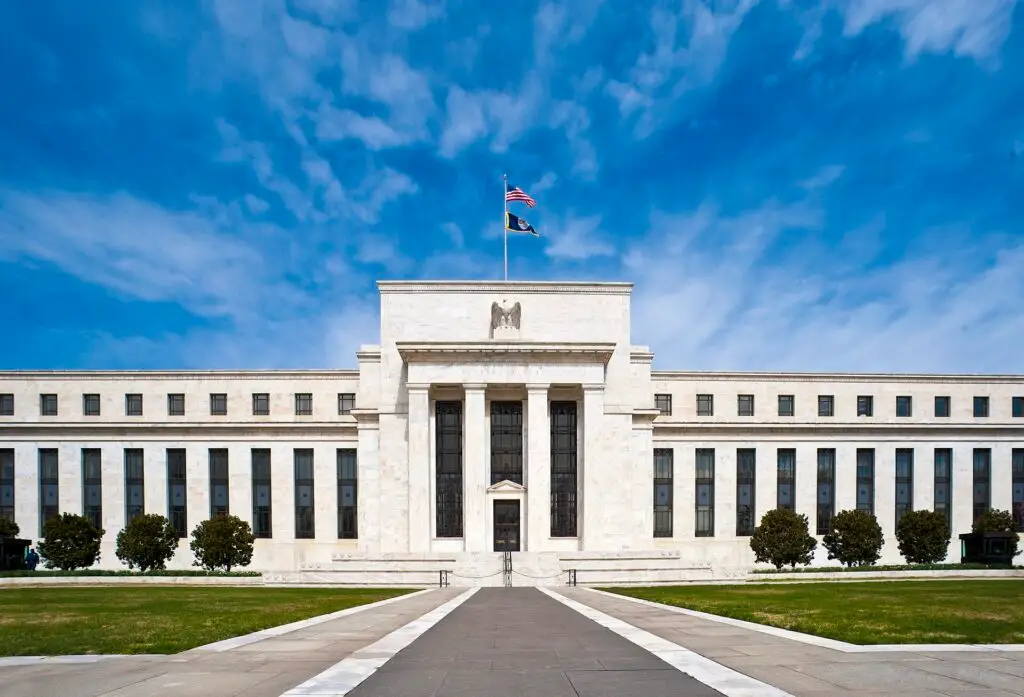
Friday’s U.S. jobs report showed 162,000 positions added in August against a forecast of 58,000, with unemployment steady at 4.1% and the previous two months revised up by a combined 55,000. Futures pricing moved to about a 60% chance that the Federal Reserve raises its policy rate by a quarter point at its 16 September meeting, from 49% the day before. U.S. stocks fell on Tuesday, with the S&P 500 down 0.4% and the Dow down 1.0%. In Canada the 5-year Government of Canada bond yieldBond yield The annual return an investor gets for lending to a government or company through a bond. Yields rise when bond prices fall. Fixed mortgage rates are priced from the 5-year Government of Canada yield. closed Tuesday at 3.40% and the 10-year at 3.77%, with the dollar at 72.55 U.S. cents.
Why it matters
A Fed hike does not change the Bank of Canada’s rate, but it changes the bond market that prices your fixed mortgage. Canadian yields move with U.S. yields most days, so a hike in Washington shows up in five-year fixed quotes in Canada within the week. The Canadian dollar also tends to weaken when the gap between U.S. and Canadian rates widens, which raises the cost of anything priced in U.S. dollars.
Our view
Our view: the market is now pricing what we argued last week, that the era of cheaper money each year is over. A hike on 16 September would confirm it. We think fixed rates in Canada hold in the low-4% range through the fall, and that waiting for lower rates before a renewal is a bet against the bond market rather than a plan.
What to consider
Anyone renewing a mortgage in the next six months should hold a rate now. Most lenders offer a rate hold of 90 to 120 days at no cost, which keeps the option open if the market turns the other way after Friday’s U.S. inflation data.
Array
4 Canada lost 42,000 jobs in August and wages grew at the slowest pace since 2017

What happened
Statistics Canada’s Labour Force Survey for August, released Friday 4 September, showed employment down 42,000 and the employment rate falling to 60.8%. Unemployment held at 6.4% only because fewer people were looking. Average hourly wages rose 2.0% from a year earlier to $37.02, the weakest growth outside the pandemic since November 2017. Manufacturing added 22,000 jobs; Quebec lost 19,000 and Ontario 18,000. Youth unemployment rose to 12.9%.
Why it matters
Wage growth of 2% against inflation near 2.5% means the average pay cheque is buying slightly less than a year ago. That is the number behind the feeling that things are tight even though the headline economy is not in recession. It also matters for the Bank of Canada: a softening labour market is the one argument for cutting rates that oil and tariffs have not taken away.
Our view
Our view: this report and the oil price are pulling the Bank of Canada in opposite directions, and we think the labour market loses that argument for now. A weak jobs number gets a cut only when inflation is behaving, and inflation is about to get an oil and tariff push.
What to consider
For households, the practical response to flat real wages is the boring one: an emergency fund of three to six months of expenses in a high-interest savings account or short-term GIC, which at today’s yields pays a real return for the first time in years.
Where this connects
Slower wage growth removes slack from a household budget, which raises the cost of any interruption to income. It is a reason to check how long the household could carry its fixed costs, not a reason to cut back on protection.
Array
5 Canadians bought the most new vehicles since 2019, and retail spending is up 7%

What happened
Statistics Canada reported on Tuesday that 547,673 new motor vehicles were registered in the second quarter, the highest for that quarter since 2019. Its Retail Commodity Survey put June retail sales at $78.4 billion, 7.2% higher than a year earlier.
Why it matters
Read beside the jobs data, this is a household that is still spending but increasingly on credit and on big-ticket purchases pulled forward before prices rise. Vehicle purchases in particular are sensitive to tariffs and to financing rates, both of which moved against buyers this week. Strong spending also gives the Bank of Canada one more reason not to cut.
Our view
Our view: a spending surge with flat real wages is borrowed demand, and borrowed demand is repaid later at whatever rate is then on offer. We would expect vehicle sales to cool through the fourth quarter as tariff pricing reaches showrooms.
What to consider
If a vehicle purchase is in your plans, the financing rate matters more than the sticker this year: a 7-year loan at 7% adds roughly a quarter of the price in interest. Shorter terms and a larger down payment change that arithmetic more than any dealer incentive.
Array
| 07:00 PT | U.S. Employer Costs for Employee Compensation (Q2) | |
| Thu 05:30 PT | U.S. Producer Price Index (August) | |
| Fri 05:30 PT | U.S. Consumer Price Index (August) | |
| 16 Sep | U.S. Federal Reserve rate decision | 60% odds of +25 bp |
| Late Oct | Bank of Canada rate decision | Hold at 2.25% |
Glossary today: CPI ex-gasolineCPI ex-gasoline The Consumer Price Index with gasoline removed. When it sits well below the headline rate, the inflation is coming from fuel rather than from the broad economy. bond yieldBond yield The annual return an investor gets for lending to a government or company through a bond. Yields rise when bond prices fall. Fixed mortgage rates are priced from the 5-year Government of Canada yield.
Sources
- Finance Canada, List of products from the United States subject to counter-tariffs effective September 8, 2026, 2026-08-25
- Yahoo Finance, Stock Market Today (Sept. 8, 2026), 2026-09-08
- Al Jazeera, Oil prices surge as US-Iran strikes intensify in Strait of Hormuz, 2026-09-07
- Kiplinger, What a Blowout August Jobs Report Means for a September Rate Hike, 2026-09-04
- Bank of Canada, Bank of Canada maintains the policy rate at 2¼%, 2026-09-02
- Ascenthya market feed, Bank of Canada Valet data, 8 September close, 2026-09-08
- Statistics Canada, The Daily: Labour Force Survey, August 2026, 2026-09-04
- Statistics Canada, The Daily, 8 September 2026: New Motor Vehicle Registrations, Q2 2026; Retail Commodity Survey, June 2026, 2026-09-08
Important disclosure information
All information in this material is as of 9 September 2026 unless otherwise indicated. Market figures shown in the live rails are supplied by the sources named beneath them and may be delayed.
See moreSee less
This material is prepared by the Ascenthya Research Desk for informational and educational purposes only. It is general in nature and does not take into account the objectives, financial situation or needs of any particular person. It may be shared by link, but may not be copied, reproduced, republished or distributed in whole or in part, or altered in any way, without the prior written consent of Ascenthya (together with its affiliates, “Ascenthya”).
The views and opinions expressed are those of the Ascenthya Research Desk as of the date shown. They may not reflect the views of Ascenthya as a firm, are subject to change at any time without notice, and Ascenthya has no obligation to update them. Where a view is labelled as a house view, it is an opinion, not a forecast, and the conditions that would change it are stated alongside it.
Nothing in this material constitutes an offer, solicitation or recommendation to buy or sell any security, insurance product or other financial instrument, or to adopt any investment, tax, estate, insurance or financing strategy. It is not an invitation to enter into any transaction and shall not form the basis of, or be relied upon in connection with, any contract or commitment. Products and services are offered only where Ascenthya and its advisors are licensed to do so, and only after a personal assessment of suitability.
This material is not intended to provide, and should not be relied upon for, legal, tax, accounting or investment advice. Readers should obtain advice from their own qualified professionals about their particular circumstances before acting on anything in this material.
There can be no assurance that any trend described in this material will continue or will not reverse. Past events and past performance are not indicative of future events or results. Certain statements may be forward looking in nature; such statements are identified by words such as “expect”, “think”, “would”, “likely”, “may” or similar terms, involve risks and uncertainties, and actual events or results may differ materially from those contemplated. Undue reliance should not be placed on them.
Information obtained from third parties, including government and central bank releases, news organisations and market data providers, is believed to be reliable but has not been independently verified. Ascenthya makes no representation or warranty, express or implied, as to its accuracy, completeness or timeliness, and accepts no liability for any loss arising from its use. Sources are cited so that readers may consult the original releases.
This material may reference the names, trade names or trademarks of companies and institutions that are not affiliated with Ascenthya. Such references are for identification only and do not imply any relationship with, or endorsement by, those parties. Photographs are used under the licence stated in their credit line.
© 2026 Ascenthya. All rights reserved.