Markets · 3 Nov 2026Policy rateBank of Canada2.50%YieldsCA 2Y3.26%CA 5Y3.49%+3 bpCA 10Y3.77%+3 bpCanadian dollarCAD/USD0.7146−0.11%CAD/EUR0.6385−0.02%CAD/GBP0.5325−0.15%CAD/JPY113.25+0.34%CryptoBTCUS$80,269+3.46%ETHUS$2,423+5.57%

Morning Brief

Wednesday 14 October 2026

U.S. CPI rose 3.7% in the year to September, up from 3.4% in August, with gasoline up 34.2% and accounting for more than half of the monthly increase.

The desk’s view todayThe Bank of Canada will hold at 2.25% on 28 October, but a hike by December is a live risk, and borrowers should plan for fixed rates to stay where they are or rise.

Story 1 of 5

U.S. inflation re-accelerates to 3.7% as gasoline jumps

Gas pumps at a filling station
Photo: Pexels

01What happened

The U.S. Bureau of Labor Statistics reported on 14 October that the Consumer Price Index rose 0.6% in September and 3.7% over 12 months, up from 3.4% in August. Gasoline rose 9.1% in the month and 34.2% over the year, and accounted for more than half of the monthly increase. Core CPI, which strips out food and energy, rose 0.3% in the month and 2.6% over the year, up from 2.4%. Food was flat on the month and shelter rose 0.4%.

The print lands four weeks after the Federal Reserve raised its policy rate by 25 basis points to a 3.75% to 4.00% range on 16 September, its first increase since 2023, with a statement that inflation remains elevated. The next Fed decision is on 28 October, the same day as the Bank of Canada’s.

02Our view

Fixed mortgage rates in Canada are more likely to hold or drift higher into year-end than to fall. September’s U.S. inflation report overstates the underlying problem, but it closes the door on near-term rate relief on either side of the border.

Why we think so. The jump in the headline rate from 3.4% to 3.7% is mostly a fuel story. Gasoline rose 9.1% in the month and 34.2% over the year, and on its own accounted for more than half of the 0.6% monthly increase. Strip out food and energy and core CPI rose 0.3% in the month and 2.6% over the year, up from 2.4%: firmer, but only modestly above target. That matters for central banks later, less for Canadian borrowing costs now. The Government of Canada 5-year bond yieldBond yield The annual return an investor gets for lending to a government or company through a bond. Yields rise when bond prices fall. Fixed mortgage rates are priced from the 5-year Government of Canada yield., which sets fixed mortgage pricing, closed at 3.54% on 9 October and moves with U.S. yields day to day. A hot U.S. print keeps U.S. yields high, and that pressure reaches Canadian lenders’ funding costs within hours, long before the Bank of Canada meets. The Federal Reserve, which raised its range by 25 basis points on 16 September, has no reason to back away.

What the market is pricing. Forecasters expected 3.7% on the headline and 2.5% on core. The headline landed exactly on consensus; core came in a tenth higher. Core is the part traders will dwell on, because it shows whether a fuel shock is spreading. We agree with the market that relief is not close, but we put more weight on the energy share than on the core surprise. If gasoline stabilises, the headline can ease quickly. The realistic risk for borrowers is a long plateau, with yields refusing to fall because neither measure is coming down convincingly.

What it means. For a Canadian with a fixed-rate renewal ahead, the working assumption should be that today’s rates are closer to a floor than a ceiling for the rest of the year. A rate hold from the lender, which usually costs nothing, protects against further increases between now and the renewal date. A variable rate follows the Bank of Canada’s policy rate through prime, and no cut is in view. Stress-testing the household budget at 1% above the current mortgage rate shows whether there is room before a decision is forced. Savers, on the other side, still find GIC rates attractive.

What would change our mind. A Canadian September CPI on 19 October showing inflation clearly easing, with the core measures holding near 2%, combined with the 5-year yield settling well below its 3.54% close of 9 October, would tell us fixed rates have room to fall. In the other direction, a Canadian print of 3.3% or higher with CPI-trim and CPI-median above 2.5% would make a Bank of Canada hike in October the base case, and fixed rates would rise faster than we expect.

What to watch. The Federal Reserve’s Beige Book today; Governor Macklem’s fireside chat at the Institute of International Finance today and his IMF panel on 16 October, for any hint of how the Bank reads the energy shock; Canada’s September CPI on 19 October; and the Bank of Canada and Federal Reserve decisions, both on 28 October.

03Why it matters to you

If you are renewing or buying, hotter U.S. inflation keeps pressure on Canadian fixed rates. Knowing when to lock a rate can matter as much as which lender you choose.

Book a mortgage renewal review

Sources U.S. Bureau of Labor Statistics, Consumer Price Index, September 2026; U.S. Federal Reserve, Federal Reserve issues FOMC statement, 16 September 2026; Bank of Canada, Selected bond yields

Story 2 of 5

Oil back above US$106 as the Russian diesel deal meets Hormuz attacks

The oil supertanker AbQaiq under way at sea
Photo: PUBLIC DOMAIN, via Wikimedia Commons

01What happened

Brent crude rose to US$106.60 a barrel and WTI to US$95.79 on 14 October, a two-week high, after Houthi strikes hit a Saudi Aramco building in Dhahran and Iranian officials told Reuters they are using new tactics against ships in the Strait of Hormuz. A container ship sank south of the Strait after striking a mine.

The move reverses Tuesday’s dip, when traders priced in the arrangement announced by President Trump on 9 October to temporarily lift some sanctions so Russia can export diesel. The International Energy Agency said on 14 October that Russia lacks the refining capacity to change the global diesel balance much, and that tight diesel supply could persist well into next year.

02Our view

Oil near US$100 is now a policy variable, not just a pump price. If Brent holds at these levels through October, the odds of a Bank of Canada hike this year rise even as the job market weakens, which is the worst combination for borrowers.

Why we think so. Brent rose to US$106.60 and WTI to US$95.79 on 14 October, a two-week high, after Houthi strikes hit a Saudi Aramco building in Dhahran, Iranian officials said they are using new tactics against ships in the Strait of Hormuz, and a container ship sank after striking a mine. The transmission into Canadian inflation is direct. Gasoline was up 22.8% over the year in Canada’s August CPI, and Governor Macklem said in September that the Bank normally expects each 10% rise in oil to add about 0.2 percentage points to CPI. He also said the Bank estimates oil is roughly US$40 above where fundamentals would put it: the price is being set by risk. A central bank can usually look through a brief energy spike. It cannot look through one that lasts long enough to shape inflation expectations, and the Bank has said it will not ignore a persistent shock.

What the market is pricing. Traders briefly priced relief on Tuesday, when the arrangement announced on 9 October to temporarily lift some sanctions so Russia can export diesel looked like extra supply. That dip has now reversed, and we think the reversal is the right reading. The International Energy Agency said on 14 October that Russia lacks the refining capacity to change the global diesel balance much, and that tight diesel supply could persist well into next year. The market is now pricing physical risk in the Gulf ahead of policy gestures, and we agree with that ordering. Diesel matters here because it is the fuel of freight, so its price feeds into food, building materials and delivery costs with a lag.

What it means. For households, fuel, airfares and delivery charges stay elevated, so fuel is a line to track month by month this autumn. For business owners with fuel or freight exposure, now is the time to review escalation clauses in supplier and customer contracts, because costs are hard to pass on when customers are already cautious. For borrowers, a central bank tightening into a weakening labour market raises payments just as income security softens. A cash reserve of three to six months of expenses is what prevents a spike in running costs from forcing new borrowing at today’s rates.

What would change our mind. Brent holding above US$105 into the 28 October decision, alongside a September CPI on 19 October of 3.3% or higher, would make an October hike our base case rather than a risk. In the other direction, a sustained fall in Brent back below US$100, with fewer attacks on shipping in the Strait, would take the energy argument for a hike off the table.

What to watch. Shipping incidents in and around the Strait of Hormuz; any further detail on the Russian diesel arrangement; Governor Macklem’s remarks at the Institute of International Finance today and at the IMF on 16 October; Canada’s September CPI on 19 October; and the Bank of Canada decision on 28 October.

03Why it matters to you

If fuel is one of your biggest monthly costs, oil above US$106 keeps it high into the winter. Planning for it now is easier than catching up later.

Book a budget and savings check

Sources Reuters via Business Recorder, Oil prices climb as Iran deploys new tactics to target ships transiting Hormuz; Reuters via Business Recorder, Oil prices mixed; Reuters via Business Recorder, Trump defends Russia diesel deal as lawmakers from both parties complain; money.ca via Yahoo Finance Canada, Tiff Macklem signals possible Bank of Canada rate hike as oil prices push inflation to 3%

Story 3 of 5

Wall Street treads water as the big banks report and yields sit above 5%

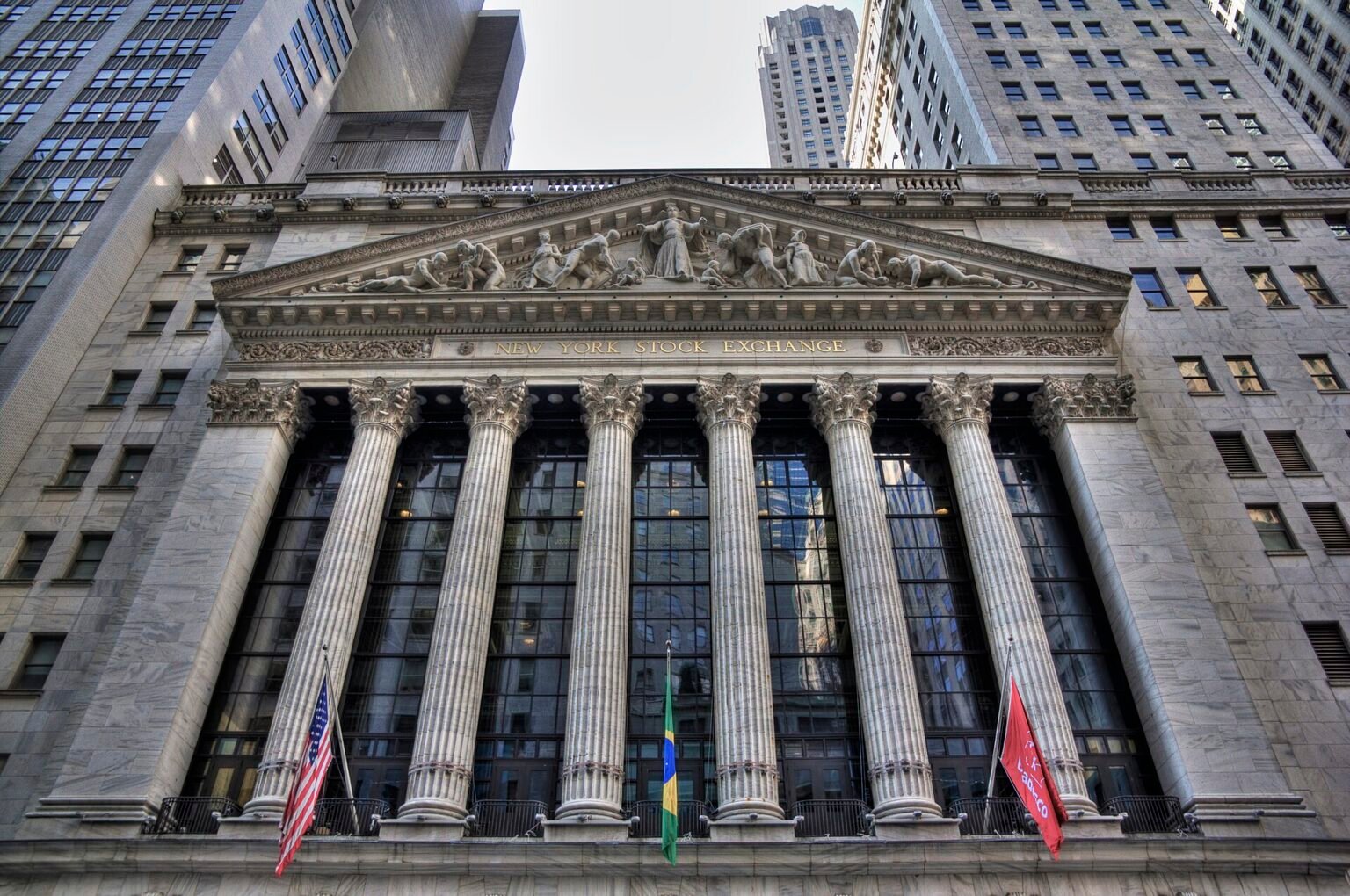
The facade of the New York Stock Exchange on Broad Street
Photo: TomasEE, CC BY 3.0, via Wikimedia Commons

01What happened

The S&P 500 closed almost unchanged at 7,805.45 on 13 October (down 0.02%), the Dow lost 0.35% to 51,670.10 and the Nasdaq slipped 0.15% to 27,204.38 as the third-quarter earnings season opened with the large U.S. banks. JPMorgan earned US$15.3 billion but missed on per-share profit; Goldman Sachs beat comfortably on a 72% jump in equities trading revenue. Memory-chip makers fell sharply on fears of Chinese competition.

On 14 October Morgan Stanley and BlackRock beat estimates while Bank of America missed and booked a US$1.2 billion charge. The 10-year U.S. Treasury yield stood at 5.19% on Tuesday morning, and the average U.S. 30-year mortgage rate is 7.4%, its highest since late 2023. The S&P/TSX Composite closed at 35,518.55 on 13 October.

02Our view

Through this earnings season, U.S. stocks depend on profits continuing to beat a very high bar, and with the 10-year Treasury above 5% the margin for disappointment is thin. We do not read a flat day as calm; we read it as a market that was waiting on inflation data it has now received.

Why we think so. The S&P 500 closed almost unchanged at 7,805.45 on 13 October, the Dow lost 0.35% to 51,670.10 and the Nasdaq slipped 0.15% to 27,204.38. Under the surface the bank results were genuinely mixed. JPMorgan earned US$15.3 billion but missed on per-share profit, while Goldman Sachs beat comfortably on a 72% jump in equities trading revenue. On 14 October Morgan Stanley and BlackRock beat estimates, and Bank of America missed and booked a US$1.2 billion charge. Memory-chip makers fell on fears of Chinese competition. That pattern, strong trading income alongside uneven core lending profits, is what a late-cycle market looks like: activity is high, but the easy gains are gone. Meanwhile the 10-year Treasury yield stood at 5.19% and the average U.S. 30-year mortgage rate at 7.4%, its highest since late 2023. When safe assets pay that much, stocks have to earn their valuations rather than borrow them from low rates.

What the market is pricing. Analysts expect roughly 30% earnings growth for the S&P 500 this quarter. That is a demanding number, and the index near record levels suggests investors are treating it as achievable. Our view is broadly in line with the market on the first weeks of results, which have mostly delivered. Where we differ is on the cost of a miss. At these yields, a company that disappoints is not just compared with its peers; it is compared with a government bond paying more than 5% with no earnings risk at all. That makes the reaction to bad news sharper than it would have been when bonds paid little.

What it means. Most Canadian portfolios hold U.S. equities directly or through funds, so this season is a test of something most investors own. The practical step is to check how much of a portfolio is concentrated in U.S. technology, and whether the fixed-income share has been revisited since yields crossed 5% in the U.S. and the Government of Canada 10-year reached 3.86% at home. A bond yieldBond yield The annual return an investor gets for lending to a government or company through a bond. Yields rise when bond prices fall. Fixed mortgage rates are priced from the 5-year Government of Canada yield. at these levels means cash, GICs and short bonds now offer a real return after inflation. Rebalancing back to a target mix is a decision about risk, not a prediction about markets, and the balance between growth and income should be set against the investor’s time horizon rather than last quarter’s returns.

What would change our mind. Results falling clearly short of the roughly 30% growth expected as more large companies report, or the 10-year Treasury pushing further above 5.19% while earnings soften, would turn a thin margin into a correction. A move in the 10-year back meaningfully below 5% while profits keep beating would make us less cautious.

What to watch. The market’s reaction over the coming sessions to the 3.7% CPI print and core at 2.6%; the Federal Reserve’s Beige Book today; the rest of the earnings season, including ASML in Europe; and the Federal Reserve decision on 28 October.

03Why it matters to you

If your portfolio holds U.S. shares, this earnings season tests whether today’s prices are backed by profits. A review shows how much you depend on that bar being cleared.

Book a portfolio review

Sources TheStreet, Stock Market Today (Oct. 13, 2026): Nasdaq, S&P 500 flat as mixed bank earnings and chip weakness weigh on stocks; Charles Schwab, Mixed Bank Tidings, Chip Pressure, CPI in Focus; BNN Bloomberg, BofA misses profit estimates on capital market weakness, books US$1.2 billion charge; The Associated Press via Yahoo Finance Canada, US stocks rise to a record on expectations companies will make even fatter profits

Story 4 of 5

Canadian employers put hiring on hold as job losses mount

A help wanted sign on a shop window
Photo: Pexels

01What happened

A Harris Poll survey of 508 Canadian hiring decision-makers for Express Employment Professionals, released 14 October, found that 60% say the political climate is affecting their company, 40% negatively, and 61% say rising costs have changed their ability to operate, 48% for the worse. Among firms not adding staff in the second half of the year, 21% cite recession fears and 14% are waiting on the outcome of government policy. 29% say the business cannot survive much longer if wages and costs keep rising at this pace. The survey was fielded between 15 May and 1 June.

The release came a day after Montreal software company Lightspeed said 250 roles would go through layoffs and unfilled vacancies, and five days after Statistics Canada reported employment fell by about 68,000 in September, taking the unemployment rate to 6.5% from 6.4%. More than 100,000 jobs have been lost over two months, concentrated in the public sector and education.

02Our view

Into the new year, the Canadian labour market is soft enough that the Bank of Canada’s hike debate is about inflation credibility, not an overheated economy. That makes any hike shallow and short-lived, but it does little for a business owner whose revenue is flat while costs are not.

Why we think so. Statistics Canada reported that employment fell by about 68,000 in September, lifting the unemployment rate to 6.5% from 6.4%, and more than 100,000 jobs have been lost over two months, concentrated in the public sector and education. In the private sector the signals point the same way. Lightspeed said on 13 October that 250 roles would go through layoffs and unfilled vacancies. The Harris Poll survey of 508 hiring decision-makers for Express Employment Professionals found that 61% say rising costs have changed their ability to operate, 48% for the worse, and that 29% say the business cannot survive much longer if wages and costs keep rising at this pace. Among firms not adding staff, 21% cite recession fears and 14% are waiting on government policy. Those are the conditions of an economy with no excess heat. Inflation, by contrast, is being driven by energy: core measures were near 2% in August while gasoline was up 22.8%.

How this has played out before. When inflation comes from a supply shock rather than from strong demand, central banks that do tighten tend to stop early, because higher rates do nothing to lower the price of oil and a great deal to slow hiring. A hiring freeze is also self-reinforcing: when employers hold back, fewer workers change jobs, wage growth cools and household spending follows. One caution on the survey: it was fielded between 15 May and 1 June, before the two months of job losses, so current sentiment is unlikely to be better than it shows.

What it means. For business owners, a freeze across the board is a default, not a strategy. Building a 12-month plan with no new hires and comparing it against one with selective hiring in revenue-generating roles turns it into a decision. For employees, particularly in cyclical sectors or the public service, two months of losses change the calculation on job moves and variable pay, and an emergency fund covering six months of essential spending is a reasonable target. For borrowers, a weak labour market caps how far rates can rise, but it does not bring a cut while energy keeps headline inflation elevated. Households should compare their fixed commitments with the income they could count on through a six to twelve month gap.

What would change our mind. A September CPI on 19 October of 3.3% or higher with CPI-trim and CPI-median above 2.5% would mean inflation is broadening beyond energy, and any hike could be larger and longer than we expect. A rebound in hiring in the next Labour Force Survey would weaken the case that the economy has no excess heat.

What to watch. Canada’s September CPI on 19 October; the Bank of Canada decision on 28 October; Governor Macklem’s remarks in Bangkok today and on 16 October; and further layoff announcements from Canadian employers.

03Why it matters to you

If your income depends on an employer that has frozen hiring, a softer job market makes your safety net more important. Knowing how long you could manage without pay is worth checking.

Book an income protection check

Sources Express Employment Professionals via GlobeNewswire, Political Uncertainty Has Some Canadian Employers Putting Hiring Plans on Hold; The Canadian Press via BNN Bloomberg, Lightspeed cuts 250 roles by laying off staff, not filling vacancies; BNN Bloomberg, ‘Quite disappointing’: Economists react to weak September jobs report

Story 5 of 5

IMF tells rich countries to cut deficits as bond markets charge a premium

Kristalina Georgieva speaking at a public event
Photo: Friends of Europe, CC BY 2.0, via Wikimedia Commons

01What happened

Opening the IMF and World Bank annual meetings in Bangkok on 14 October, Managing Director Kristalina Georgieva said the United States and other wealthy nations must bring deficits down, warning that growth alone cannot deliver the adjustment fast enough. U.S. national debt now exceeds US$40 trillion. The IMF’s fiscal director, Rodrigo Valdes, said fiscal risks are rising, that a proper reaction is largely absent in many countries, and that indiscipline in big economies travels to the rest of the world.

Governor Macklem is at the same meetings, with a fireside chat at the Institute of International Finance today and an IMF panel on 16 October, ahead of the Bank of Canada’s 28 October decision. KPMG Canada’s chief economist, Ali Jaffery, wrote earlier this month that the bond market is imposing a premium and Canada is being swept up in it, with the 5-year yield up almost 100 basis points in a year.

02Our view

The term premium is the story of this autumn, and it is unlikely to reverse quickly while U.S. deficits widen and energy keeps inflation sticky. Into the new year, Canadians should plan for long-term rates to stay near current levels rather than for a return to the 2% to 3% era.

Why we think so. The term premium is the extra return investors demand for lending to a government for many years rather than a few months. It rises when buyers worry about inflation, debt issuance or fiscal control, and all three are now in play. Opening the IMF and World Bank annual meetings in Bangkok on 14 October, Managing Director Kristalina Georgieva said the United States and other wealthy nations must bring deficits down and that growth alone cannot deliver the adjustment fast enough. U.S. national debt now exceeds US$40 trillion. The IMF’s fiscal director, Rodrigo Valdes, warned that fiscal risks are rising, that a proper reaction is largely absent in many countries, and that indiscipline in big economies travels to the rest of the world. KPMG Canada’s chief economist, Ali Jaffery, wrote that the bond market is imposing a premium and Canada is being swept up in it, with the 5-year yield up almost 100 basis points in a year. The long-term Government of Canada bond yielded 4.23% on 9 October, the highest in years.

The bigger picture. Canada’s federal finances are in better shape than most peers, but its bond market does not set prices in isolation. Global investors move money between government bond markets constantly, so when U.S. yields rise because of U.S. deficits, Canadian yields are pulled up with them. That is why the premium sets a floor under Canadian fixed mortgage rates, GIC rates and annuity pricing regardless of what the Bank of Canada does with the overnight rate. A premium driven by fiscal worries also tends to be slow to fade, because it reflects years of expected borrowing rather than a single data release.

What it means. For savers, higher long yields are an opportunity. Comparing one, three and five year terms against a personal time horizon, and spreading a cash reserve across terms in a ladder, captures today’s rates without betting on the next move. For people approaching retirement, higher long yields improve the income a given amount of savings can buy, which changes the trade-off between keeping capital invested and converting part of it to guaranteed income. For borrowers, the premium means fixed rates are unlikely to fall far even if the Bank eventually eases. For governments, including provinces, it is a rising interest bill.

What would change our mind. Credible deficit-reduction commitments from Washington, or a clear fall in energy prices that brings inflation down, would allow the premium to compress. The measurable sign would be the long Canada bond moving well below its 4.23% level of 9 October, and the 5-year giving back a large part of its near 100 basis point rise.

What to watch. Governor Macklem’s fireside chat at the Institute of International Finance today and his IMF panel on 16 October; further statements from the IMF and World Bank meetings; Canada’s September CPI on 19 October; and the Bank of Canada and Federal Reserve decisions on 28 October.

03Why it matters to you

If you are renewing a mortgage, buying a GIC or considering an annuity, bond markets now set the price. Comparing your options with that in mind can make a real difference.

Book a mortgage renewal review

Sources The Associated Press via ABC News, IMF chief urges US and wealthy nations to rein in debt to ease global economic pressure; Bank of Canada, Upcoming events; Financial Post via Yahoo Finance Canada, Bond markets demanding credibility could force Bank of Canada to hike, says KPMG; Bank of Canada, Selected bond yields

Today’s news, considered against your own plans.

If one of these stories bears on your mortgage, savings, income or business, we would be glad to go through it with you and explain clearly what, if anything, it means for you.

Book a conversation

Free · optional

The Morning Brief in your inbox at 06:00 Pacific.

The day’s stories, what each means for you, and our view. Unsubscribe in one click.

Email subscriptions open shortly.