Story 1 of 5
Markets and most economists now expect the Bank of Canada to lift its rate to 2.50% on Wednesday, the first hike since July 2023
01What happened
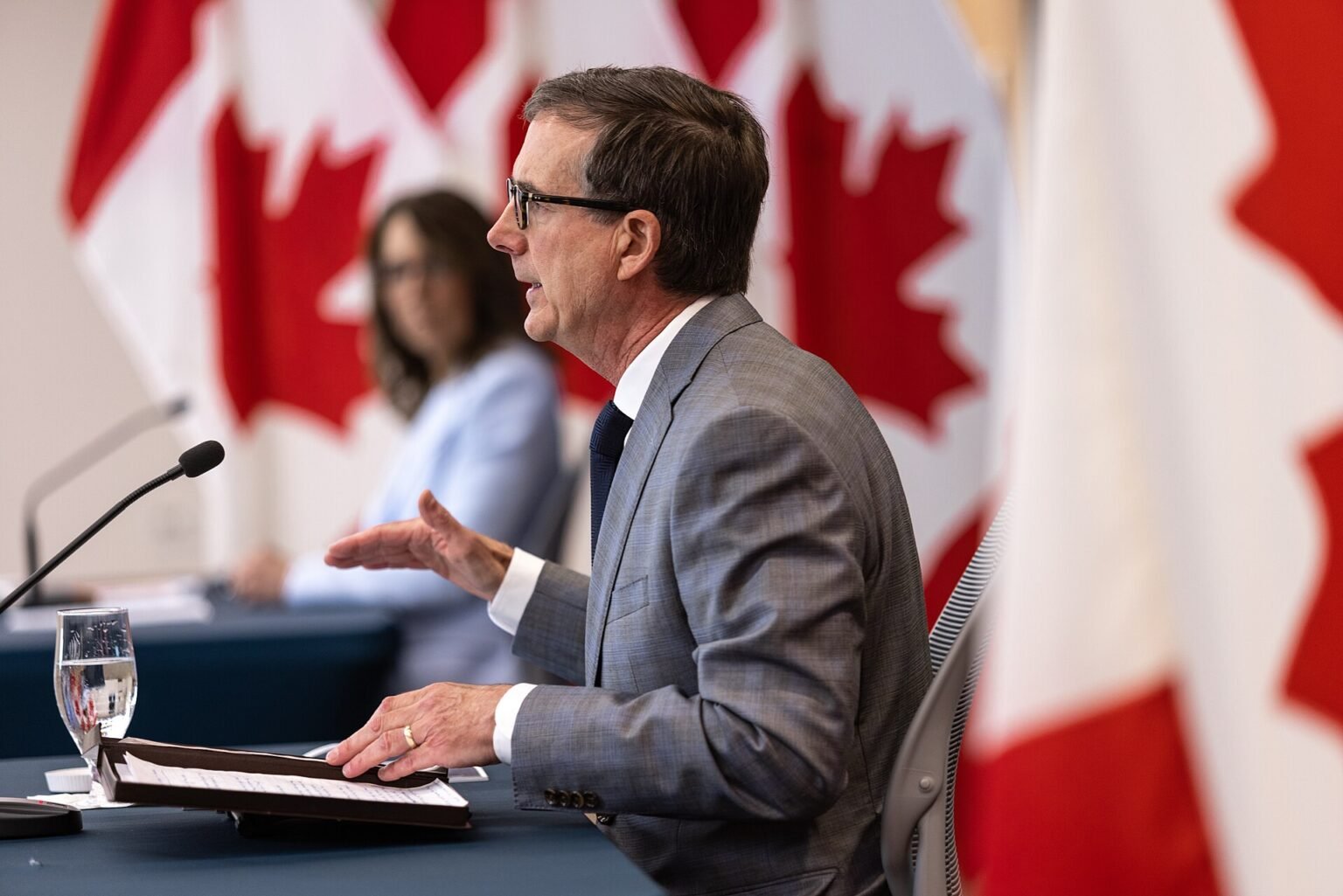
Reuters reported on Monday morning that money markets are pricing a 25 basis point increase at the Bank of Canada’s decision on Wednesday 28 October (06:45 PT, with the quarterly Monetary Policy Report), which would take the overnight rate from 2.25% to 2.50%. In a Reuters survey taken 21 to 23 October, 19 of 34 economists expected the move and a majority saw one more increase before March. The rate has not changed for a year, and a hike would be the first since July 2023.
The case rests on energy. Statistics Canada’s September CPI release on 19 October put headline inflation at 3.1%, up from 3.0% in August, with gasoline up 27.8% from a year earlier and energy as a whole up 19.0%. Strip out gasoline and inflation was 2.2%; the Bank’s core measures eased, CPI-trim to 1.8% and CPI-median to 1.9%, and food bought from stores slowed to 1.7%, the smallest rise since May 2024. Growth is soft: Reuters notes housing, manufacturing and wholesale data point to a third quarter well below the second, and the last two jobs reports erased this year’s employment gains.
Bonds have already moved. The Bank of Canada’s posted closes for Friday 23 October: 2-year 3.33%, 5-year 3.56%, 10-year 3.83%, each up from Thursday (3.22%, 3.50%, 3.78%). Reuters puts the 2-year yield more than 22 basis points above where it sat at the September meeting. Governor Tiff Macklem said at the IMF meetings earlier this month that the Bank was ready to act if inflation stayed high. BMO’s Doug Porter told Reuters he would not favour a hike given the weaker economy but reads the Bank’s messaging as pointing to one; Pedro Antunes of Signal49 Research expects the Bank to “talk tough” to keep expectations anchored. The U.S. Federal Reserve also decides on Wednesday (11:00 PT) and is expected to hold.
02Our view
The Bank of Canada raises its overnight rate by 25 basis points to 2.50% on Wednesday, to protect inflation expectations rather than because core prices are running hot. A second hike before March is less certain than markets price.
Why we think so. Headline inflation is almost entirely an energy story. September CPI rose to 3.1% from 3.0%, with gasoline up 27.8% on the year and energy as a whole up 19.0%. Strip out gasoline and inflation was 2.2%; the Bank’s core measures eased, CPI-trim to 1.8% and CPI-median to 1.9%. On those numbers alone there is no case for tightening; the case rests on time. The Bank has said its concern grows the longer energy prices stay high, because a prolonged shock risks feeding into expectations, wages and the prices of everything else. With Brent still above US$114 after a 6% gain last week, that risk has grown, and Governor Tiff Macklem said at the IMF meetings that the Bank was ready to act if inflation stayed high. A hike now is a signal that a temporary shock will not be allowed to become a permanent one.
What the market is pricing. Money markets price a 25 basis point increase, and 19 of 34 economists in a Reuters survey expected it, with a majority seeing one more before March. The 2-year yield, at 3.33% on Friday, is more than 22 basis points above its level at the September meeting. We agree on Wednesday and differ on the follow-up. The last two jobs reports erased this year’s employment gains, and housing, manufacturing and wholesale data point to a third quarter well below the second. Once the signal has been sent, those conditions argue for patience. BMO’s Doug Porter reads the messaging as pointing to a hike he would not favour, and Pedro Antunes of Signal49 Research expects the Bank to talk tough: a message, not the start of a long cycle.
What it means. If the overnight rate rises, the big banks’ prime rate follows within a day or two, and every variable-rate mortgage, home equity line of credit and floating business loan reprices with it. On a $500,000 variable mortgage in the low-4% range with 25 years left, a quarter point adds about $68 a month and a half point about $137. Fixed rates key off the 5-year bond yieldBond yield The annual return an investor gets for lending to a government or company through a bond. Yields rise when bond prices fall. Fixed mortgage rates are priced from the 5-year Government of Canada yield., which at 3.56% is higher than at any point since the summer, so renewers face higher costs whichever way they lean; a written rate hold for a renewal in the next six months costs nothing. For savers, the same move lifts what savings accounts and GICs pay.
What would change our mind. A hold on Wednesday with language that the Bank will look through energy, which would pull the 2-year yield back under 3.20% within days. Or core measures climbing above 2.5% over the winter, which would mean the energy shock is spreading and more than one hike is coming.
What to watch. The Bank of Canada decision and Monetary Policy Report on Wednesday 28 October at 06:45 PT; the U.S. Federal Reserve decision at 11:00 PT the same day, expected to hold at 3.75% to 4.00%; and Canada’s August GDP on Friday, where Statistics Canada’s advance estimate was 0.1%.
03Why it matters to you
If you hold a variable mortgage, a line of credit or a floating business loan, Wednesday can reprice all three. Knowing your payment at the new rate lets you plan rather than react.
Sources Reuters, Bank of Canada expected to hike rate on Wednesday to stem spillover of energy inflation; Statistics Canada, Consumer Price Index, September 2026; Statistics Canada, Consumer Price Index, September 2026: Bank of Canada core measures (Table 4); Bank of Canada, Selected bond yields