Markets · 4 Nov 2026Policy rateBank of Canada2.50%YieldsCA 2Y3.26%CA 5Y3.49%+3 bpCA 10Y3.77%+3 bpCanadian dollarCAD/USD0.7163+0.24%CAD/EUR0.6374−0.17%CAD/GBP0.5316−0.17%CAD/JPY113.51+0.23%CryptoBTCUS$79,547+1.61%ETHUS$2,385+2.92%

Morning Brief

Thursday 22 October 2026

Scotiabank, Desjardins and BMO now forecast a Bank of Canada hike to 2.50% on 28 October, with swap markets pricing the odds near 80%, and September producer prices jumped 2.0% in the month.

The desk’s view todayThe Bank of Canada will raise the overnight rate to 2.50% on 28 October, and the open question has moved from whether to how many.

Story 1 of 5

Economists line up behind a Bank of Canada hike next week as markets price odds near 80%

Canadian dollar banknotes in black and white
Photo: Pexels

01What happened

Scotiabank, Desjardins and BMO Capital Markets each now forecast that the Bank of Canada will raise its overnight rate by 25 basis points to 2.50% on Wednesday 28 October, Global News reported on Wednesday 21 October. Scotiabank’s Derek Holt put it plainly: “We forecast the Bank of Canada will hike 25bps next week.” Desjardins’ Randall Bartlett expects a second 25 basis point move in January, and BMO’s Robert Kavcic is “looking for a very cautious set of rate hikes.”

The shift followed Monday’s data. September CPI came in at 3.1%, the third month in a row at or above 3%, and the Bank’s quarterly surveys showed consumers’ longer-term inflation expectations rising, with about half of firms planning to pass higher oil and tariff costs on to customers. Bloomberg reported that BMO, RBC and Desjardins all flipped to a hike call that afternoon, and that overnight swaps put the odds of a move at 87% by 2:45 p.m. Ottawa time, up from near 70% earlier in the day and about 30% the previous Friday. Pricing was still near 80% on Wednesday and Thursday morning. A Bloomberg survey of economists taken before the data still leaned to a hold.

The policy rate has sat at 2.25% since October 2025. Core measures have run closer to 2% for several months; the Bank’s concern is that energy is spreading into everything else. Governor Tiff Macklem said in Bangkok on the weekend that the question is whether inflation is likely to come back down toward target on its own. Desjardins’ Royce Mendes: “Central bankers can no longer look through the inflationary impact of high energy prices.”

The bond market has already moved. The Bank of Canada’s closes for Tuesday 20 October: 2-year 3.32% (3.21% a week earlier), 5-year 3.62%, 10-year 3.90%. The loonie traded at 71.14 cents US on Wednesday, near a four-week high.

02Our view

The Bank of Canada raises its overnight rate by 25 basis points to 2.50% on 28 October. That is a change from the hold we expected at the start of the week, and a second move is far from settled: it depends on where oil goes.

Why we think so. Three things changed this week. First, the data. September CPI came in at 3.1%, the third month in a row at or above 3%, and the Bank’s quarterly surveys showed consumers’ longer-term inflation expectations rising, with about half of firms planning to pass higher oil and tariff costs on to customers. Second, the Bank’s own framing. Governor Tiff Macklem said in Bangkok that the question is whether inflation is likely to come back down toward target on its own. Core measures have run closer to 2% for several months, but the concern is that energy is spreading into everything else, and on the evidence of the surveys the answer to the governor’s question is no longer clearly yes. Third, financial conditions. The 2-year yield closed at 3.32% on 20 October against 3.21% a week earlier. If the Bank held now, yields would fall back and financial conditions would loosen at the moment it wants them tighter. As Desjardins’ Royce Mendes put it, central bankers can no longer look through the inflationary impact of high energy prices.

What the market is pricing. Overnight swaps put the odds of a move at 87% by mid-afternoon on Monday, up from near 70% earlier that day and about 30% the previous Friday, and pricing was still near 80% on Wednesday and Thursday morning. Scotiabank, Desjardins and BMO now forecast a hike and Bloomberg reported RBC flipping too. We now agree with the market on 28 October. Where we are more cautious is the follow-up. Desjardins expects a second move in January; we think that depends on oil.

What it means. If the Bank moves, the prime rate at the big lenders follows within a day or two, and so does the cost of every variable-rate mortgage, home equity line and floating business loan. A household with a $500,000 variable mortgage pays roughly $70 a month more for each quarter-point rise, and the economists quoted are talking about two of them. Fixed rates have already repriced off the 5-year yield, so the window to lock ahead of the decision is nearly closed. For savers, the same move keeps GIC and high-interest savings rates from drifting lower. The wider question is the fixed-versus-variable balance across all of a household’s borrowing, and whether a short-term cash reserve covers a year of higher payments without touching long-term investments.

What would change our mind. A hold on 28 October paired with language that the Bank will look through energy, or a sharp drop in oil below US$90 before the decision. That would send the 2-year yield back below 3.20% within days and tell us the Bank weighs the weak jobs market more heavily than we do.

What to watch. Canada’s August retail sales on Friday, with a consensus of 1.3% in the month, as a final read on household demand; then the Bank of Canada decision and Monetary Policy Report on 28 October at 06:45 PT.

03Why it matters to you

If you hold a variable mortgage, a home equity line or a floating business loan, a hike next week raises the cost of all three. Knowing your numbers before it happens gives you time to adjust.

Book a mortgage renewal review

Sources Global News, Bank of Canada expected to raise rates next week, some economists say; Bloomberg, Bank of Canada hike bets grow among economists, traders; Hashtag Investing, Markets put 80% odds on Bank of Canada rate hike next week as loonie hits four-week high; Bank of Canada, Selected bond yields

Story 2 of 5

Factory-gate prices jump 2.0% in September as raw material costs climb 4.8%

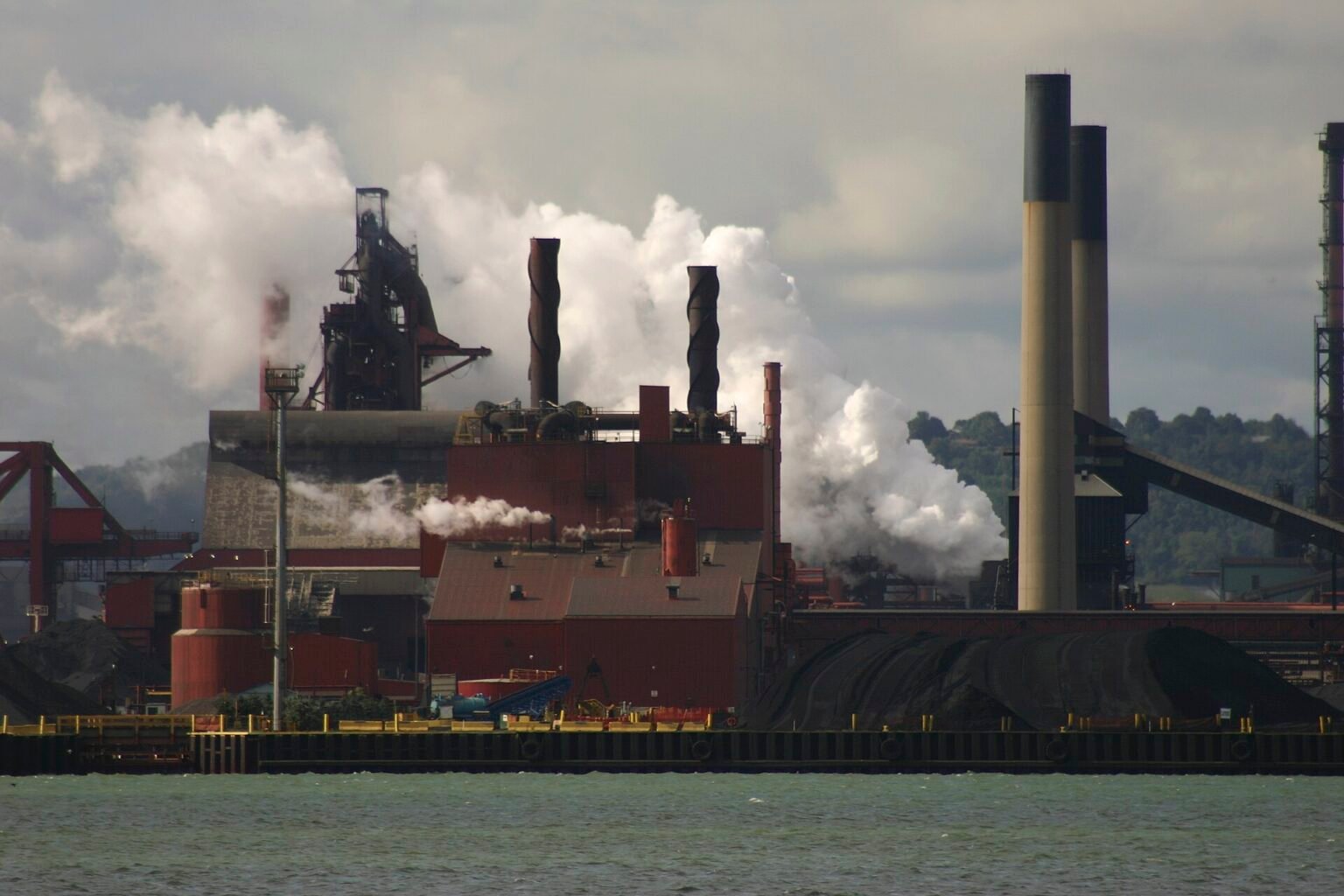
The Dofasco steel works on Hamilton Harbour, Ontario, with smokestacks and mill buildings
Photo: Martin Cathrae from Charlottetown, PE, Canada, CC BY-SA 2.0, via Wikimedia Commons

01What happened

Statistics Canada’s producer price data for September, released at 05:30 PT on Thursday 22 October, came in well above forecasts. The Industrial Product Price Index, which measures the prices manufacturers receive at the factory gate, rose 2.0% in the month after a 1.3% gain in August, and is up 14.5% from a year earlier (13.5% in August). The Raw Materials Price Index, the prices manufacturers pay for inputs, rose 4.8% in the month after 3.3% in August, and is 27.0% higher than a year ago (22.9% in August). The consensus on the Forex Factory calendar had been 0.9% and 3.1%.

Neither index is adjusted for the season, and both move with the exchange rate as well as world commodity prices, so a weak loonie and crude that has swung between US$97 and US$112 this month are both in these numbers. Statistics Canada’s website was unavailable on Thursday morning, so the agency’s own breakdown by product, including the split between energy and everything else, was not readable when this brief was written.

02Our view

September’s producer prices make a Bank of Canada hike next week more likely, not less, and point to headline CPI staying above 3% into the new year even if crude stops rising.

Why we think so. These are the prices one step upstream of the CPI, and both came in far above forecasts. The Industrial Product Price Index, the prices manufacturers receive at the factory gate, rose 2.0% in September after 1.3% in August and is up 14.5% from a year earlier. The Raw Materials Price Index, the prices manufacturers pay for inputs, rose 4.8% in the month after 3.3% and is 27.0% higher than a year ago. The consensus had been 0.9% and 3.1%. The gap between the two indexes is the signal. When input costs rise 27% in a year and selling prices rise 14.5%, the difference is margin being squeezed out of Canadian producers. Firms can absorb that for a while, but not indefinitely, and the Bank of Canada’s surveys say half of firms intend to pass costs on. The pass-through from inputs to shelf prices usually takes two to four months, which puts the pressure on the November and December CPI prints. That is why we expect headline inflation to stay elevated even if oil simply holds where it is.

The bigger picture. Producer price indexes need careful reading. Neither is adjusted for the season, and both move with the exchange rate as well as world commodity prices, so a weak loonie and crude that has swung between US$97 and US$112 this month are both in these numbers. A weaker currency raises the Canadian dollar price of commodities priced in U.S. dollars even when world prices are unchanged. The picture is also incomplete: Statistics Canada’s website was unavailable on Thursday morning, so the split between energy and everything else could not be read. If most of the rise is energy, it may fade if oil does; if other products are rising too, the pressure is broader. Either way, a surprise of this size is too large to dismiss.

What it means. For business owners who buy metal, fuel, plastics or packaging, the September numbers are the supplier price increases arriving in the next quarter. Check now which supplier contracts carry fuel, metal or currency escalators, and when your own prices can next be reset, rather than absorbing a 4.8% monthly jump in input costs. Businesses with thin margins should map winter cash flow with these costs built in. For households, these figures are the reason core inflation may not stay near 2% while headline sits above 3%, so a budget needs room for goods prices catching up with energy over the winter. For borrowers, the data strengthen the case for a rate increase and the higher variable-rate payments that would follow.

What would change our mind. An October IPPI that falls back toward zero, with CPI excluding energy still near 2%. That would show the pass-through from producers to consumers is weaker than the surveys suggest.

What to watch. The Bank of Canada decision and Monetary Policy Report on 28 October at 06:45 PT; Canada’s new housing price index for September, tentatively due today; and the November and December CPI prints, where the pass-through should appear.

03Why it matters to you

If your business buys raw materials, rising input costs are squeezing your margin before customers see higher prices. Reviewing pricing and cash flow now protects next quarter.

Book a business review

Sources investingLive, Canada September PPI +2.0% m/m vs +1.3% prior; Forex Factory, Economic calendar, Thursday 22 October 2026; Statistics Canada, The Daily (site unavailable on 22 October)

Story 3 of 5

Ottawa and Ontario put $8.7 billion behind steel, autos and the Ring of Fire

Exterior of the Ford Oakville Assembly Complex in Oakville, Ontario
Photo: Whpq, CC BY-SA 3.0, via Wikimedia Commons

01What happened

Prime Minister Mark Carney and Premier Doug Ford announced an $8.7 billion Canada-Ontario action plan in Ottawa on Wednesday 21 October, aimed at the industries hit hardest by U.S. tariffs. The largest piece is a Joint Steel Action Fund with five-year commitments of $3.55 billion from Ottawa and $1.67 billion from Ontario, to be delivered through existing channels such as the federal Strategic Response Fund, with a Buy Canadian policy and a Buy Ontario policy that put Canadian steel first in public procurement, and tighter enforcement by the Canada Border Services Agency.

Autos get an additional $2.5 billion over two years for large capital projects, up to $1.5 billion federal and up to $1 billion provincial. Ottawa will also freeze the fleet-average emissions standard at the 2026 level of 172 grams per mile through the 2029 model year, with annual tightening resuming in 2030 and the target of 75% electric-vehicle sales by 2035 kept. In the north, the federal government will match Ontario’s commitment of up to $1 billion over three years for road infrastructure into the Ring of Fire mineral belt, with a coordinated permitting process and a working group with First Nations. Carney called the plan “cooperative federalism in action.” Ford said it would “provide tariff-impacted workers the certainty and stability they deserve.”

No new wage, employment insurance or training money is attached; the release points back to the August measures, including the $3.5 billion Rapid Response Supports for workers and employers and the $1.5 billion Regional Tariff Response Initiative for small and medium firms.

02Our view

The $8.7 billion Canada-Ontario plan protects large, capital-intensive incumbents and buys time, but it does not change the tariff arithmetic. The emissions freeze through the 2029 model year is the more lasting change.

Why we think so. The largest piece is a Joint Steel Action Fund, with five-year commitments of $3.55 billion from Ottawa and $1.67 billion from Ontario, delivered through existing channels such as the federal Strategic Response Fund. Autos get an additional $2.5 billion over two years for large capital projects, and Ottawa will match Ontario’s commitment of up to $1 billion over three years for road infrastructure into the Ring of Fire. This is capital funding for large projects, not operating support. It helps big producers modernize and stay open, but it does not lower the tariff a Canadian steel or auto exporter pays at the U.S. border. No new wage, employment insurance or training money is attached; the plan points back to the August measures, including the $3.5 billion Rapid Response Supports and the $1.5 billion Regional Tariff Response Initiative. The funds are only as useful as the trade deal that does or does not arrive before they are spent. The emissions decision is different. Freezing the fleet-average standard at 172 grams per mile through the 2029 model year, with tightening resuming in 2030 and the 75% electric-vehicle target for 2035 kept, changes what the industry has to build for three model years regardless of what Washington does.

The bigger picture. Industrial support packages work best as bridges, keeping capacity intact while a larger problem is resolved; their value depends on that problem being resolved. Procurement is the other lever. Buy Canadian and Buy Ontario policies that put Canadian steel first in public procurement, with tighter enforcement by the Canada Border Services Agency, create domestic demand that does not depend on U.S. tariffs, although public projects can replace only part of an export market.

What it means. For business owners in steel, auto parts or mining supply chains in Ontario, this is the money and the procurement rule set to watch. A smaller supplier benefits only if a large customer invests, so the useful question is which customers are likely to apply and what they plan to build. Check eligibility under the Strategic Response Fund route the steel fund will use, and read the Buy Canadian rules before the end of the year, when bids for federal infrastructure and defence work start to reflect them. For vehicle buyers, the freeze means less pressure on manufacturers to push electric volumes, which tends to show up in pricing and availability. For taxpayers, this is more than $6 billion of new federal commitments on a deficit that was already rising.

What would change our mind. A Canada-U.S. agreement that lowers the sector tariffs before mid-2027, which would turn the funds from a lifeline into a bonus, or steel production that keeps falling despite the money, which would show it came too late.

What to watch. The detailed rules for the steel fund and the Buy Canadian procurement policy as bids for federal work begin to reflect them before year end, and any movement toward a Canada-U.S. agreement on the sector tariffs.

03Why it matters to you

If your business supplies steel, auto parts or mining in Ontario, this money will reshape contracts and procurement. Knowing where you fit helps you plan your next investment.

Book a business review

Sources Prime Minister of Canada, Prime Minister Carney and Premier Ford launch new action plan to protect workers from tariffs and strengthen Ontario industries; Innovation, Science and Economic Development Canada, Backgrounder: Canada-Ontario action plan

Story 4 of 5

Brent tops US$112 as Washington pulls diplomats from Saudi Arabia and Iran says seven vessels were hit

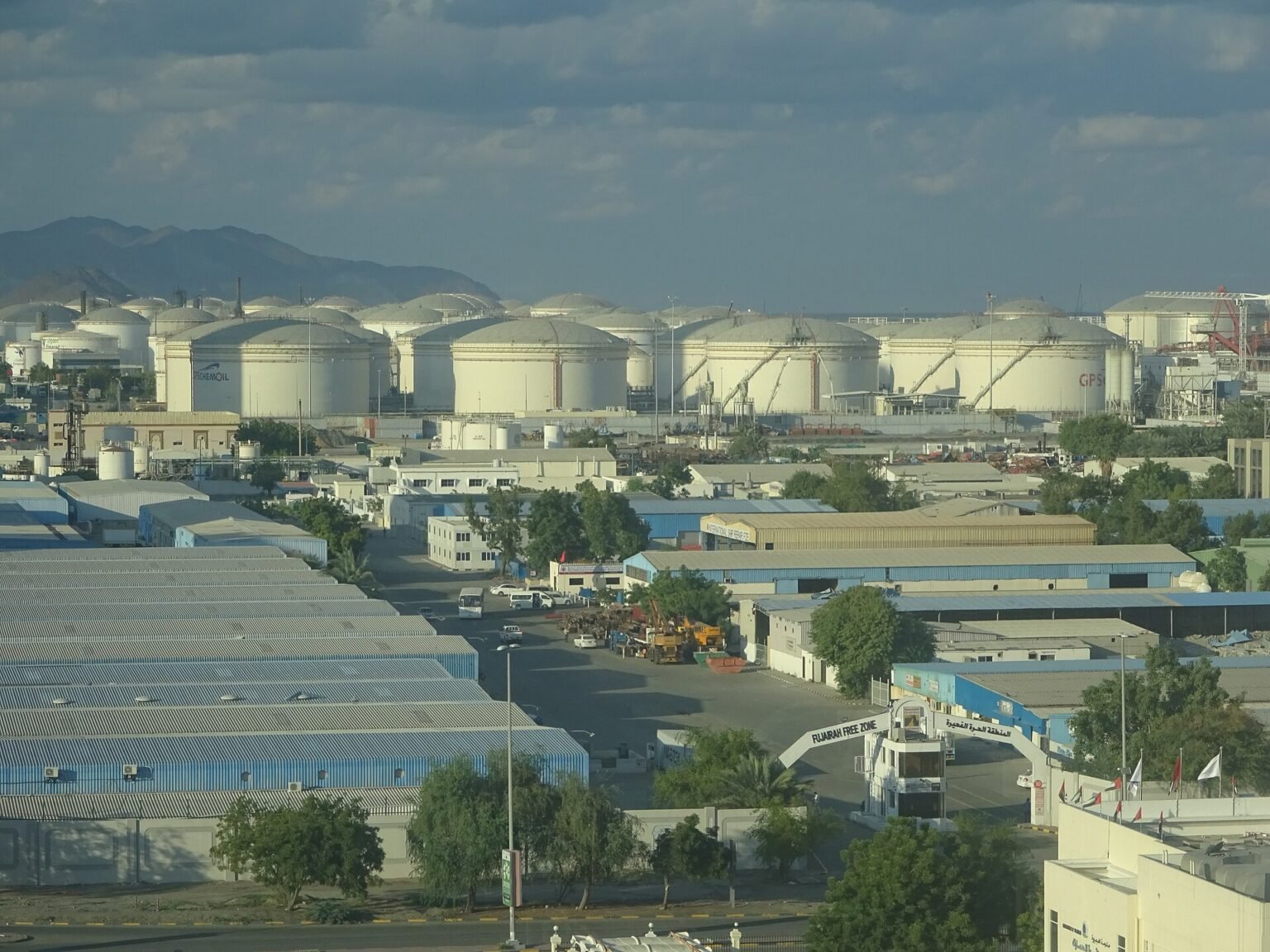
Rows of oil storage tanks at the Port of Fujairah on the Gulf of Oman, outside the Strait of Hormuz
Photo: Jpbowen, CC BY-SA 4.0, via Wikimedia Commons

01What happened

Oil jumped overnight into Thursday 22 October. Brent was up US$3.06, or 2.8%, at US$111.88 a barrel by 11:04 GMT after touching US$112.55, its highest since 18 May; WTI rose to US$99.19 after briefly crossing US$100. The trigger was a U.S. State Department order for some diplomats and their families to leave its missions in Saudi Arabia, with family members to be withdrawn from other missions in the region. Iran’s Revolutionary Guard navy said four vessels it accused of illegal oil transfers were struck and set on fire in the northern Gulf, and that three more hit mines west of the Strait of Hormuz. Saudi Aramco told staff to leave its Dhahran headquarters and work remotely after Houthi strikes killed one person at the Dammam airport and two at a Saudi oil field.

President Trump has said the U.S. will not attack Iran before the 3 November midterms. Tamas Varga of PVM Oil told Reuters that no de-escalation is expected until the elections, which should keep prices elevated. Supply, for now, is still moving: Morgan Stanley estimates Middle East crude exports at about 17 million barrels a day last week. U.S. crude stocks fell 3.06 million barrels to 412.5 million in the latest EIA week.

On Wednesday, before the overnight escalation, Brent had settled at US$108.82 and the December WTI contract at US$97.15, down 67 cents. The Associated Press notes Brent has swung between US$97 and US$112 in October, and GasBuddy estimates U.S. drivers have spent US$138.8 billion more on gasoline and diesel since 1 March than they otherwise would have. S&P 500 futures were down about 0.9% early Thursday.

02Our view

Oil is pricing a political calendar rather than a supply loss. We expect Brent to hold a US$100 to US$115 band until the U.S. midterms on 3 November, with the larger single-day risk on the downside if a credible ceasefire emerges.

Why we think so. The overnight jump was driven by escalation, not by barrels lost. Brent rose 2.8% to US$111.88 by 11:04 GMT on Thursday after touching US$112.55, its highest since 18 May, and WTI briefly crossed US$100. The triggers were a U.S. State Department order for some diplomats and their families to leave its missions in Saudi Arabia, Iran’s claim that four vessels were struck and three hit mines, and Saudi Aramco telling Dhahran staff to work remotely after deadly Houthi strikes. Yet supply is still moving: Morgan Stanley estimates Middle East crude exports at about 17 million barrels a day last week, and U.S. crude stocks fell 3.06 million barrels to 412.5 million in the latest EIA week. With exports close to normal, the premium above US$100 is insurance against what happens after 3 November. President Trump has said the U.S. will not attack Iran before the midterms, and Tamas Varga of PVM Oil expects no de-escalation until the elections, which should keep prices elevated within the band.

The bigger picture. A risk premium behaves differently from a shortage. A shortage lasts until new supply arrives. A premium is paid for protection against an event, and it can collapse as fast as it rose once the event looks less likely. That is why the larger single-day risk is to the downside: a credible ceasefire would remove the reason for the premium almost at once. Brent has already swung between US$97 and US$112 in October, a 15% range in a single month, which shows how much of the price rests on sentiment.

What it means. The pump price and the heating bill are where this lands first, and the Bank of Canada decision is where it lands second: crude this high is what keeps headline CPI above 3% while core sits nearer 2%. For households with heating or fuel as a large winter expense, locking what can be locked, such as a fixed-price natural gas or heating-oil contract where one is offered, removes some uncertainty compared with riding the spot price through November. For businesses with fuel in the cost base, a 15% swing within a month argues for a budget buffer. For investors, the energy-heavy TSX rises on these headlines while the rest of a portfolio falls, so a Canadian index fund hedges some of the pain but not the inflation. Is an energy-heavy portfolio a deliberate choice, or an accident of living in Canada?

What would change our mind. A confirmed loss of Gulf export volume, from a closure of the Strait of Hormuz or a sustained hit to Saudi loading. That would take Brent through US$120 and force the Bank of Canada to weigh a supply shock rather than a price spike.

What to watch. Today’s U.S. EIA natural gas storage report, the Bank of Canada decision on 28 October, and the U.S. midterms on 3 November, which the market treats as the point after which the conflict’s direction becomes clearer.

03Why it matters to you

If fuel and heating are a large part of your budget, oil at this level keeps that pressure on. A budget built for it holds up better through the winter.

Book a budget and savings check

Sources Reuters, Oil rises as US orders diplomats to leave Saudi Arabia amid escalating tensions; Invezz, Brent crude crosses $112 as Hormuz attacks worsen Middle East supply fears; The Associated Press, Oil prices unsteady on elevated risk in Strait of Hormuz; The Canadian Press, S&P/TSX composite rises more than 200 points, while U.S. markets also gain ground

Story 5 of 5

TSX adds 217 points on a tech rally; Tesla beats forecasts with a profit 43% lower than last year

Close-up of the Tesla badge on the rear of a Model S
Photo: Ivan Radic, CC BY 2.0, via Wikimedia Commons

01What happened

Canada’s main index rose 217.03 points to 36,324.99 on Wednesday 21 October, led by technology and financial stocks. In New York the S&P 500 added 44.60 points, or 0.6%, to 7,757.17, the Dow gained 360.21 to 52,856.09 and the Nasdaq climbed 278.04, or 1.1%, to 26,702.86, after SpaceX reported a stronger summer profit than analysts expected and its shares rose 7.8%. Nvidia added 2.5% and Super Micro Computer 9.5%; Netflix fell 5.3% on its guidance and AT&T dropped 6.4%. The U.S. 10-year Treasury yield ended at 5.12%, where it was late Tuesday, and Freddie Mac’s 30-year mortgage average held at 7.40% for a second week. The loonie traded at 71.14 cents US and December gold rose US$7.40 to US$4,150.00 an ounce.

After the close, Tesla reported third-quarter revenue of US$28.05 billion, flat on a year earlier and in line with forecasts. Net income fell 43% to US$787 million, or US$0.22 a share, while adjusted earnings of US$0.48 a share beat the US$0.45 consensus. Operating margin recovered to 2.6% from 1.4% in the second quarter but remains well below the 5.8% of a year ago; research spending rose 69% to US$2.76 billion as the company spends on AI and robotics. Energy storage revenue fell 16% to US$2.88 billion, which Tesla partly attributed to tariff-related customer refunds. Free cash flow was US$1.53 billion and cash and investments stood at US$45.4 billion. Deliveries of 486,532 vehicles were down 2.1% from a year earlier.

Thursday morning the tone turned: S&P 500 futures were down about 0.9% as oil jumped, while U.S. initial jobless claims came in at 194,000 against 200,000 expected.

02Our view

With the U.S. 10-year yield above 5% and the Federal Reserve having raised rates in September, equity gains driven by a handful of AI names are fragile. We would not add to that concentration through this reporting season.

Why we think so. Wednesday’s gains were real but narrow. The S&P/TSX composite rose 217.03 points to 36,324.99, the S&P 500 0.6% and the Nasdaq 1.1%, led by technology after SpaceX reported a stronger summer profit than expected and its shares rose 7.8%; Nvidia added 2.5% and Super Micro Computer 9.5%. Meanwhile borrowing costs sit at levels not seen in a generation: the U.S. 10-year Treasury yield ended at 5.12%, and Freddie Mac’s 30-year mortgage average held at 7.40% for a second week. When a safe government bond pays this much, stocks must justify their prices with profits, and a rally resting on a few companies’ growth stories is more exposed to disappointment than one supported across the market. The mood can turn fast: by Thursday morning S&P 500 futures were down about 0.9% as oil jumped.

The bigger picture. Tesla shows how a headline and a business can diverge. Revenue of US$28.05 billion was flat on a year earlier, and adjusted earnings of US$0.48 a share beat the US$0.45 consensus. Yet net income fell 43% to US$787 million, operating margin of 2.6% remains well below the 5.8% of a year ago, deliveries fell 2.1%, and research spending rose 69% to US$2.76 billion as the company spends on AI and robotics. A beat against the forecast can sit alongside a business earning far less than it did, and the share price follows the headline for about a day. Index investors should also remember that funds weighted by market value hold more of the largest companies, so a U.S. index fund owns more of a few AI-linked names than its label suggests.

What it means. For Canadian investors, check how much of the portfolio sits in a handful of U.S. technology names, including through index funds, and whether that matches the risk you intended to take. If it has drifted, a rebalance is a decision about risk, not a prediction about prices. Which account a sale comes from matters: capital gains realized in a non-registered account are taxed, while those inside a TFSA or RRSP are not, so rebalancing within registered accounts first can avoid an unnecessary tax bill. For those holding cash or bonds, high yields mean fixed income offers a genuine return while waiting. For borrowers, U.S. long rates above 5% keep pressure on borrowing costs well beyond the United States.

What would change our mind. Earnings growth broadening to industrials, banks and consumer companies through the current reporting season, together with a 10-year yield back under 4.75%. That would mean the rally rests on profits rather than on a few stories.

What to watch. Today’s Freddie Mac weekly mortgage rate survey, last at 7.40%, and U.S. initial jobless claims, which came in at 194,000 against 200,000 expected; the rest of the reporting season for signs that earnings are broadening; and the Bank of Canada decision on 28 October.

03Why it matters to you

If your index fund is carried by a narrow group of AI names, your diversification may be thinner than it looks. A review shows what you actually own.

Book a portfolio review

Sources The Canadian Press, S&P/TSX composite rises more than 200 points, while U.S. markets also gain ground; The Associated Press, A strong profit report from SpaceX helps lift tech stocks and Wall Street; Electrek, Tesla (TSLA) releases Q3 2026 financial results: margins rebound, profit still falls; The Mortgage Reports, Mortgage rates steady at 7.40% in Freddie Mac survey as 10-year Treasury yield pulls back; investingLive, Canada September PPI +2.0% m/m vs +1.3% prior

Today’s news, considered against your own plans.

If one of these stories bears on your mortgage, savings, income or business, we would be glad to go through it with you and explain clearly what, if anything, it means for you.

Book a conversation

Free · optional

The Morning Brief in your inbox at 06:00 Pacific.

The day’s stories, what each means for you, and our view. Unsubscribe in one click.

Email subscriptions open shortly.