Markets · 3 Nov 2026Policy rateBank of Canada2.50%YieldsCA 2Y3.26%CA 5Y3.49%+3 bpCA 10Y3.77%+3 bpCanadian dollarCAD/USD0.7146−0.11%CAD/EUR0.6385−0.02%CAD/GBP0.5325−0.15%CAD/JPY113.25+0.34%CryptoBTCUS$80,498+3.84%ETHUS$2,437+6.41%

Morning Brief

Tuesday 27 October 2026

The Bank of Canada decides tomorrow at 06:45 PT, with markets pricing roughly a 75% to 80% chance of a hike to 2.50% and 19 of 34 economists in the Reuters poll expecting one.

The desk’s view todayThe Bank of Canada raises the overnight rate by 25 basis points to 2.50% tomorrow, but frames it as insurance against rising inflation expectations rather than the start of a cycle.

Story 1 of 5

The Bank of Canada decides tomorrow, and a hike to 2.50% is now the base case
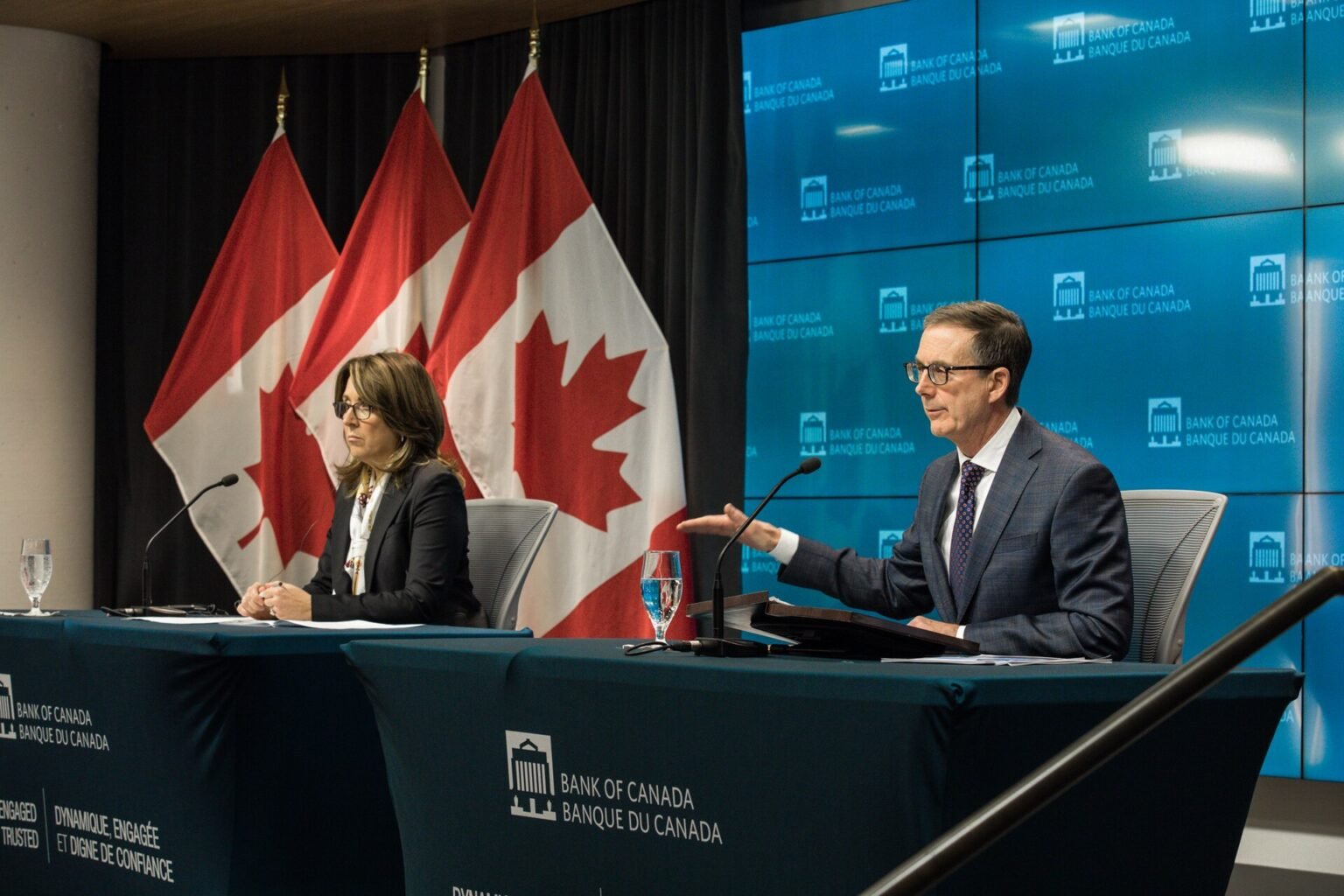
Bank of Canada Governor Tiff Macklem and Senior Deputy Governor Carolyn Rogers seated at a Monetary Policy Report press conference
Photo: Bank of Canada - Banque du Canada from Canada, CC BY 2.0, via Wikimedia Commons

01What happened

The Bank of Canada announces its overnight rate decision on Wednesday 28 October at 06:45 PT, with a new Monetary Policy Report alongside it. The rate has sat at 2.25% for more than 11 months. In the Reuters poll taken 21 to 23 October, 19 of 34 economists (56%) expected a 25 basis point hike to 2.50%, and 16 of 29 expected a second hike to 2.75% by the end of March. The previous poll had 80% of them calling for no change through 2026. Interest-rate futures moved from pricing a 30% chance of a hike a few weeks ago to roughly three in four, and MoneySense and the Financial Post put the market odds near 80%.

The case for a hike rests on September inflation of 3.1%, up from 3.0% in August, with gasoline up 27.8% year over year, and on the Bank’s own surveys showing inflation expectations rising sharply. The case against it is a weak economy: 68,000 jobs lost in September, unemployment at 6.5%, and CPI ex-gasolineCPI ex-gasoline The Consumer Price Index with gasoline removed. When it sits well below the headline rate, the inflation is coming from fuel rather than from the broad economy. running at 2.2%. Reuters reports that dissenting economists cite exactly that mix. BMO’s Benjamin Reitzes summed up the Bank’s likely reasoning as preferring the mistake of hiking a little too early.

02Our view

A Bank of Canada hike to 2.50% tomorrow is more likely than not, but it is a closer call than the market odds suggest, because the Bank would be tightening into falling employment. We expect a quarter point described as insurance against energy-driven inflation expectations, with the Monetary Policy Report revising inflation up and growth down.

Why we think so. The case for a hike rests on inflation and, above all, on expectations. September CPI rose 3.1%, up from 3.0% in August and above the 1% to 3% band, with gasoline up 27.8% from a year earlier, and the Bank’s own surveys show inflation expectations rising sharply. Once households and businesses expect higher prices, they build them into wages and contracts, which is how a temporary energy shock becomes lasting inflation. That is the risk a central bank is least willing to take. The case against is a weak economy: 68,000 jobs lost in September, unemployment at 6.5%, and CPI ex-gasolineCPI ex-gasoline The Consumer Price Index with gasoline removed. When it sits well below the headline rate, the inflation is coming from fuel rather than from the broad economy. at only 2.2%. Those figures argue against a sequence of moves. BMO’s Benjamin Reitzes summed up the Bank’s likely reasoning as preferring the mistake of hiking a little too early. A single hike with cautious language reconciles the two, which is why the language matters more than the quarter point.

What the market is pricing. The shift has been fast. Interest-rate futures moved from about a 30% chance of a hike a few weeks ago to roughly three in four, and MoneySense and the Financial Post put the odds near 80%. In the Reuters poll, 19 of 34 economists (56%) expected a hike, and 16 of 29 expected a second to 2.75% by the end of March, while the previous poll had 80% calling for no change through 2026. We agree with the direction, but the economists’ split shows more doubt than the futures do, and dissenting economists cite exactly the mix of rising inflation and falling jobs.

What it means. For anyone with a variable-rate mortgage or a home equity line of credit, a 25 basis point hike flows to the lender’s prime rate within days, and the payment or the amortization moves with it. MoneySense notes the lowest five-year variable is about 3.43% and would sit near 3.7% after a quarter point. The useful step before 06:45 PT tomorrow is to work out what a 0.25% and a 0.50% rise would do to the monthly payment on all variable-rate debt, so the decision is arithmetic already done. A cash buffer that covers two hikes rather than one is the safer plan. Business owners with a floating operating line will see the cost of carrying inventory rise by the same quarter point. Savers can expect high-interest savings and short GIC rates to edge up, which makes a short GIC ladder worth comparing against waiting.

What would change our mind. A hold tomorrow, or a hike with language that explicitly points to further increases, would show we have misread the Bank’s balance between inflation expectations and the labour market.

What to watch. The overnight rate decision and Monetary Policy Report at 06:45 PT on Wednesday 28 October. The U.S. Federal Reserve’s meeting, which begins today, with its decision on Wednesday at 11:00 PT.

03Why it matters to you

If you hold a variable mortgage or a home equity line, a hike tomorrow raises your cost within days. Testing your budget at the higher rate today is better than finding out on the statement.

Book a mortgage renewal review

Sources Reuters, Bank of Canada to raise rates to 2.50% on October 28 and once again by end-March: Reuters poll; MoneySense, Bank of Canada interest rate forecast: What to expect on October 28; Financial Post, News of the day: Investors gush over oilpatch, rate hike likely, early inflation warnings


Story 2 of 5

Five-year yields are back near their spring highs, so fixed mortgage rates are not coming down yet

A set of keys to a new home
Photo: Pexels

01What happened

The Government of Canada five-year bond yieldBond yield The annual return an investor gets for lending to a government or company through a bond. Yields rise when bond prices fall. Fixed mortgage rates are priced from the 5-year Government of Canada yield., the benchmark lenders use to price fixed mortgage rates, closed at 3.58% on Monday 26 October on the Bank of Canada’s selected yields page, up from 3.50% last Thursday. The two-year closed at 3.37% and the ten-year at 3.84%. MoneySense’s Clay Jarvis describes yields as within a hair of their peaks from the spring Iran war period, and calculates that three- and five-year yields would need to fall about 60 basis points for fixed rates to drop back under 4%. The lowest advertised three- and five-year fixed rates are 4.34%, and the lowest two-year fixed is 4.39%.

Housing itself is soft. CREA’s September figures show sales down 2.3% from August and 7.7% from a year earlier, with the national average price at $666,538, down 1.6% year over year.

02Our view

Fixed mortgage rates stay above 4% through the winter. Bond yields are being held up by oil-driven inflation and by a central bank about to tighten, and neither reverses quickly.

Why we think so. Fixed rates are priced off Government of Canada bond yieldsBond yield The annual return an investor gets for lending to a government or company through a bond. Yields rise when bond prices fall. Fixed mortgage rates are priced from the 5-year Government of Canada yield., not off the Bank of Canada’s rate directly, and the five-year yield closed at 3.58% on Monday 26 October, up from 3.50% last Thursday. The two-year closed at 3.37% and the ten-year at 3.84%. MoneySense’s Clay Jarvis describes yields as within a hair of their peaks from the spring Iran war period, and calculates that three- and five-year yields would need to fall about 60 basis points for fixed rates to drop back under 4%. A move that large usually needs a clear change in the inflation outlook, or a sharp weakening in the economy that convinces bond investors rates are heading down. Neither is in view this week. Inflation is 3.1% and rising on energy, and the Bank is expected to hike tomorrow, which tends to support short and medium-term yields rather than lower them.

What the market is pricing. The lowest advertised three- and five-year fixed rates are 4.34% and the lowest two-year fixed is 4.39%. The bond market is pricing a Bank that tightens at least once and inflation that stays above target for some time. We agree. Tomorrow’s decision will push the short end of the yield curve one way or the other, but the five-year yield already reflects much of the expected hike.

What it means. A large group of Canadians who locked in below 3% in 2021 and 2022 are renewing now and in 2027. At today’s yields a five-year fixed renewal lands in the low to mid 4% range. Anyone renewing within the next 120 days can ask the current lender and at least one other for a written rate hold; a hold usually costs nothing, protects against further rises and does not prevent taking a lower rate if yields fall. The main trade-off is between a shorter fixed term, which offers a second chance at lower rates in two or three years, and the certainty of a five-year term at a rate that can be budgeted. Buyers face falling prices and rising borrowing costs at once: CREA’s September figures show sales down 2.3% from August and 7.7% from a year earlier, with the average price at $666,538, down 1.6%. That rewards patience on price but punishes delay on rate.

What would change our mind. If oil falls back toward US$90 and the Bank signals tomorrow that one hike is the whole story, the five-year yield could shed 30 to 40 basis points by year end, and fixed rates would have room to fall.

What to watch. The Bank of Canada’s decision and Monetary Policy Report at 06:45 PT on Wednesday, especially whether it signals more. The Fed’s decision on Wednesday at 11:00 PT, since U.S. yields shape Canadian ones.

03Why it matters to you

If you locked in under 3% and renew soon, your payment is likely to rise. Starting early gives you time to compare terms and hold a rate before your lender sets the offer.

Book a mortgage renewal review

Sources Bank of Canada, Selected bond yields; MoneySense, Bank of Canada interest rate forecast: What to expect on October 28

Story 3 of 5

Anthropic files for a Nasdaq listing as Wall Street climbs into Fed week

The Nasdaq MarketSite building and its video board in Times Square, New York City
Photo: NASA Headquarters / NASA/Emma Howells, PUBLIC DOMAIN, via Wikimedia Commons

01What happened

Anthropic, the AI developer, filed its public registration statement with the U.S. Securities and Exchange Commission on Monday and applied to list on the Nasdaq under the symbol ANT. The filing shows revenue of US$16.3 billion in the first half of 2026, against US$1.16 billion a year earlier, and a net loss of US$80.7 billion, of which about US$72.4 billion is a non-cash charge from revaluing convertible notes as the company’s valuation rose. The operating loss was US$693 million, and the company held US$112.4 billion in cash at 30 June. Share count and price range are not yet set; press reports suggest marketing to investors could begin the week of 9 November.

Markets rose on Monday. The Nasdaq closed at 26,169.38, up 0.82%, the S&P 500 at 7,676.80, up 0.70%, and the Dow at 52,361.52, up 0.28%. The S&P/TSX composite added 155.98 points to 35,944.16, helped by financials. The U.S. 10-year Treasury yield held near 4.98%. The Federal Reserve begins its two-day meeting today with its target range at 3.75% to 4.00%; markets price only about a 10% chance of a hike on Wednesday. Microsoft, Alphabet and Amazon report earnings this week.

02Our view

For a household, the question this listing raises is not whether the company succeeds, but whether a single new issue deserves a place in a diversified portfolio at a price set by the most enthusiastic bidders on the first day. Over the years that follow, first-day buyers of large IPOs rarely do better than the index.

Why we think so. The filing shows the two faces of a growth-stage company. Revenue was US$16.3 billion in the first half of 2026, against US$1.16 billion a year earlier. The net loss was US$80.7 billion, but about US$72.4 billion of that is a non-cash charge from revaluing convertible notes as the company’s valuation rose; the operating loss was US$693 million, and the company held US$112.4 billion in cash at 30 June. Alongside that growth come very large commitments, including one equipment lease that calls for about US$125 billion in rent over five years, and a share structure that leaves the founders with voting control. None of that makes the company a good or bad business. It means the price at listing will carry a great deal of optimism, and buyers on day one pay for it in full.

How this has played out before. Large, heavily publicized offerings tend to price at levels that reward early private investors and the most eager public buyers, and enthusiasm on the first day often fades as more shares become available and results are measured against high expectations. Investors who bought broad index funds have, over long periods, usually done at least as well, with far less concentration. The backdrop adds to the risk: on Monday the Nasdaq rose 0.82% to 26,169.38 and the S&P 500 0.70% to 7,676.80, with markets pricing only about a 10% chance of a Fed hike, so equities are already priced for a calm Fed and strong technology earnings, leaving little room for disappointment.

What it means. Canadian investors will be able to buy this listing in a brokerage account soon after pricing. Anyone considering any IPO can decide in advance the dollar amount, as a share of the portfolio, that could be lost entirely without harming the plan, and write it down before the marketing begins. It also helps to remember that a technology-heavy index fund already carries large AI exposure, so a new listing on top of it is a decision about how much retirement savings should depend on one theme.

What would change our mind. If the offering were priced at a clear discount to the last private round, which the filing does not yet indicate, the case for first-day buyers would be stronger and we would revise our view.

What to watch. The share count and price range, not yet set. Marketing to investors, which press reports suggest could begin the week of 9 November. Microsoft, Alphabet and Amazon results this week, and the Fed’s decision on Wednesday.

03Why it matters to you

If a listing like this tempts you, a growth-stage IPO carries different risks from the funds you already hold. It is worth deciding how much of your savings, if any, belongs there.

Book a portfolio review

Sources BetaNews, Anthropic files for Nasdaq IPO as ANT with $16.3B half-year revenue; Fast Company, Anthropic IPO: AI giant is preparing for blockbuster stock listing. Here’s what the SEC filing reveals; TheStreet, Stock Market Today (Oct. 26, 2026): Nasdaq, S&P 500 jump after Anthropic IPO announcement; The Canadian Press, S&P/TSX composite rises more than 150 points, U.S. stock markets also higher

Story 4 of 5

Oil holds above US$115 as Houthi attacks on Saudi Arabia offset talks in Tehran

An oil refinery lit up at night
Photo: Pexels

01What happened

Brent crude was at US$115.15 a barrel at 00:00 GMT on Tuesday, down 0.57% on the session, and West Texas Intermediate at US$101.32, according to Reuters. Brent touched US$117 on Monday and again last week, its highest since April. The December crude contract on the New York exchange fell US$1.51 to US$101.76 on Monday. Prices are being pulled two ways: Iran-aligned Houthi forces renewed attacks on Saudi Arabia, while Saudi Arabia, Turkey and Pakistan held talks with Iranian officials in Tehran on Monday to open negotiating channels and avoid a return to military escalation. A Washington think tank counts October as the worst month on record for attacks on commercial shipping in and around the Strait of Hormuz.

In Canada, the Financial Post reports the oil patch’s problem is now too much cash, with producers expected to report strong third-quarter results this week, and Denver-based Ovintiv agreed to buy Calgary’s Logan Energy for about $1.26 billion including debt.

02Our view

The oil market is pricing a stalemate rather than a resolution, and that is probably right for the next few weeks. Talks in Tehran lower the chance of a worse outcome, but they do not reopen shipping lanes.

Why we think so. The forces on price are pulling in opposite directions and neither is strong enough to win. Iran-aligned Houthi forces renewed attacks on Saudi Arabia, while Saudi Arabia, Turkey and Pakistan held talks with Iranian officials in Tehran on Monday to open negotiating channels and avoid a return to military escalation. Diplomacy of that kind reduces the risk of a sharp escalation, but it does nothing in the near term for the physical problem: a Washington think tank counts October as the worst month on record for attacks on commercial shipping in and around the Strait of Hormuz. As long as moving oil is dangerous, the risk premium stays in the price.

What the market is pricing. Brent was US$115.15 a barrel at 00:00 GMT on Tuesday, down 0.57% on the session, and West Texas Intermediate US$101.32. Brent touched US$117 on Monday and again last week, its highest since April, and the December New York crude contract fell US$1.51 to US$101.76 on Monday. That is a market moving within a range on each headline rather than trending, which is what a stalemate looks like. We agree with that pricing for now.

What it means. Oil at this level is the single biggest reason Canadian inflation is back above 3%: gasoline was up 27.8% year over year in September, and it is why the Bank of Canada is weighing a hike tomorrow despite job losses. Households feel it at the pump, in airfares and in delivered goods, and it is sensible to rebase the fuel line in a household or business budget at today’s prices rather than last year’s. For an Alberta or Saskatchewan business it is a tailwind; the Financial Post reports the oil patch’s problem is now too much cash, with strong third-quarter results expected this week, and Ovintiv agreed to buy Calgary’s Logan Energy for about $1.26 billion including debt. For a trucking firm, a farm or a restaurant in Ontario or B.C., it is a cost that cannot be passed on in full, and asking suppliers about surcharge terms before they change is worth doing now. Investors may find that a meaningful part of this year’s portfolio return came from one commodity, and it is worth knowing whether that exposure is intentional.

What would change our mind. A verified ceasefire that covers the Houthis would likely take US$10 to US$15 off Brent quickly. A strike on Saudi export terminals would do the opposite.

What to watch. Canadian producers’ third-quarter results this week. The Bank of Canada’s decision on Wednesday at 06:45 PT, for how it treats energy prices in its inflation outlook. Any outcome from the Tehran talks.

03Why it matters to you

If fuel and heating take a growing share of your month, oil at this level is not a short spike. A budget that plans for it holds up better than one that hopes it passes.

Book a budget and savings check

Sources Reuters, Oil rises as hopes for diplomacy offset impact of renewed Houthi attacks; The Canadian Press, S&P/TSX composite rises more than 150 points, U.S. stock markets also higher; Financial Post, News of the day: Investors gush over oilpatch, rate hike likely, early inflation warnings

Story 5 of 5

Carney says U.S. trade talks have picked up, and that any progress is Washington moving toward Ottawa

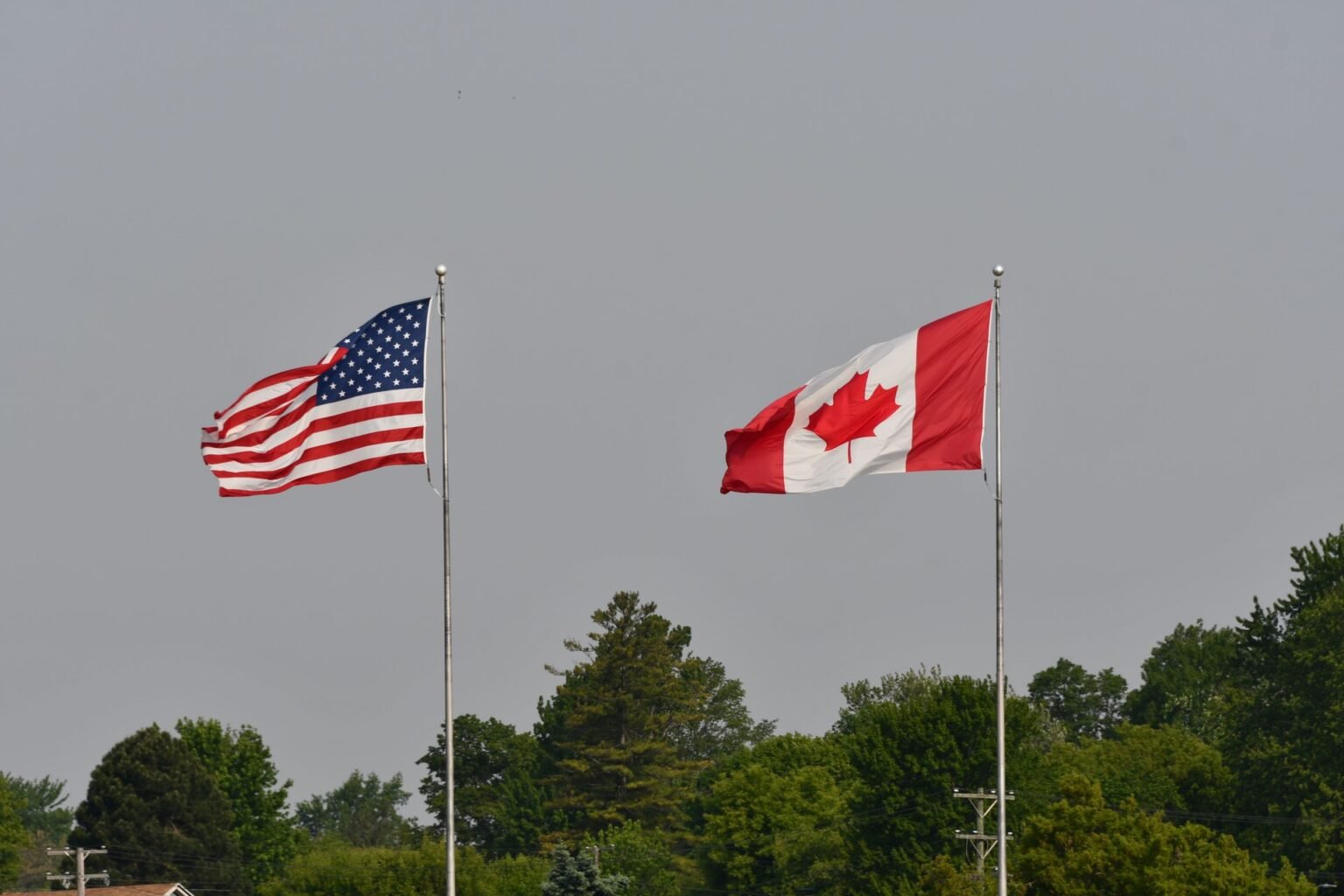
The flags of the United States and Canada flying together
Photo: Pexels

01What happened

Prime Minister Mark Carney told reporters in Ottawa on Monday that there has been a slight intensification in trade discussions with the United States, after President Trump and White House adviser Kevin Hassett said over the weekend that a deal was close. Talks broke down on 21 August, after which the U.S. put 50% tariffs on roughly $20 billion of Canadian goods and Canada retaliated on a similar value of American products. Bloomberg reports the August U.S. offer would have kept tariffs on steel, aluminum and autos at reduced rates, and that the round collapsed partly over whether tariff relief would extend to medium- and heavy-duty trucks. Carney said Canada has clear red lines and was not willing to sign what was on the table in August, and that any movement since has come from the U.S. side. A U.S. official told Bloomberg that Washington does not think Canada is offering enough yet. No deadline has been set.

02Our view

A framework trade agreement with the United States before the U.S. midterm campaign is plausible, because both governments now want one. But the truck and steel details that sank the August round are unresolved, and they could sink this one too.

Why we think so. The tone has changed. Prime Minister Carney said there has been a slight intensification in discussions, after President Trump and White House adviser Kevin Hassett said over the weekend that a deal was close. When both sides speak positively at once, it usually means each sees a political benefit in an agreement. The substance has not changed as much. Talks broke down on 21 August, after which the U.S. put 50% tariffs on roughly $20 billion of Canadian goods and Canada retaliated on a similar value of American products. Bloomberg reports the August U.S. offer would have kept tariffs on steel, aluminum and autos at reduced rates, and that the round collapsed partly over whether relief would extend to medium and heavy-duty trucks. Carney says Canada has clear red lines, was not willing to sign what was on the table in August, and that any movement since has come from the U.S. side. A U.S. official told Bloomberg that Washington does not think Canada is offering enough yet. Both statements can be true, and they describe a gap, not a deal. No deadline has been set.

The bigger picture. Trade negotiations often produce a positive framework well before the hard details are settled, and the details are where sectoral tariffs live. For Canada, the outcome on steel, aluminum, autos and trucks matters more than any headline agreement. The trade file is also one of the two forces, with oil, holding the Canadian dollar near 71.3 U.S. cents and keeping the Bank of Canada cautious about how far it can tighten.

What it means. For an exporter or a manufacturer in a tariffed sector, this is the first positive signal in two months, but pricing, hiring and inventory decisions that assume relief by a certain date are still a bet. Modelling margins at the current 50% tariff, at the lower August-style rates and at zero, and deciding in advance which orders to accept under each, turns a headline into a plan. Business owners should also check whether the operating line and cash on hand cover another quarter at current tariff levels. Investors may want to know how much of a Canadian equity portfolio sits in the sectors a deal would help most.

What would change our mind. We would be more confident if Lutnick and LeBlanc announce a formal negotiating round with dates. We would be less confident if either side adds a new sectoral tariff in the meantime.

What to watch. Any announcement of a formal negotiating round with dates. Any new sectoral tariff from either side. The Bank of Canada’s decision on Wednesday, where trade uncertainty shapes the growth outlook.

03Why it matters to you

If your business is in a tariffed sector, a signal of progress is not relief. Planning pricing and inventory for both outcomes keeps your options open.

Book a business review

Sources Bloomberg, US-Canada Trade Talks Are Picking Up Pace But No Deal Yet, Carney Says; The Canadian Press, S&P/TSX composite rises more than 150 points, U.S. stock markets also higher

Today’s news, considered against your own plans.

If one of these stories bears on your mortgage, savings, income or business, we would be glad to go through it with you and explain clearly what, if anything, it means for you.

Book a conversation

Free · optional

The Morning Brief in your inbox at 06:00 Pacific.

The day’s stories, what each means for you, and our view. Unsubscribe in one click.

Email subscriptions open shortly.