Story 1 of 5
The Bank of Canada decides tomorrow, and a hike to 2.50% is now the base case
01What happened
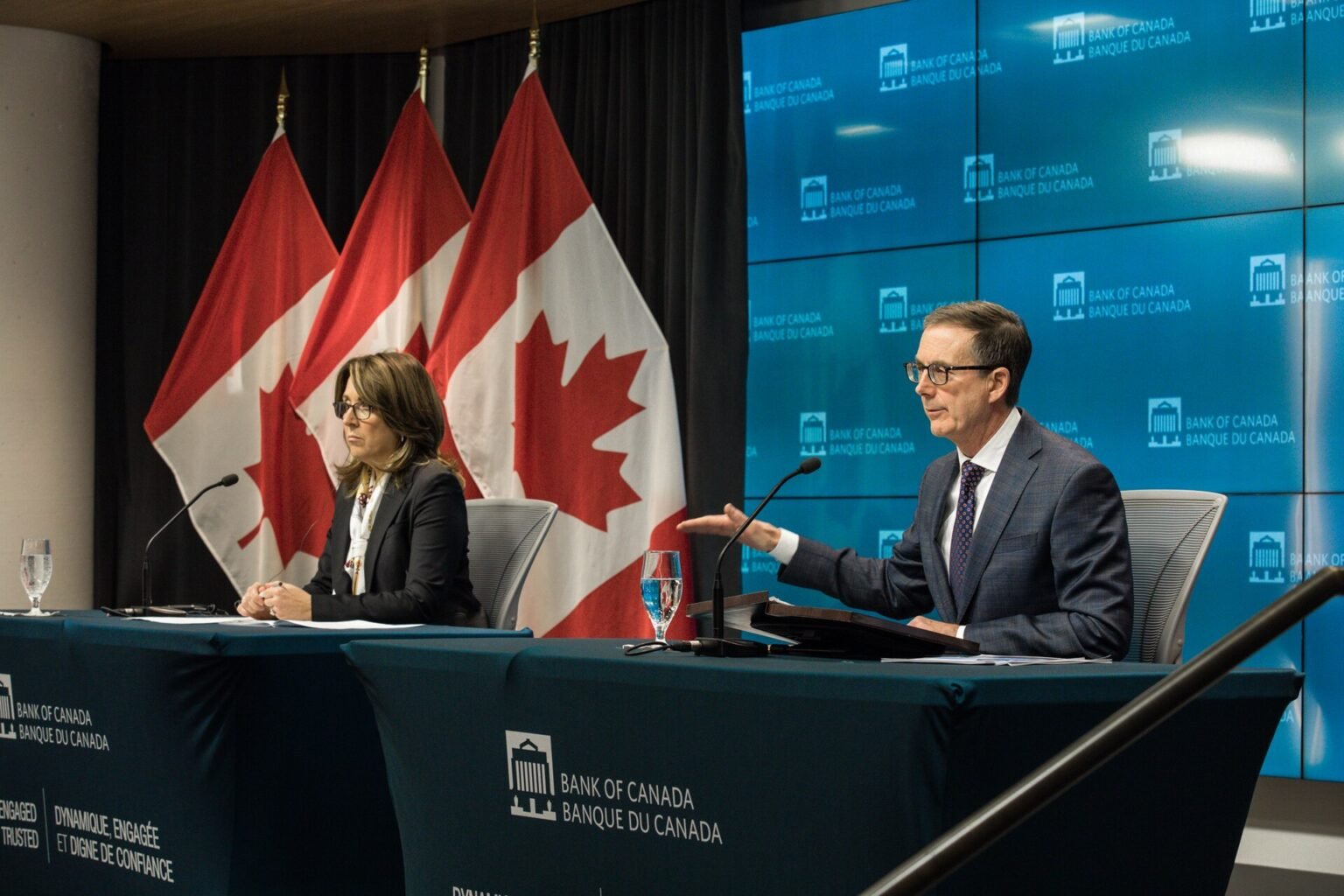
The Bank of Canada announces its overnight rate decision on Wednesday 28 October at 06:45 PT, with a new Monetary Policy Report alongside it. The rate has sat at 2.25% for more than 11 months. In the Reuters poll taken 21 to 23 October, 19 of 34 economists (56%) expected a 25 basis point hike to 2.50%, and 16 of 29 expected a second hike to 2.75% by the end of March. The previous poll had 80% of them calling for no change through 2026. Interest-rate futures moved from pricing a 30% chance of a hike a few weeks ago to roughly three in four, and MoneySense and the Financial Post put the market odds near 80%.
The case for a hike rests on September inflation of 3.1%, up from 3.0% in August, with gasoline up 27.8% year over year, and on the Bank’s own surveys showing inflation expectations rising sharply. The case against it is a weak economy: 68,000 jobs lost in September, unemployment at 6.5%, and CPI ex-gasolineCPI ex-gasoline The Consumer Price Index with gasoline removed. When it sits well below the headline rate, the inflation is coming from fuel rather than from the broad economy. running at 2.2%. Reuters reports that dissenting economists cite exactly that mix. BMO’s Benjamin Reitzes summed up the Bank’s likely reasoning as preferring the mistake of hiking a little too early.
02Our view
A Bank of Canada hike to 2.50% tomorrow is more likely than not, but it is a closer call than the market odds suggest, because the Bank would be tightening into falling employment. We expect a quarter point described as insurance against energy-driven inflation expectations, with the Monetary Policy Report revising inflation up and growth down.
Why we think so. The case for a hike rests on inflation and, above all, on expectations. September CPI rose 3.1%, up from 3.0% in August and above the 1% to 3% band, with gasoline up 27.8% from a year earlier, and the Bank’s own surveys show inflation expectations rising sharply. Once households and businesses expect higher prices, they build them into wages and contracts, which is how a temporary energy shock becomes lasting inflation. That is the risk a central bank is least willing to take. The case against is a weak economy: 68,000 jobs lost in September, unemployment at 6.5%, and CPI ex-gasolineCPI ex-gasoline The Consumer Price Index with gasoline removed. When it sits well below the headline rate, the inflation is coming from fuel rather than from the broad economy. at only 2.2%. Those figures argue against a sequence of moves. BMO’s Benjamin Reitzes summed up the Bank’s likely reasoning as preferring the mistake of hiking a little too early. A single hike with cautious language reconciles the two, which is why the language matters more than the quarter point.
What the market is pricing. The shift has been fast. Interest-rate futures moved from about a 30% chance of a hike a few weeks ago to roughly three in four, and MoneySense and the Financial Post put the odds near 80%. In the Reuters poll, 19 of 34 economists (56%) expected a hike, and 16 of 29 expected a second to 2.75% by the end of March, while the previous poll had 80% calling for no change through 2026. We agree with the direction, but the economists’ split shows more doubt than the futures do, and dissenting economists cite exactly the mix of rising inflation and falling jobs.
What it means. For anyone with a variable-rate mortgage or a home equity line of credit, a 25 basis point hike flows to the lender’s prime rate within days, and the payment or the amortization moves with it. MoneySense notes the lowest five-year variable is about 3.43% and would sit near 3.7% after a quarter point. The useful step before 06:45 PT tomorrow is to work out what a 0.25% and a 0.50% rise would do to the monthly payment on all variable-rate debt, so the decision is arithmetic already done. A cash buffer that covers two hikes rather than one is the safer plan. Business owners with a floating operating line will see the cost of carrying inventory rise by the same quarter point. Savers can expect high-interest savings and short GIC rates to edge up, which makes a short GIC ladder worth comparing against waiting.
What would change our mind. A hold tomorrow, or a hike with language that explicitly points to further increases, would show we have misread the Bank’s balance between inflation expectations and the labour market.
What to watch. The overnight rate decision and Monetary Policy Report at 06:45 PT on Wednesday 28 October. The U.S. Federal Reserve’s meeting, which begins today, with its decision on Wednesday at 11:00 PT.
03Why it matters to you
If you hold a variable mortgage or a home equity line, a hike tomorrow raises your cost within days. Testing your budget at the higher rate today is better than finding out on the statement.
Sources Reuters, Bank of Canada to raise rates to 2.50% on October 28 and once again by end-March: Reuters poll; MoneySense, Bank of Canada interest rate forecast: What to expect on October 28; Financial Post, News of the day: Investors gush over oilpatch, rate hike likely, early inflation warnings